Louisa May Alcott’s reputation as a novelist was sealed back in 1868, when her treasure of a tale, ‘Little Women’, was first published. But wowee, the stage adaption by Anne Marie Casey is well worth its salt.
Originally released in two devourable volumes, the story has since been adapted for film eight times, not
to mention a six-part BBC mini-series and no fewer than forty-eight radio dramatisations, plus countless
musical derivatives, a ballet and even an anime adaption. The latest film famously stars everyone’s
favourite know-it-all-witch next door, Hermione Granger (aka Emma Watson), alongside the enigmatic
Saorise Ronan and Florence Pugh.
So what else is there left to say? Does the story’s relevancy still hold?
Above all, this is a play about women under life’s opposing pressures, on a journey of discovery. But
discovery of what, exactly, is the debate. On the surface, Little Women is a coming-of-age piece that
plunges right into the thorny hinterland between childhood and womanhood, and undoubtedly it is a story
which has stood the test of time. What the characters come to realise by the play’s close is that genuine
happiness and solace may stem from spiritual and selfless values, and the silent question hangs as we
the modern audience are asked whether we agree with such a stoic angle, and how relevant this remains
today.
Directed by Loveday Ingram and produced by Lee Dean and Daniel Schumann, this adaption holds true
to the original story and attends the sisters’ progression into womanhood – with the absence of the
traditional patriarch keenly felt.
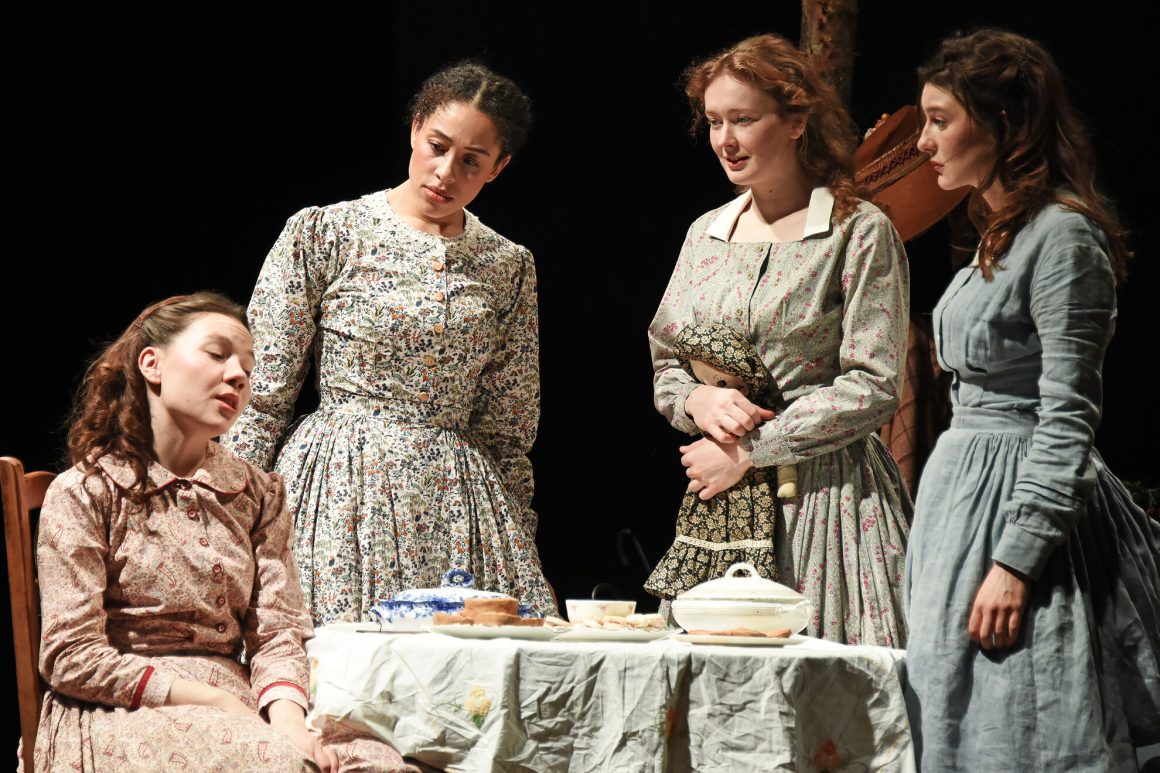
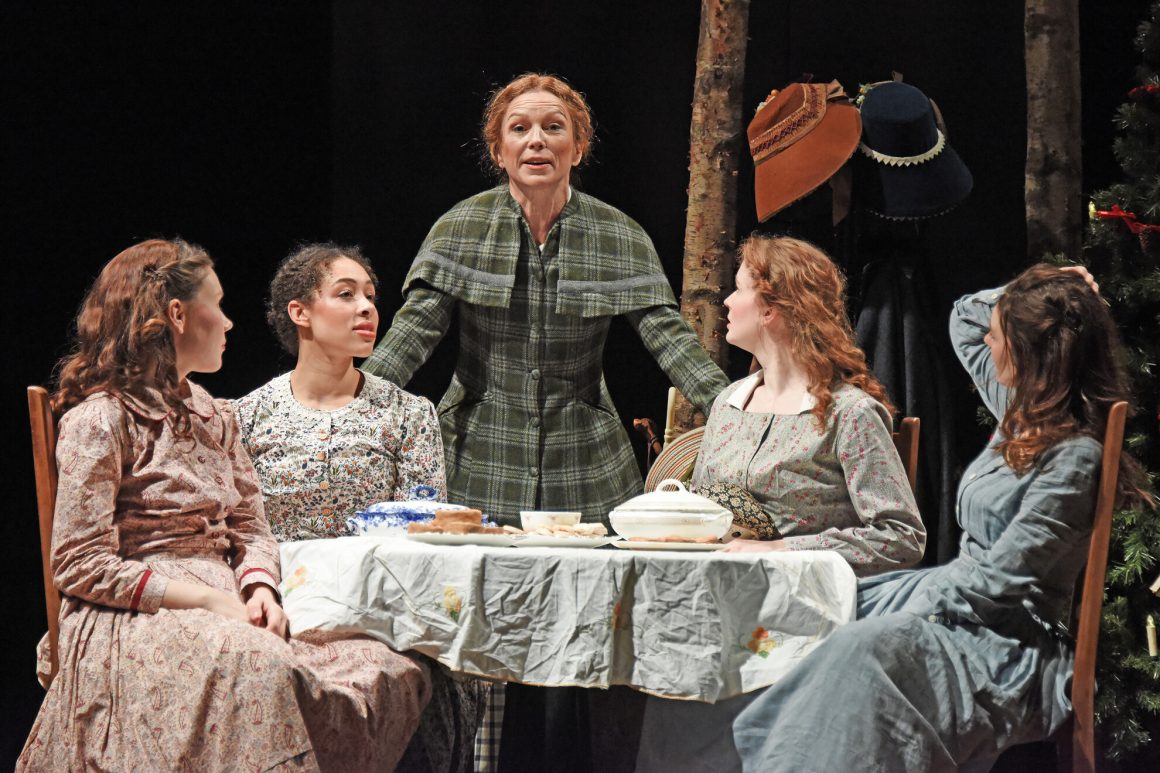
The first half of the play then, centres on the lives of the four March daughters—Jo, Meg, Beth and Amy – over the course of one year. The girls’ father has left home to serve as an American Civil War Chaplain and he leaves behind the sisters and their mother, affectionately referred to by the girls as “Marmee”.
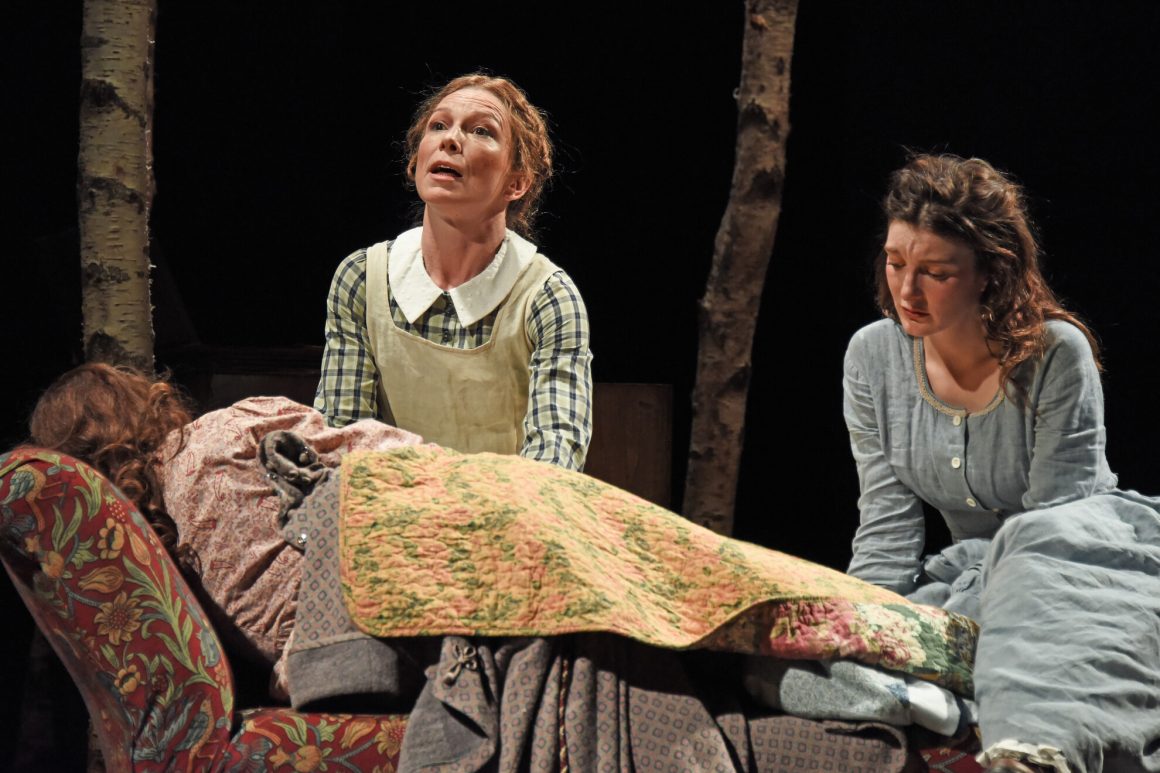
The first half is all set up beautifully, as we’re introduced to the ensemble, and from then on we are offered a cohesive take on a tale that clearly resonates across countries and languages for a reason.
Although female-centric and focused on our protagonists as individuals, really the show’s poignancy lies
in its wider themes of ambition, sisterhood and ultimately identity. It is both a performance and a very real moral offering which leaves you pondering your own behaviour and priorities throughout.
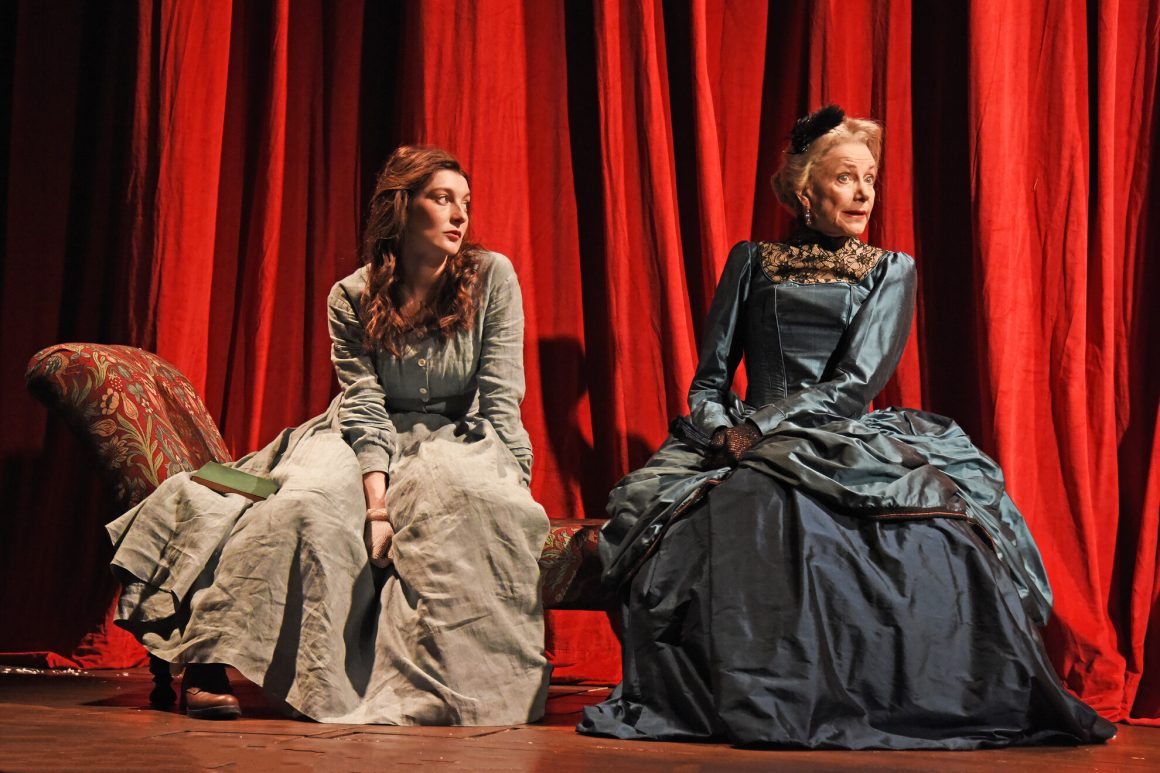
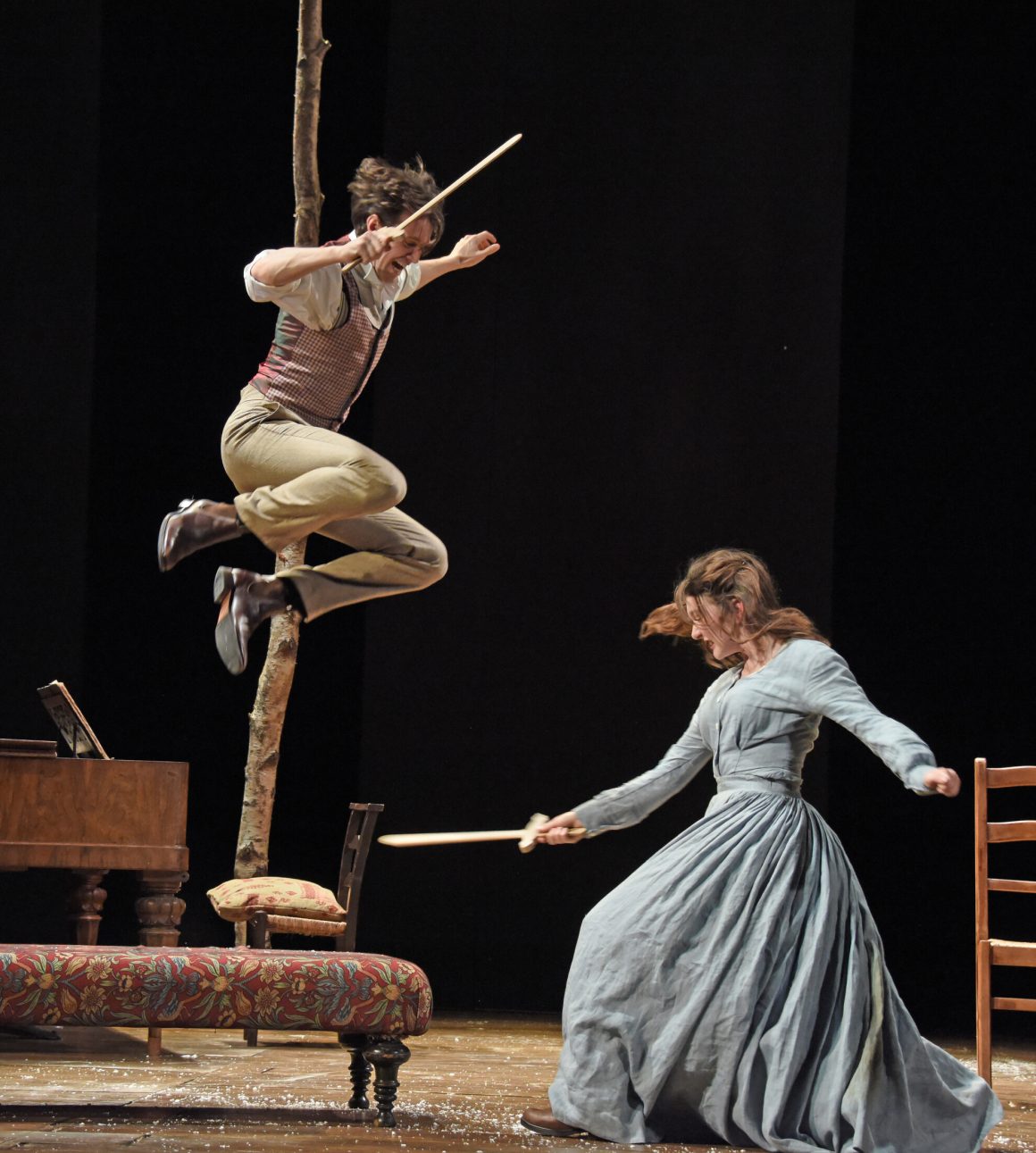
The set and overall design is plain but suitably so, given that the story is briefly modelled after Pilgrim’s
Progress; simple lighting and a handful of key props are used to demonstrate the shift between settings.
The background allows the cast’s performances to truly shine.
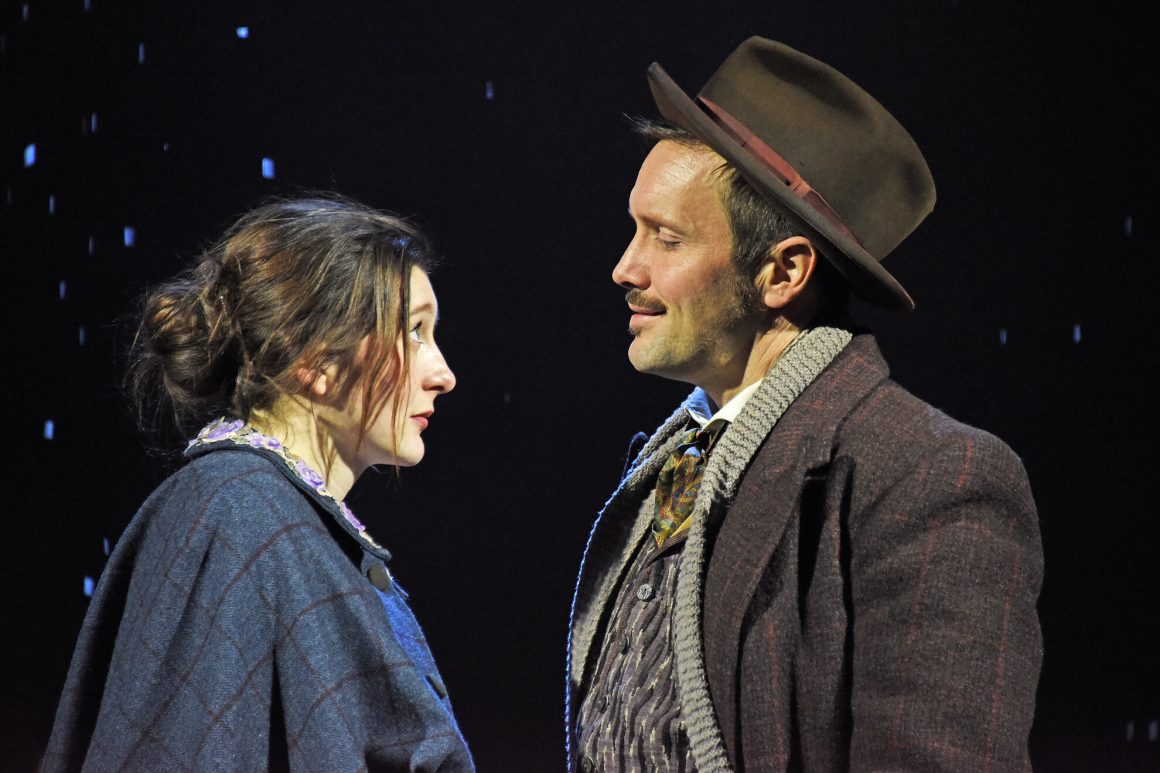
As the play draws on, each of the sisters comes to recognise a moral flaw which they possess, and
attempt to overcome it over the span of the performance. Jo has a hideous temper, Amy is spoiled and
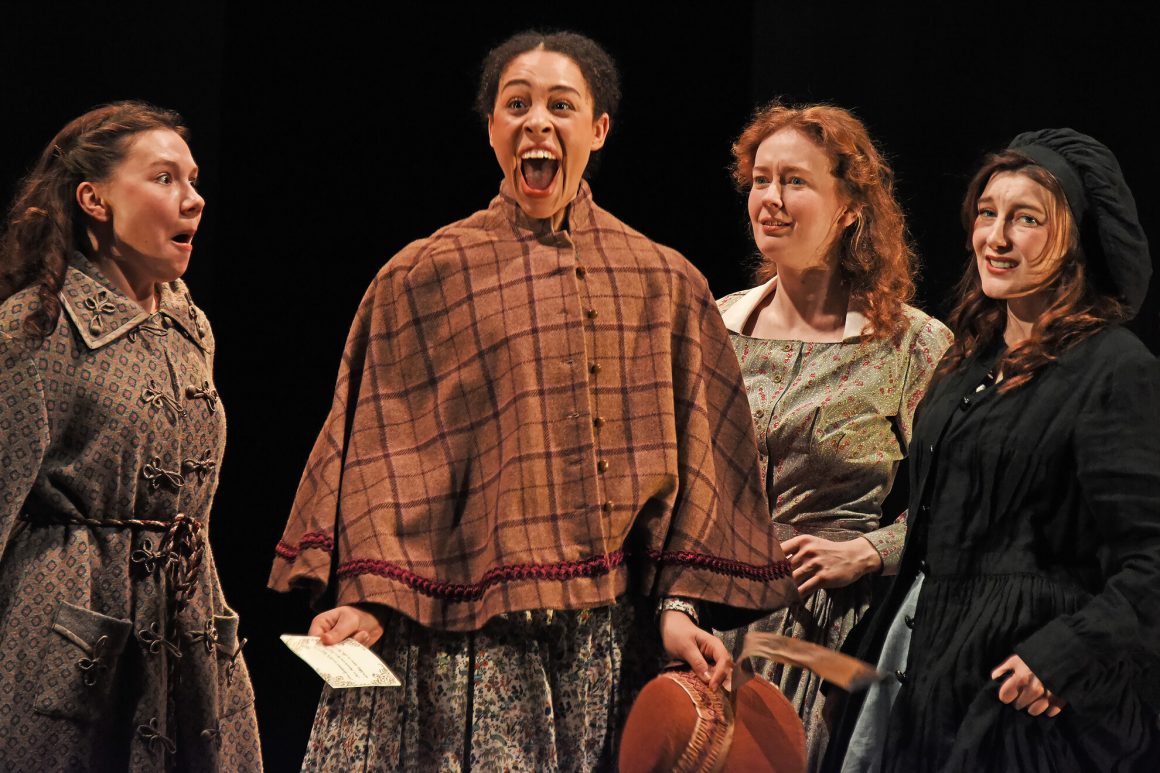
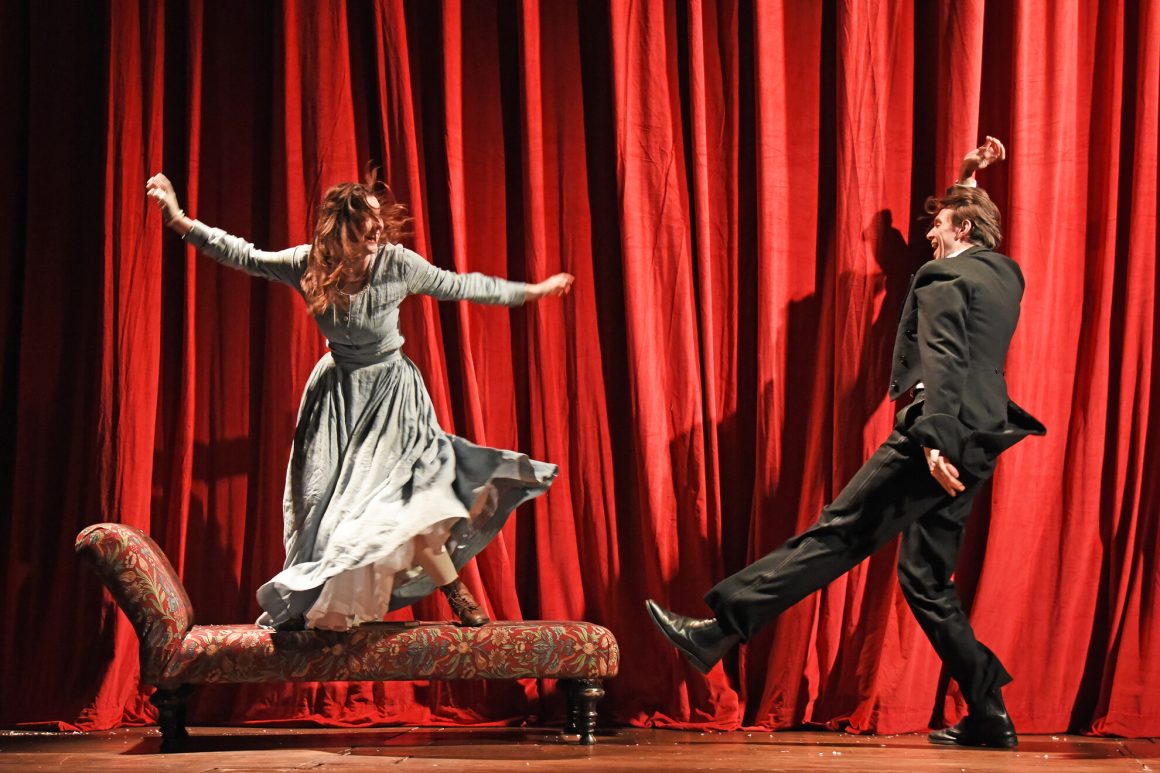
selfish, Beth lacks confidence and Meg is vain. In a cohort of excellent portrayals, the real standout for
me is Grace Malony as Jo March. With her comic timing and seamless delivery, the character seems as
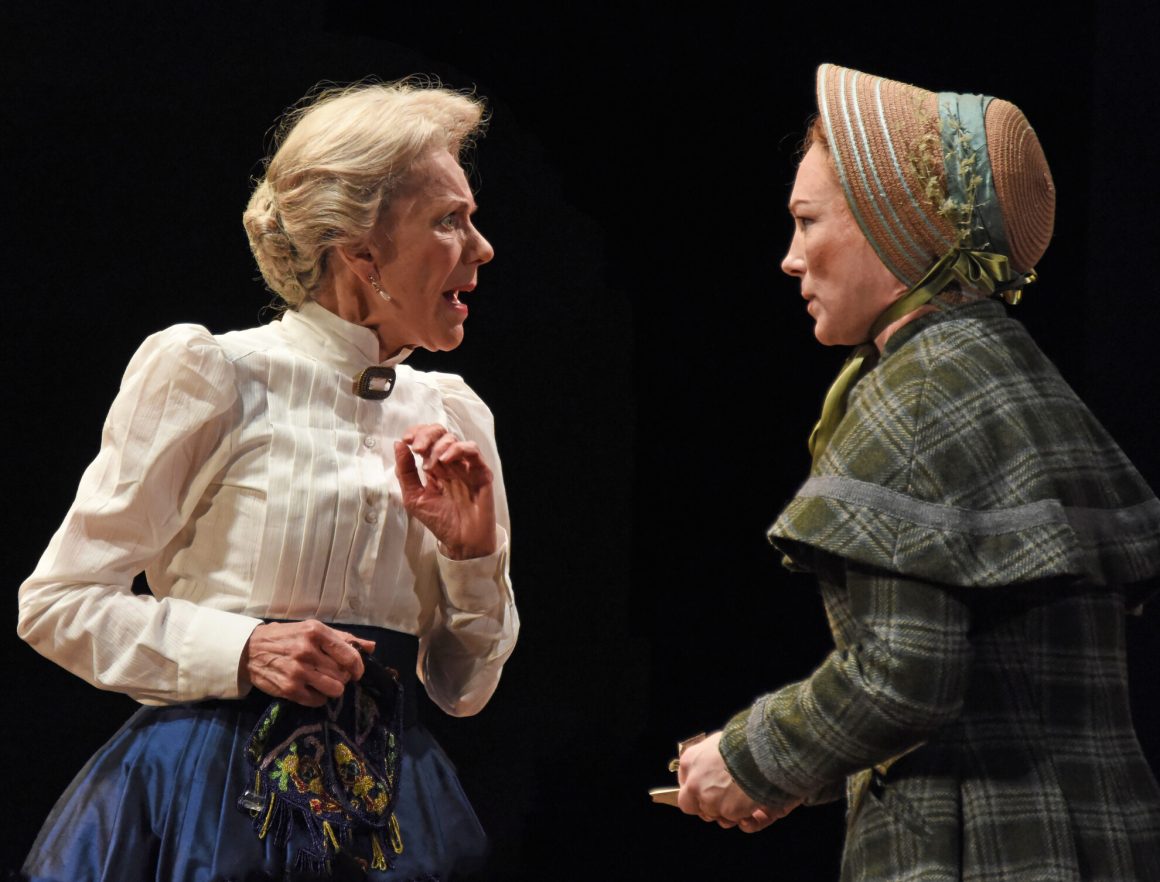
natural to her as though she were playing herself, and her imitations of the hateful but simultaneously
loveable Aunt March had me howling throughout. The chemistry between the sisters comes off as
similarly authentic and often genuinely convivial, giving the story the depth of emotion its history
demands.
What is both interesting and impressive about this adaption is that it manages to grab a tight hold of the
emotional heart of the novel whilst holding our attention as a live audience, keeping things at a steady
beat. Despite Jo’s protestations against it, change is a key theme of the play and the allusions to it gently
assist the overall pacing of the performance as a whole. Christmas becomes the anchor event, enabling
us to reflect on what has passed in a relatively short space of time. The two hours flew by and with the
end in sight in the final scene, there is time for a little reflection.
Loosely modelled on Alcott’s own experiences growing up, ‘Little Women’ was an immediate commercial
success, and as a story has become so wildly acclaimed that it’s almost impossible to bring much new to the fore. Anne Marie Casey’s take is a careful and very lovely – albeit faithful – retelling of a cherished
story which clearly still boasts multi-generational appeal. As the last of my theatre wine is drunk and the
Northern Bloc ice cream settles in my stomach, I leave the Leeds Grand thoughtfully aware of the quiet
yet unrelenting power of the mundane and the ordinary.
Louisa May Alcott’s ‘Little Women’ is showing at the Leeds Grand Theatre until Saturday 14th June 2025.
Book tickets online at leedsheritagetheatres.com.
Photography by Nobby Clark.
Main image: Catherine Chalk, Imogen Elliott, Jade Kennedy and Grace Malony.
Little Women by Louisa May Alcott
Adapted by Anne-Marie Casey
Producer/Lee Dean
Director/Loveday Ingram
Designer/Ruari Murchison
Lighting/Mike Roberston