HSBC, the UK’s largest bank, has partnered with Leeds-based charity Epilepsy Action to improve workplace accessibility for people with photosensitive epilepsy.
Together, HSBC and Epilepsy Action has launched a new research report, offering best practice insights informed by community research. The intention is to give businesses and organisations the knowledge and tools they need to create safe physical and digital spaces for employees living with the condition.
The project involved capturing lived experiences from people with photosensitive epilepsy, to establish the greatest challenges for this group, and how workplaces can be adapted to be more inclusive.
Some of the key recommendations to help keep those with the condition safe included avoiding potential triggers, such as flashing lights, and providing clear warnings when these may be present. Also recommended is considering entire environments when assessing triggers and maintenance upkeep. One example is replacing broken lightbulbs that are flickering
HSBC are also implementing training from Epilepsy Action across their company by rolling out the e-learning module and virtual training to their First Aider population.
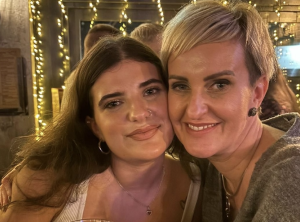
Emma Haslam, Senior Digital Governance Manager at HSBC, led on the project. Inclusivity and accessibility are extremely important to Emma in her job role, but this project was even more personal to her, having a close connection to epilepsy herself. “My daughter, Ruby, has lived with epilepsy since she was 17. Now 21, over the past three and a half years, I’ve seen first-hand the impact that epilepsy can have on a person and their family. I was on facetime to Ruby during her first seizure. She suddenly went off camera, and I rushed upstairs to go and find her. My husband was already there, as he had heard a bang.
After that, we had a bit of an ‘unknown’ phase. Was it a one-off or something else? Ruby was diagnosed with epilepsy pretty quickly, and in some way we were relieved, as at least we knew what it was and she could start medication”.
Ruby’s diagnosis came as a huge shock for all of the family. “I think what I’m most gutted for, for Ruby, is that it developed at such a significant age – none of us knew epilepsy could develop randomly until our experience. Ruby was 17 and had just started learning to drive and was getting her first sense of freedom.
As her mum, of course I worry about her all the time and still do. Sometimes, she gets irritated by me, her stepdad or brother shouting up to her if we hear a bang in the house. However, Ruby hasn’t let her epilepsy define her or stop her from doing anything. I want her to take epilepsy seriously, but I also want her to live her life to the fullest, which she is absolutely doing”.
Emma’s lived experience has made her even more motivated to create change in her workplace and beyond. “I am extremely passionate about this new collaboration with Epilepsy Action, especially because of my close connection. As a team, we support the bank to ensure the digital platforms and products we deliver to customers and colleagues are accessible, reinforcing HSBC’s ambition to be the most trusted bank globally by putting customers at the heart of everything we do, and supporting our aim to be the world’s most digitally accessible bank. This year, we’ve delivered three key pieces of work: increasing epilepsy awareness (including clear do’s and don’ts for supporting someone having a seizure), strengthening our first-aid response and carrying out user research to validate that our guidance reflects real, lived experiences.
“As a parent to someone with epilepsy, I know that if I was confident every member of the public knew what to do if someone has a seizure in front of them, I would be much more relaxed. Establishing training across the bank will ensure that people with epilepsy amongst our staff, and even members of the public coming into our branches, can feel fully supported and trust that there are people there to help them.”
Rebekah Smith, Chief Executive at, Epilepsy Action: “Whilst only affecting 3-5% of people with epilepsy, photosensitive epilepsy can be an extremely difficult condition to manage, as it can make everyday activities, such as going to the shops or on a walk, very tricky. A big part of this project was talking to those from our community about their experiences. It was humbling and at times emotional to hear the daily struggles many of them face and created even more motivation for us and HSBC to help ensure that we can create safer and inclusive environments for those who need it.
There is a wide range of triggers for people with photosensitive epilepsy, which is why we have provided a range of guidance to help businesses and organisations create safer and more inclusive working environments. While it is not possible for any single set of guidance to address every potential trigger or individual circumstance, given the highly personal nature of epilepsy, we encourage employers to consider these recommendations carefully and take proactive steps to support the safety and wellbeing of employees with epilepsy in the workplace.
We’re so pleased to see HSBC paving the way for safety and inclusion of all people with epilepsy in the workplace, and we hope other companies will be inspired to do the same.”
Mali Fernando MBE, Head of Digital Experience and Accessibility at HSBC: “I am proud of the impact this work will have and more so, that we are able to share this with other organisations. I hope this research which we have created with our partners from Epilepsy Action helps other organisations, particularly those who may not have been aware of the risks and impact of multimedia, print and other collateral when created without considering the needs of people with photosensitive epilepsy”.
Epilepsy affects around one in every 100 people in the UK and around 80 are diagnosed every day. Over 52,000 people are living with the condition in Yorkshire alone. Epilepsy Action is committed to improving the lives of people with epilepsy, by campaigning for better services and raising awareness of the condition.
The charity provides a national network of support groups, with expert advice available on its freephone helpline 0808 800 5050 and online here.
To find out more about the partnership https://www.epilepsy.org.uk/epilepsy-action-and-hsbc-v2.
Images: Emma with Ruby.