At a sad time when subjects like Drama and Music have been devalued or pushed to the sidelines in many schools and colleges, it is heartening to discover one where they are an important part of the curriculum.
I have just returned from a visit to Elliott Hudson College, situated next door to the White Rose Centre in Beeston, to see a production of Antigone, a tragedy written nearly two and a half thousand years ago in Athens by Sophocles, and first performed at a Festival of Dionysus, which I imagine was rather like modern Glastonbury with added theatre.

The college, for 16 to 19 year-olds, is rated Outstanding by OFSTED . This production could certainly be described as such.
When Sophocles wrote the play, he intended it to be part of a trilogy which begins with the story of Oedipus, who unwittingly kills his father and marries his mother, which has long-lasting consequences for himself and his family. Themes of fate, free will, power and morality are explored. Oedipus becomes the father of two daughters, Antigone and Ismene, and two sons, Eteocles and Polynices.
The play about Antigone is set in Thebes at a time just after the defeat of the invading army of Argos. It begins with the death of the two sons, who fought on opposing sides and who have just killed each other. Their uncle Creon is the king, a pretty hard-line authoritarian. He orders that Eteocles, who fought loyally for Thebes, can be buried with all the usual funerary rites, but that Polynices, who fought against the city, must be left for the dogs and vultures, unburied. Antigone strongly objects, planning to disobey the king by burying her brother according to the laws of the gods, not the laws of the state. Creon is apoplectic.
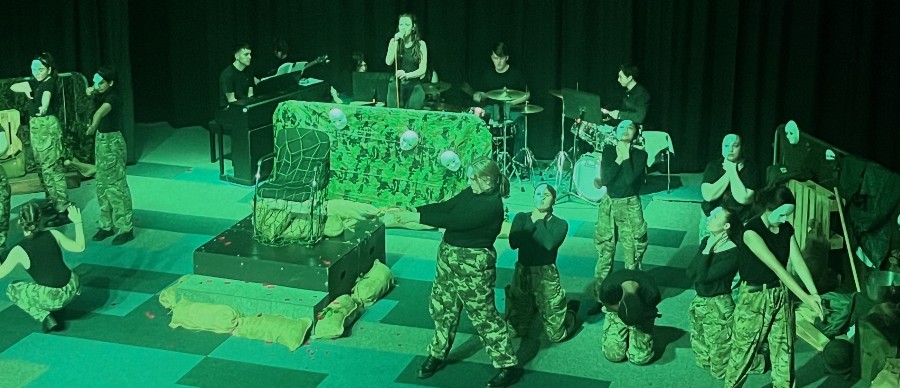
In the well-equipped college drama theatre, the action began with the backstories, which were briefly and efficiently conveyed to the audience by Eteocles (Grace Martin) and Polynices (Marvaa Hussein) confronting and shooting each other. Spears were out – it’s a modern world. Members of the seventeen-strong chorus were soon fighting madly all over the performance area in a sparsely furnished set, their fingers pistol barrels, their fists waving imagined weapons in a well-choreographed display. It was superbly organised whenever it appeared, or rather well-drilled, because the play is about the aftermath of a war, written at a time when the soldiers of Greek city-states were regularly hacking each other to bits with bronze swords. The choral speaking, often hard to get right, was beautifully synchronised.
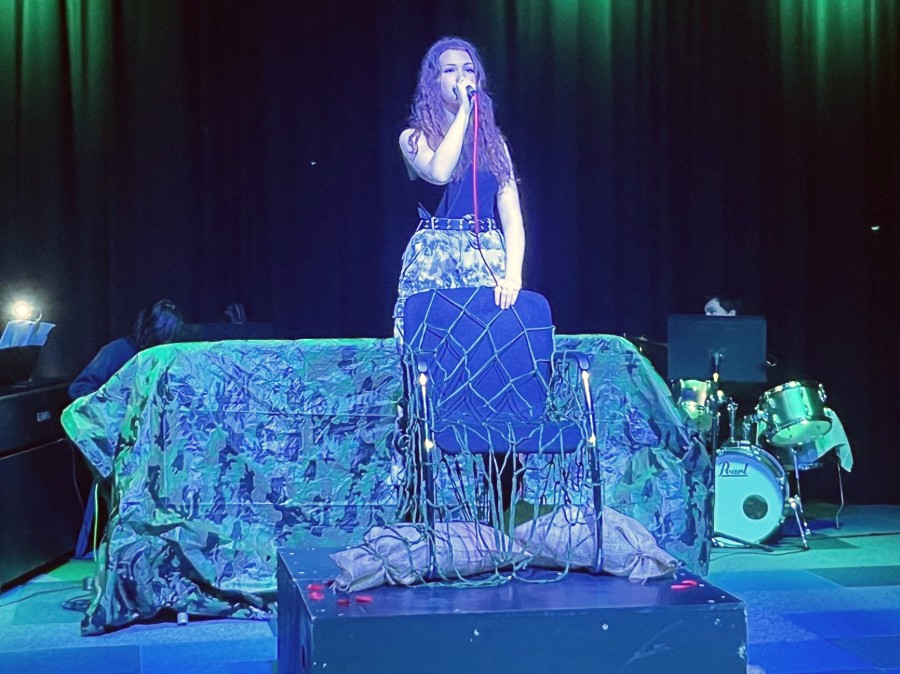
An exploration of the themes took place on two screens above the action, with constantly changing glimpses of modern despots like Adolf Hitler and Saddam Hussein and numerous wise quotes from thinkers like Friedrich Nietzsche and William Shakespeare. The films were created by film student Caitlin Mulholland. The techie team, led by the Y13 technical manager Niamh Quinn, excelled itself generally, with just-right timing; spots always accurately placed. The small guitar and drums band at the back greatly contributed to the frantic emotional atmosphere at crucial moments, sometimes with heartbeat rhythms, sometimes with the near-professional sounds of its vocalists Emily Carter and Andrea Minos Menlah, whose voices will take them a long way.
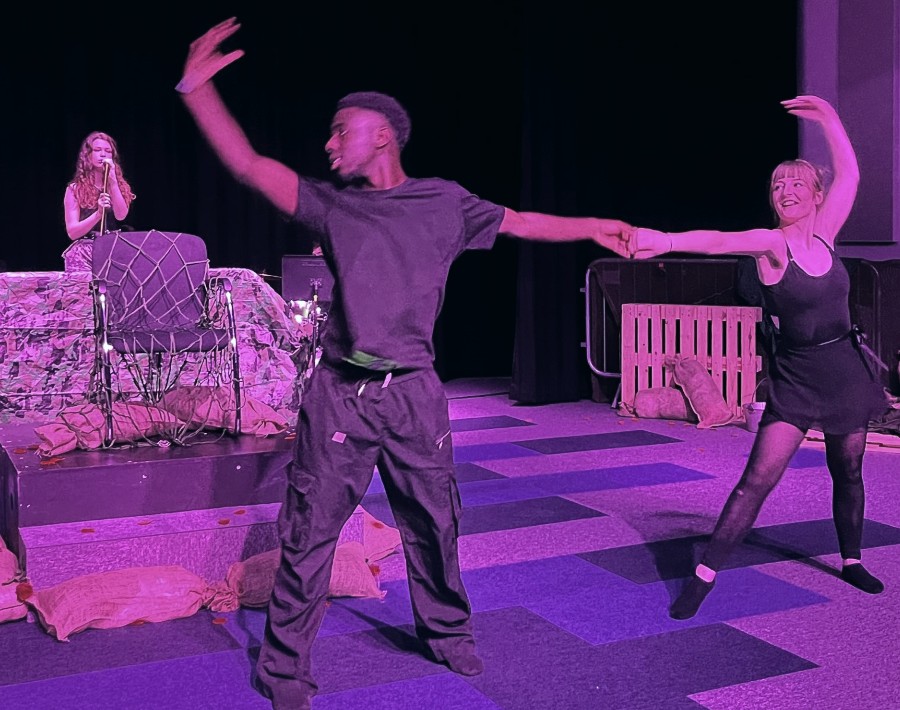
Isobel Jackson was deeply involved in the character of Antigone, conveying rebellious fury with obvious relish as she harangued her cruel uncle, grief at the death of her brother and bravery as she was led away after she was ordered to be starved to death in a sealed cave. She contrasted well with Mariana Warner as her more conventional younger sister Ismene, who made it quite clear that she was conflicted rather than timid.
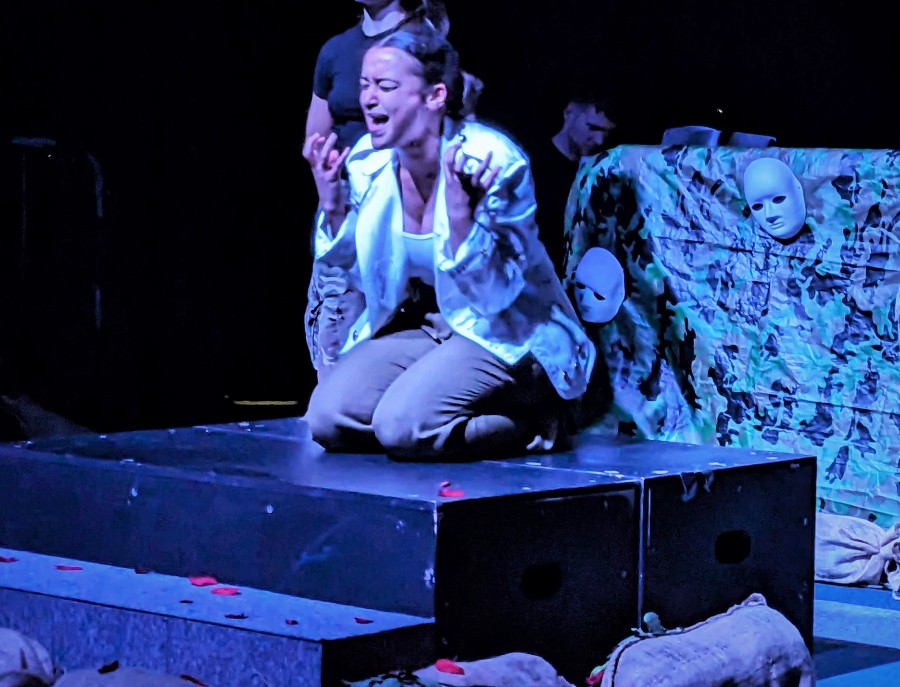
Lauren Hylton was a terrifyingly convincing Creon, who sustained a loud, ranting tone from the first confrontation with her (his) niece until the horrors at the end, when Antigone, son Haemon and wife Eurydice were all dead by suicide. They died offstage of course – which was the custom in Ancient Greece. When Creon was holding forth with Generals Leonidas and Themistocles (Ollie Woodhead and Antoni Wierzbicki) standing on either side she (he) seemed almost psychopathic as they attempted to advise their king in calmer, reasonable tones.

Haemon’s speeches were delivered precisely by Rebecca Gould, and Caitlin Gillard as Tiresias picked up well on the poetic aspects of the advice to the king, in which he is asked what glory is to be gained from defeating a corpse.
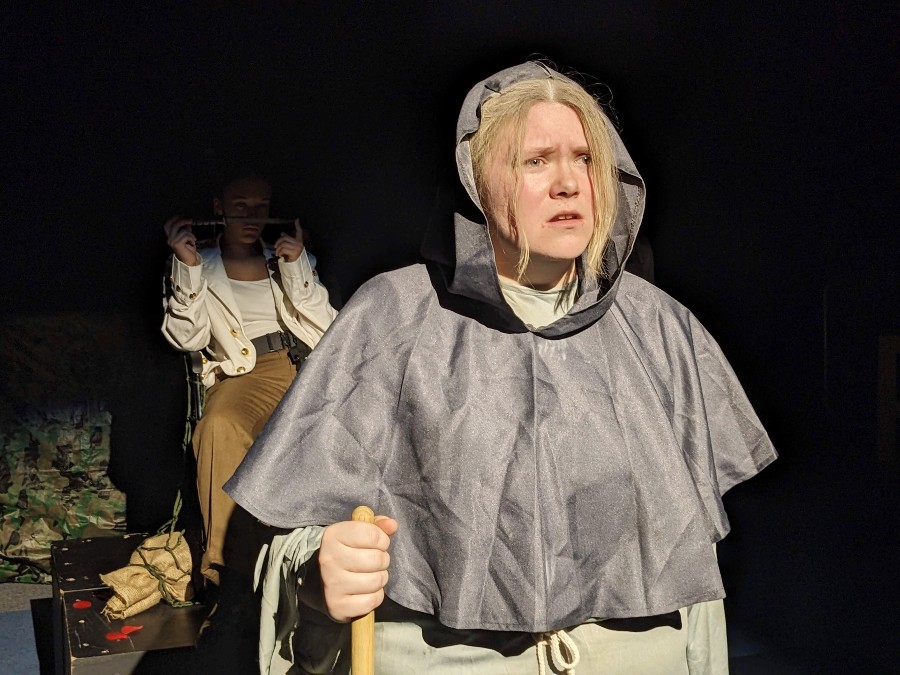
Messengers are always important in Ancient Greek drama, and the two in this production were terrific: Makenzie Skinner was a funny, cheeky soldier with a strong Leeds accent, and Anna McArdle’s emotional reporting of Antigone’s death was striking,
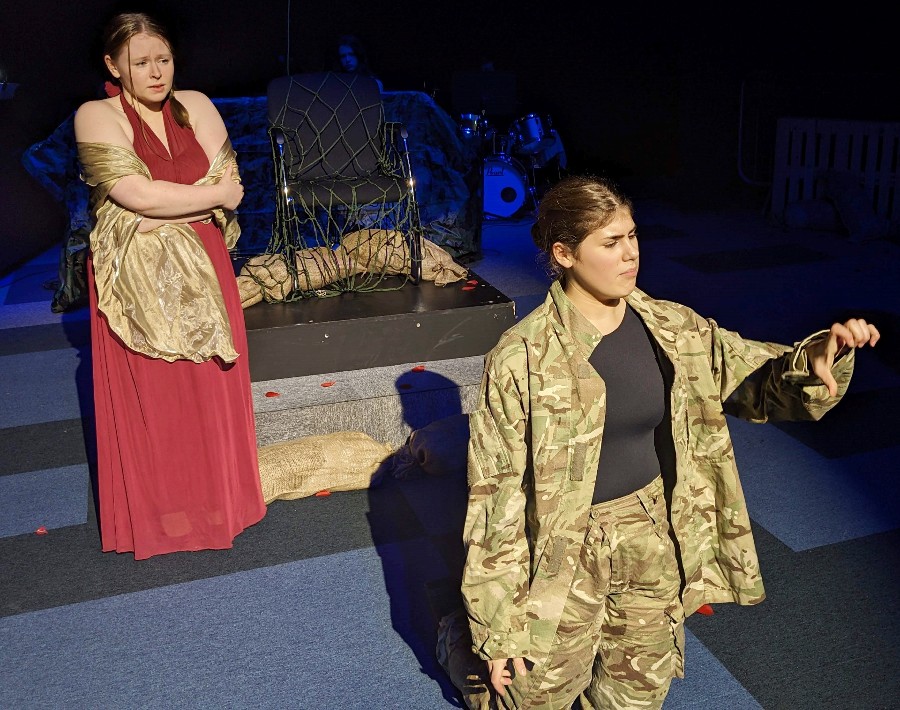
All the many members of the energetic team responsible for making this production so successful must certainly feel proud, but Head of Drama Maria Forryan should receive a huge bunch of flowers for her efforts, because she rehearsed the cast over just twenty-three scattered hours!
The Cast
Creon: Lauren Hylton
Antigone: Isobel Jackson
Ismene: Mariana Warner
Soldier: Makenzie Skinner
Tiresias: Caitlin Gillard
Haemon: Rebecca Gould
Messenger: Anna McArdle
General Leonidas: Ollie Woodhead
General Themistocles: Antoni Wierzbicki
Polynices: Marvaa Hussain
Etelocles: Grace Martin
Eurydice: Ellie Pickersgill
Chorus
Freya Briggs.
Daniel Goncalves
Andrea Minos Menlah
Aine Shaw
Chloe Wong
Rebecca Gould
Grace Martin
Makenzie Skinner
Ollie Woodhead
Neave Forster-Mayers
Poppy Martin
Flora Purdy
Ellie Swift
Caitlin Gillard
Marvaa Hussain
Anna McArdle
Antoni Wierzbicki
The Band
Musical Director: Mr Loz Barker
Vocals: Emily Carter, Andrea Minos Menlah
Guitar: Carmela Romano, Matthew Shevill
Bass guitar: Ruby Hansom
Drums: Dylan Easton, Josh Temple
The Crew
Director and Producer: Mrs Maria Forryan
Assistant Directors: Mrs Bethany Speight, Katie Haywood, Ellie-May Pickersgill
Film Director and Editor: Caitlin Mulholland
Year 13 Technical Manager: Niamh Quinn
Techie Team: Elsie Dean, Leigh Smith, Zak Sugden, Mrs Hannah Whitaker
Stage Manager: Ellie-May Pickersgill
Main image: The Chorus. All photographs provided by Elliott Hudson College.