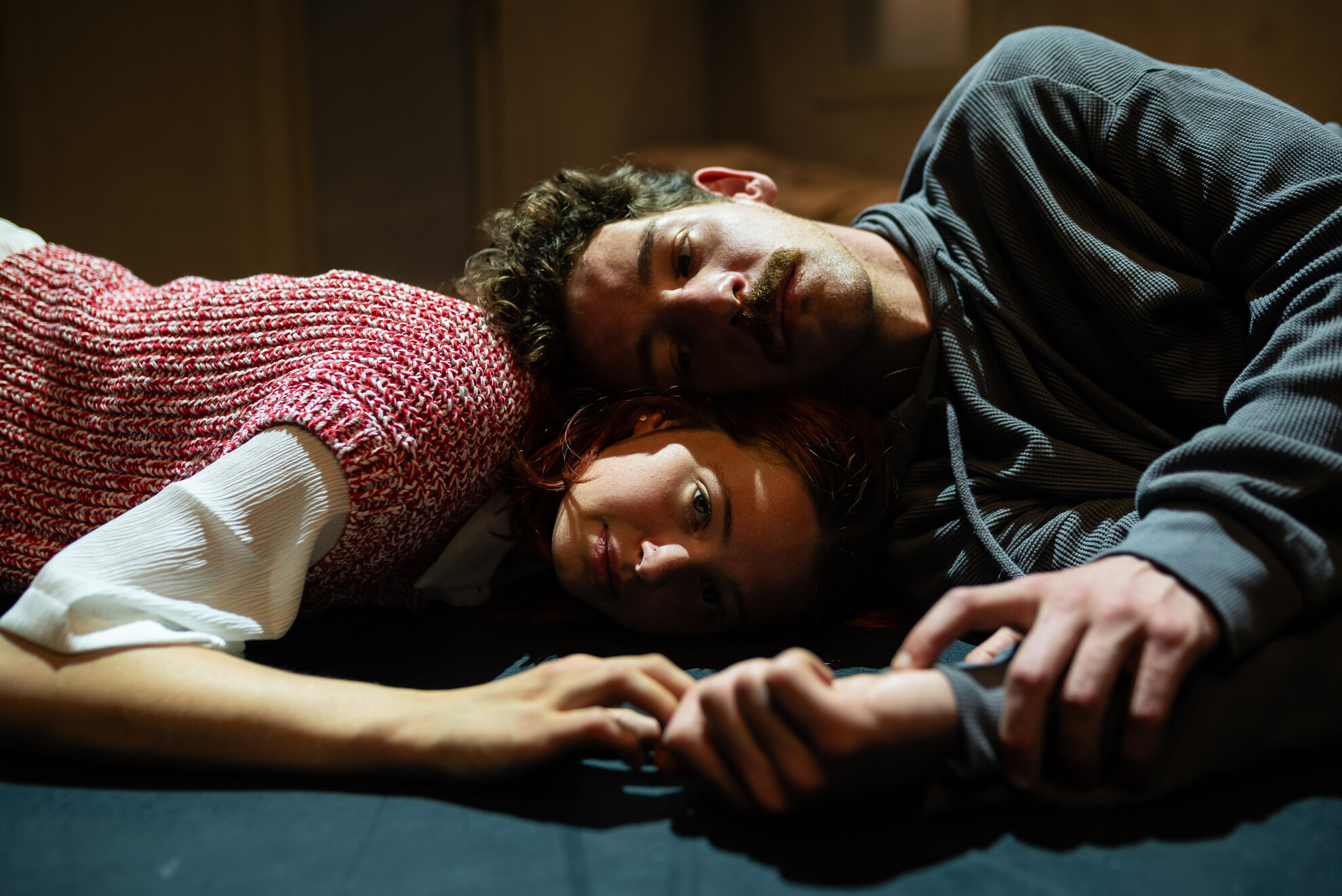
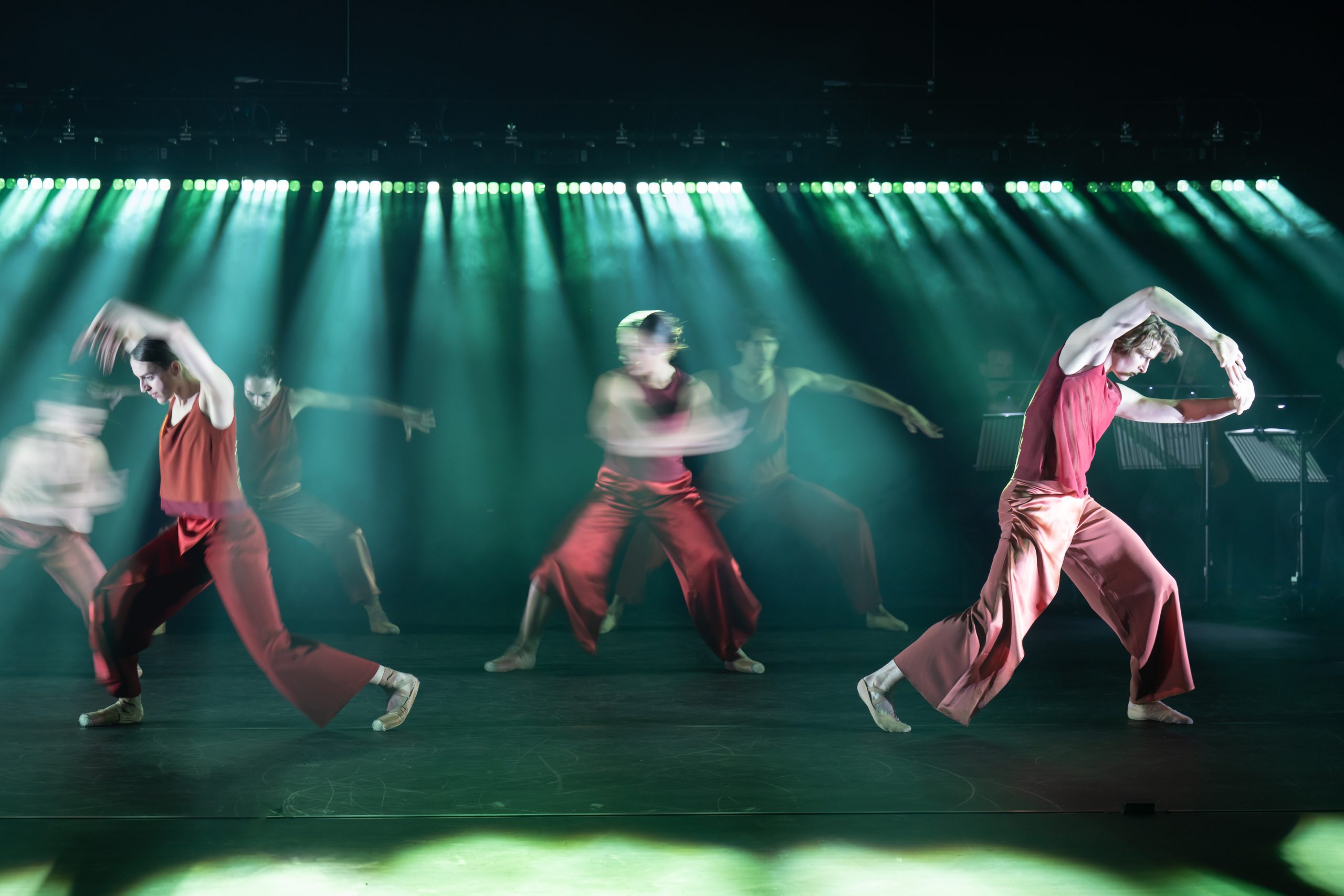
VERVE, the Northern School of Contemporary Dance’s touring ensemble, returned to Leeds Playhouse with a triple bill that embraced risk, humour and unflinching physicality.
Choreographers Luca Signoretti, Sattva Nguyen, and Bosmat Nossan presented three distinct works, moving between surrealism, emotional intensity and theatrical oddity. It was never dull.
The night began with a short pre-show by a separate group of dancers. Though it lacked the precision of the main programme, its looseness was oddly charming, presenting a raw, unpolished gesture of support that eased us into the evening.

The first main piece, Luca Signoretti’s Let Me In, offered a 27-minute exploration of authenticity in choreography. It opened with a deadpan, self-referential sequence: three dancers asked, ‘Why do I choreograph?’ and ‘What do I want from my choreography?’ The moment could have veered into indulgence, but its delivery was sharp enough to carry a self-aware humour.

What grounded the piece was the ensemble’s precision. Background performers executed tightly synchronised movements, head tilts and glances with impressive accuracy, offsetting the chaotic edge of the lead trio’s theatricality. This cohesion gave the work its spine, demonstrating real technical command.

One of the most effective images came late in the piece: underlit black umbrellas casting fractured shadows across the stage. At one point, two dancers stood in front of them, backlit, producing a hazy, mist-like glow. It was simple but visually arresting. As the dancers dropped to the floor and the lights dimmed, the umbrellas lingered, perhaps suggesting protection or a flickering sense of self amid outside noise.

If the piece faltered, it was in the sound design. The bass became increasingly dominant, eventually overwhelming the choreography. Whether a technical flaw or creative decision, the effect was distracting and at odds with the clarity of the movement.
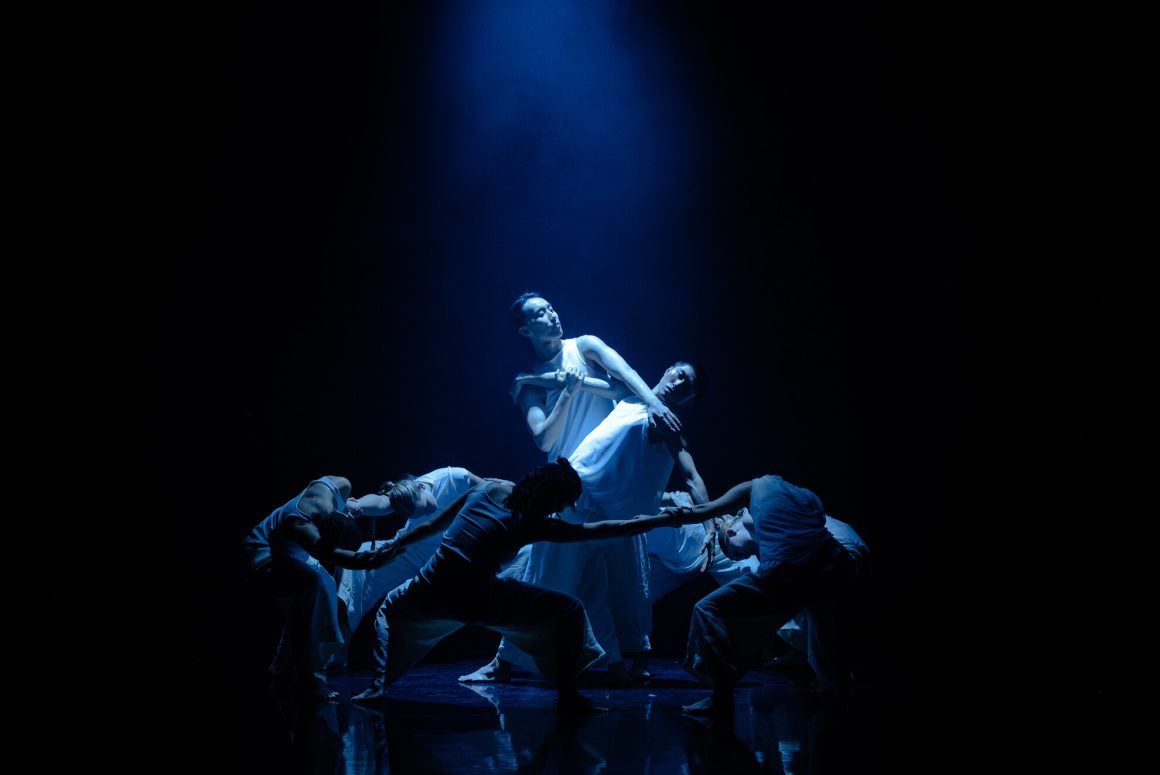
Nguyen’s Lotus followed, offering a calmer, more stripped-back interlude. Featuring eight dancers in loose white clothing and set to a pulsing electronic track, it prioritised form and image over narrative. While not as conceptually deep as the first, it provided a welcome shift in energy and a moment to breathe. Its still final tableau was quietly effective.

Then came Ro-Mass by Nossan – easily the evening’s most provocative work. It opened with dancers entirely wrapped in sleeping bags and plastic sheeting, rustling across the floor in silence before music began. Limbs slowly emerged, insect-like, creating a strange, almost alien image.
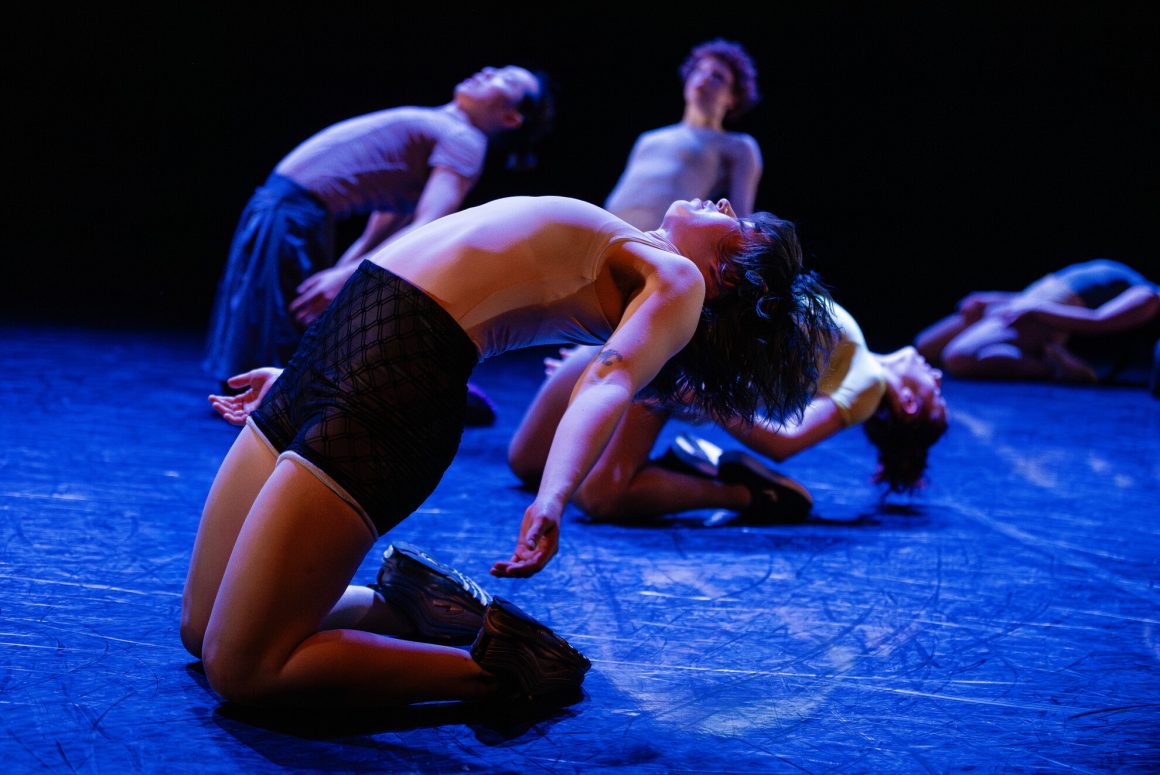
The piece claimed to explore emotional transmission, but its focus leaned heavily into the sexual. Dancers, minimally dressed, simulated orgasms, hummed in unison, and moved as a unified, pulsing mass. The imagery – grabbing, reaching, kissing — was visceral and intentionally uncomfortable. The juxtaposition of slow-motion smiling with jagged staccato movement created a surreal, occasionally disturbing aesthetic. It was visually compelling, but the intensity sometimes overwhelmed the message.
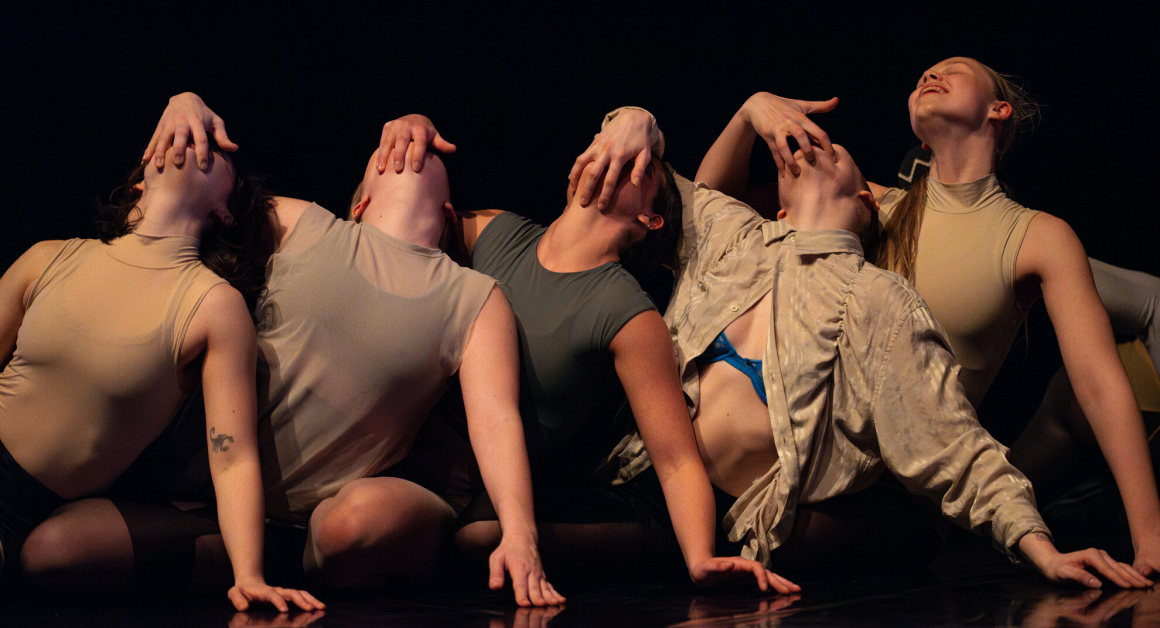
This discomfort peaked when dancers entered the audience, humming and circling spectators while movement continued onstage. It was immersive and disorientating, with the audience becoming the focus. As they reassembled on stage, walking in canon before bursting into angular formations, the shift back to choreography was a striking moment of regained control.
The most jarring scene came near the end, as dancers turned their backs to the audience and began to scream. The music surged, movements became frantic, and the atmosphere tipped into full sensory overload. My heart raced; I genuinely considered leaving. It was a deliberate provocation, pushing the audience into shared discomfort, but it teetered on the edge of excess. The use of sustained strobe lighting in the final moments, unannounced beforehand, was also a major oversight considering the potential health risks.
Despite this, I found myself drawn in by the sheer boldness of the evening. I’ve never seen dance quite like this: physically demanding, emotionally raw and unapologetically strange. The dancers were exceptional, both technically and in presence, showing maturity well beyond their years.
That said, this kind of work won’t be for everyone. It was dense, highly experimental, and carried a political and aesthetic sensibility that might alienate some audiences. But for those willing to be challenged, VERVE delivered something rare: contemporary dance that dares to confront, disrupt and reject the easy option.
Main image: Ro Mass by Bosmat Nossan.