Paula Hawkins’ best-selling psychological thriller has already gripped audiences on the page and screen. Now it takes to the theatre stage.
The Girl on the Train follows Rachel, an alcoholic who escapes the mess of her own life by observing strangers from her daily commute. As she becomes entangled in a missing person’s case, her quiet obsession spirals into something far more dangerous.
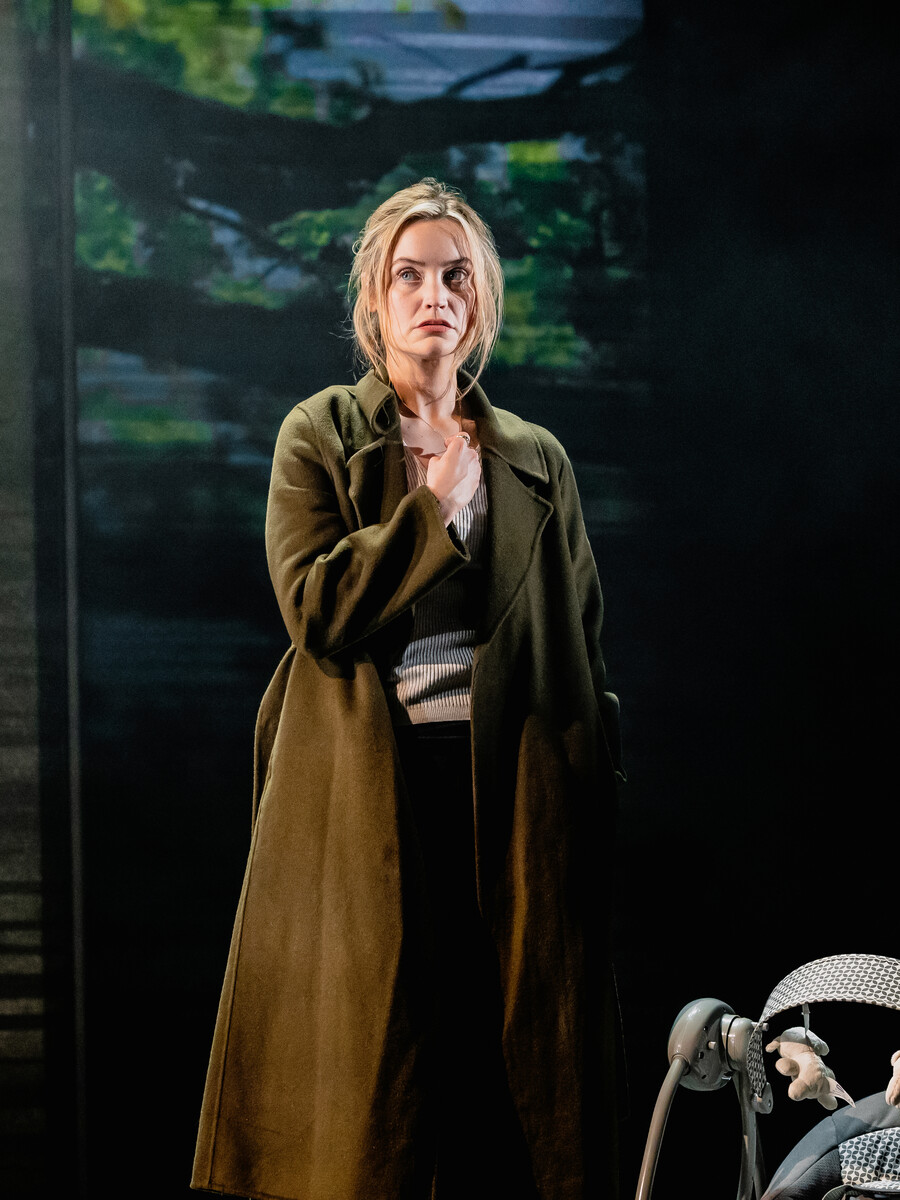
Rachel Wagstaff and Duncan Abel‘s stage adaptation remains faithful to Hawkins’ novel, preserving its timeline and slow-burning suspense. Key moments from the book are carefully retained, and the story’s structure unfolds with well-paced precision. The adaptation respects the original’s emotional core while skillfully reshaping it to suit a theatre’s audience.
The depiction of the train, which is a central motif, is handled creatively through a digital screen and a tight-knit ensemble who move in synchrony with Laura Whitmore‘s Rachel. These transitions are seamless, capturing the hypnotic rhythm of train travel. While the train arguably holds a more dominant presence in the novel, the play introduces subtle theatrical touches, such as the ensemble and their role in relation to Rachel.
Whitmore’s portrayal of Rachel is compelling. The audience is invited to share her confusion, frustration and unreliable narration.
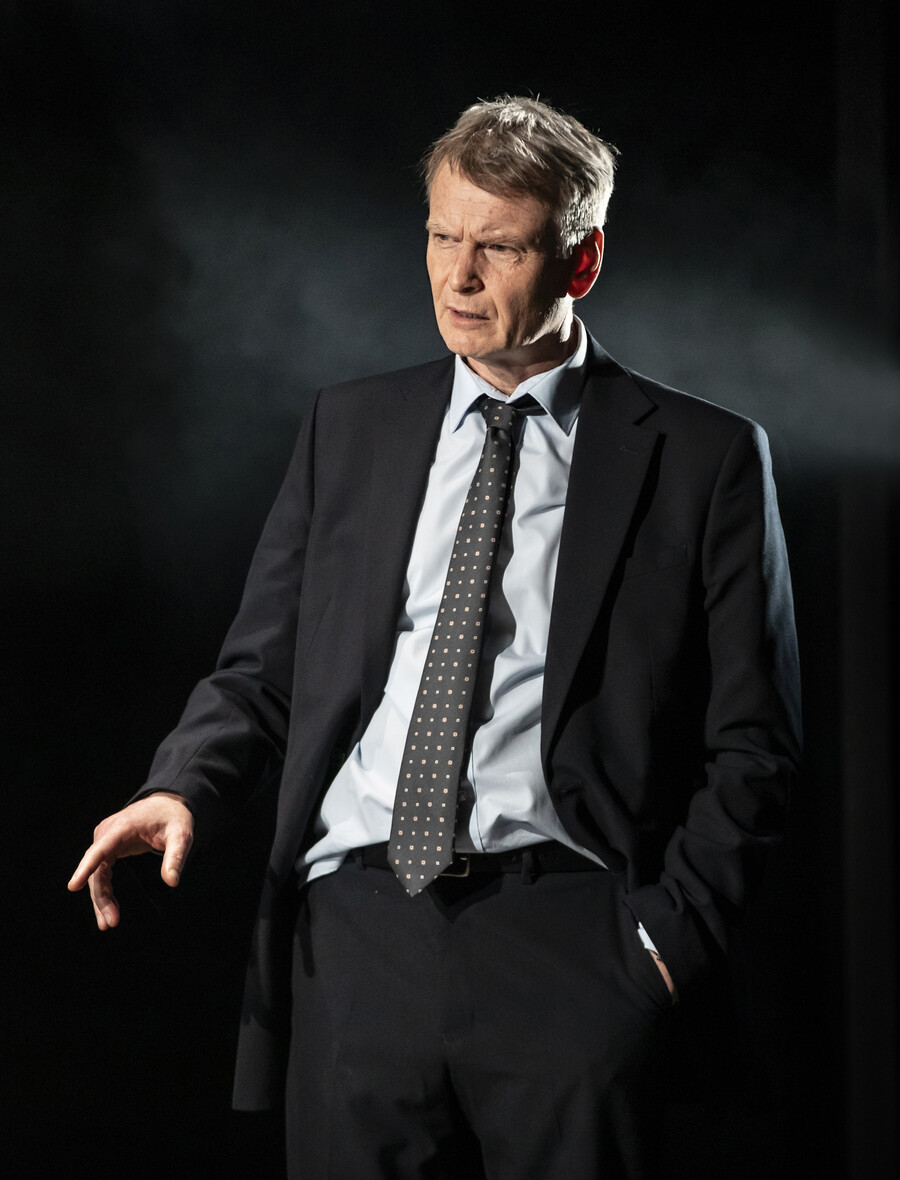
Yet, she also injects the character with sharp wit and moments of levity that stop the play from becoming too bleak. This made her character feel multi-dimensional and all the more engaging to watch. Paul McEwan‘s D.I. Gaskill also provides welcome comic relief through his dry, unfazed remarks. At first, the humour seemed unexpected given the play’s darker themes, but it was well-judged and resonated with the audience.
By the interval, speculation buzzed through the theatre. The people beside me whispered theories about the case, even though I’m sure a lot of the audience already knew the outcome. The tension remained intact regardless, a testament to the production’s effectively suspenseful atmosphere. I enjoyed closely watching Edward Harrison‘s portrayal of Tom Watson as it was especially absorbing; his character’s quiet manipulation unfolds with eerie subtlety.
As with any good thriller, the second act escalates.
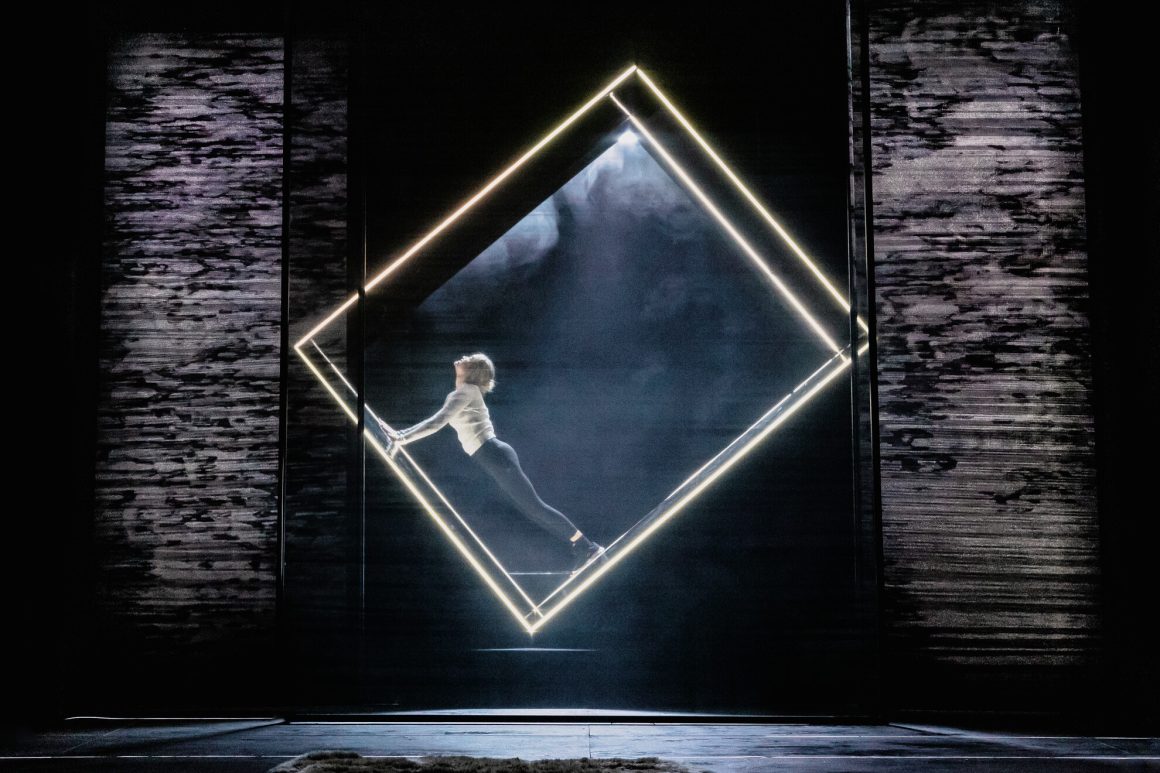
Freya Parks shines as Megan, a character shrouded in mystery and personal pain. Her monologue, delivered while seated alone on stage, was emotionally captivating. In that moment, time seemed to pause. The lighting and sound design here also deserve praise, heightening the intimacy and drawing the audience even closer to Megan’s internal world. Her recounting of past trauma was performed with stunning sensitivity, and it became a highlight of the play.
The ending was altered slightly for dramatic effect, with a starker, more theatrical conclusion. The final scene leaves a lasting impression. As the train pulls away, its sound isn’t just noise – it becomes a symbol. Rachel’s reflection feels honest. She’s not claiming to have healed or figured everything out, but she recognises the need to keep going.
It’s a poignant end to a production that blends psychological depth with visual flair.
Book tickets online atleedsheritagetheatres.com or call the Box Office on 0113 243 0808.
Photography by Pamela Raith.