Our Public House (written by Barney Norris, created and directed by Josephine Burton) is a play whose power comes not so much from what happens on stage, but from what has happened in workshops offstage in the run-up to crafting it.
Three years ago, DASH Arts began running ‘Speak Out!’ Workshops where they asked participants, activists, academics and politicians to explore the power of speech-making. Participants were encouraged to craft speeches of their own in answer to the question ‘what can we change today that will make the future better?’ It is these speeches that became the starting point, the foundation and, in turn, the power to the play ‘Our Public House.’
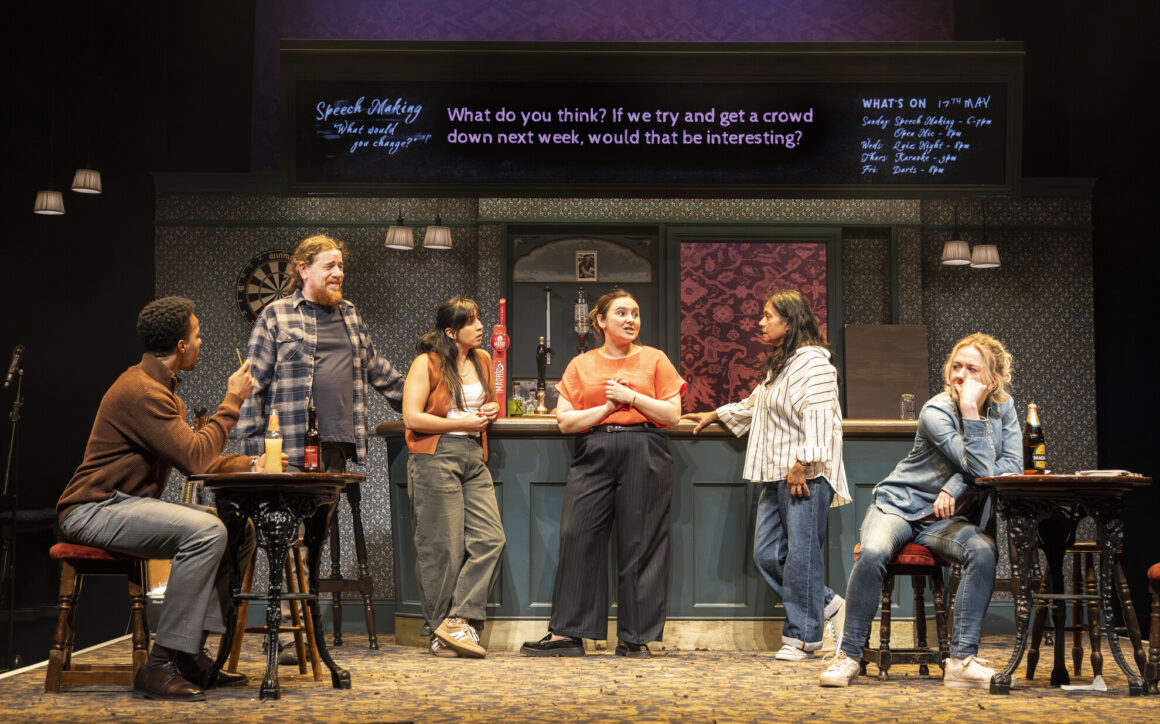
The play opens (and indeed continues) in a pub called ‘the Albion’ (this being fitting, given its meaning as the oldest known name for Great Britain) which is situated in a town where there has been a voting strike and is therefore experiencing a by-election. From here begins the unfolding of a fun, real and gently moving play exploring the lives of the town’s inhabitants. From Sanjana (played by Bharti Patel) who runs a speech-making workshop in the pub each week, to her daughter Anika (played by Chaya Gupta) who is returning home to the pub after moving out to London, to Tom and Mary (played by Kit Esuroso and Gabriella Leon respectively) who represent the political elite and are running to win the by-election to Jo (played by Lauren Moakes) and Scott (Fergus O’Donnell) who are regulars at the pub.
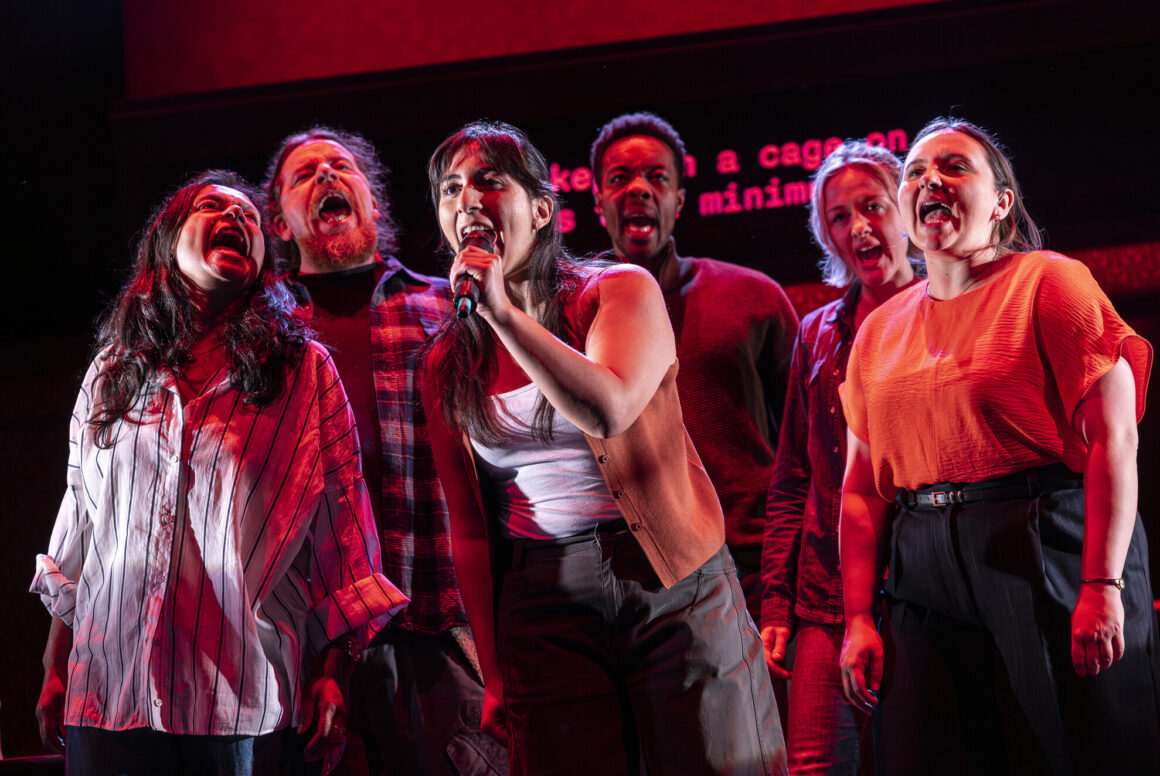
The cast break out into song at occasional intervals – both collectively (where disenchantment at the political system and anger at issues such as rent are unleashed) and individually (where each character’s back story and the context behind their political views are gradually revealed). The play’s complexity comes from the ever-changing dynamics between each of the characters – no individual character remains a hero or a villain for long but instead is presented with humanity as being a bubbling mix of things. Characters often grapple with ideas and ideals while challenging and arguing with one another (at points the fall out reaching violent levels) while ultimately being shown as loyal and united with one another, despite differences.
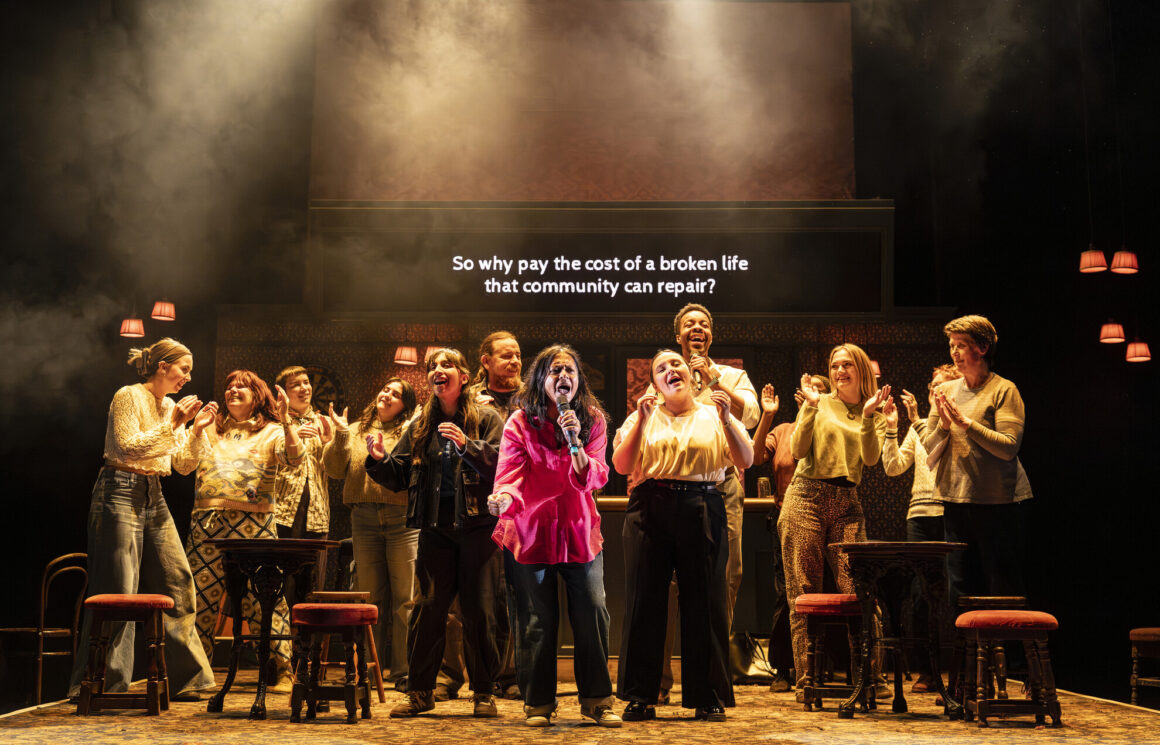
Where the play sometimes meanders along slowly, room is left for the audience to consider their own involvement with community and politics and their role in bringing about change that will make the future better.
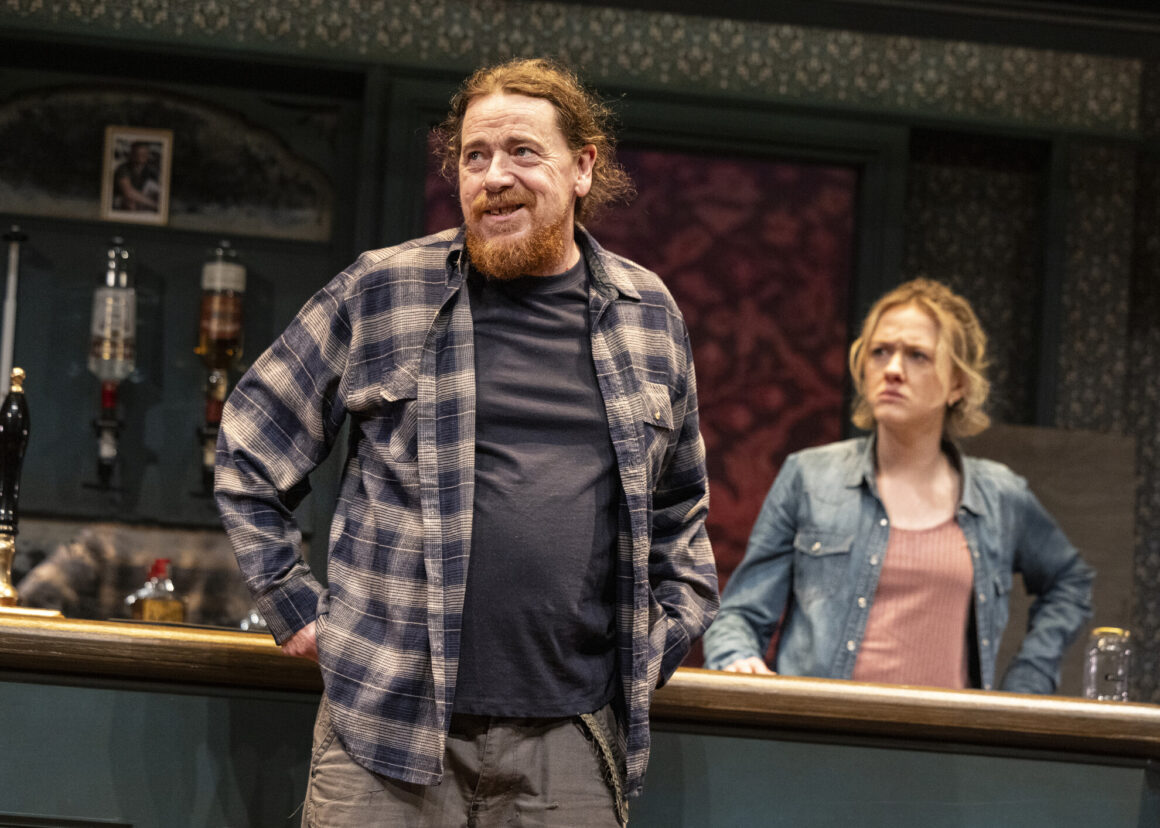
While it may not necessarily provoke a cathartic overwhelm of emotion in the moment, it is a play that will sit with the audience for a long time, gently challenging them, as they return back to day to day life, to see community, and the power of it, differently.
Main image: Chaya Gupta, Lauren Moakes, Kit Esuruoso, Fergus O’Donnell, Gabriella Leon, Bharti Patel.
All photography by Pamela Raith.