One of the most significant lines in August Wilson’s Fences is: “Some people build fences to keep people out and other people build fences to keep people in.”
Leeds Playhouse places this idea at the heart of its staging, making it an extension of the script. The set, lighting and movement of the space make visible the boundaries Wilson creates through language, gradually turning the Maxson home into a physical representation of the emotional and social restrictions that shape the family.
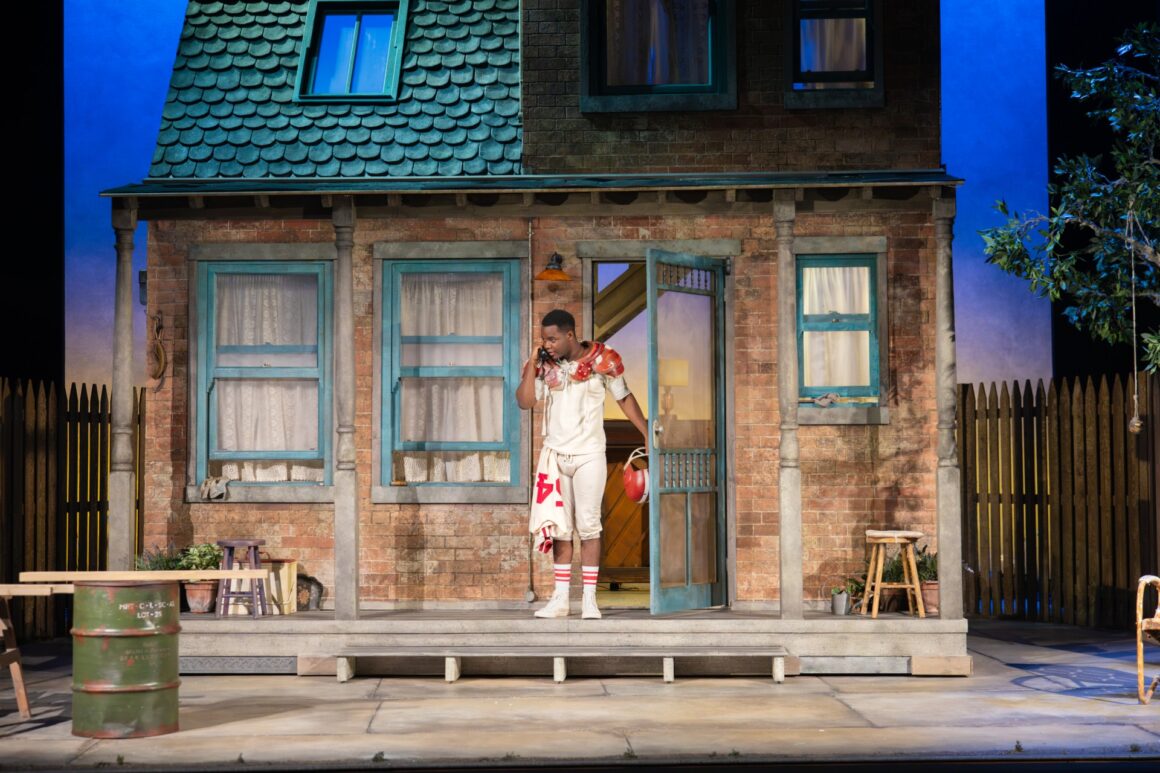
The set centres on the Maxson family’s porch, with the house looming behind it. Most of the action remains here, keeping the characters within a clearly defined space. For much of the first act, the house remains closed, rotating only occasionally to offer brief glimpses of its interior. We never fully enter it. Instead, we remain on the porch, looking towards the house but kept outside the family’s private world.
This extends the structure of Wilson’s writing onto the stage. The play begins in medias res, withholding the family’s history from the audience and forcing us to gradually construct an understanding of the Maxson’s. The production mirrors this process physically: just as Wilson keeps us outside the family’s full story, the staging keeps us outside their home.
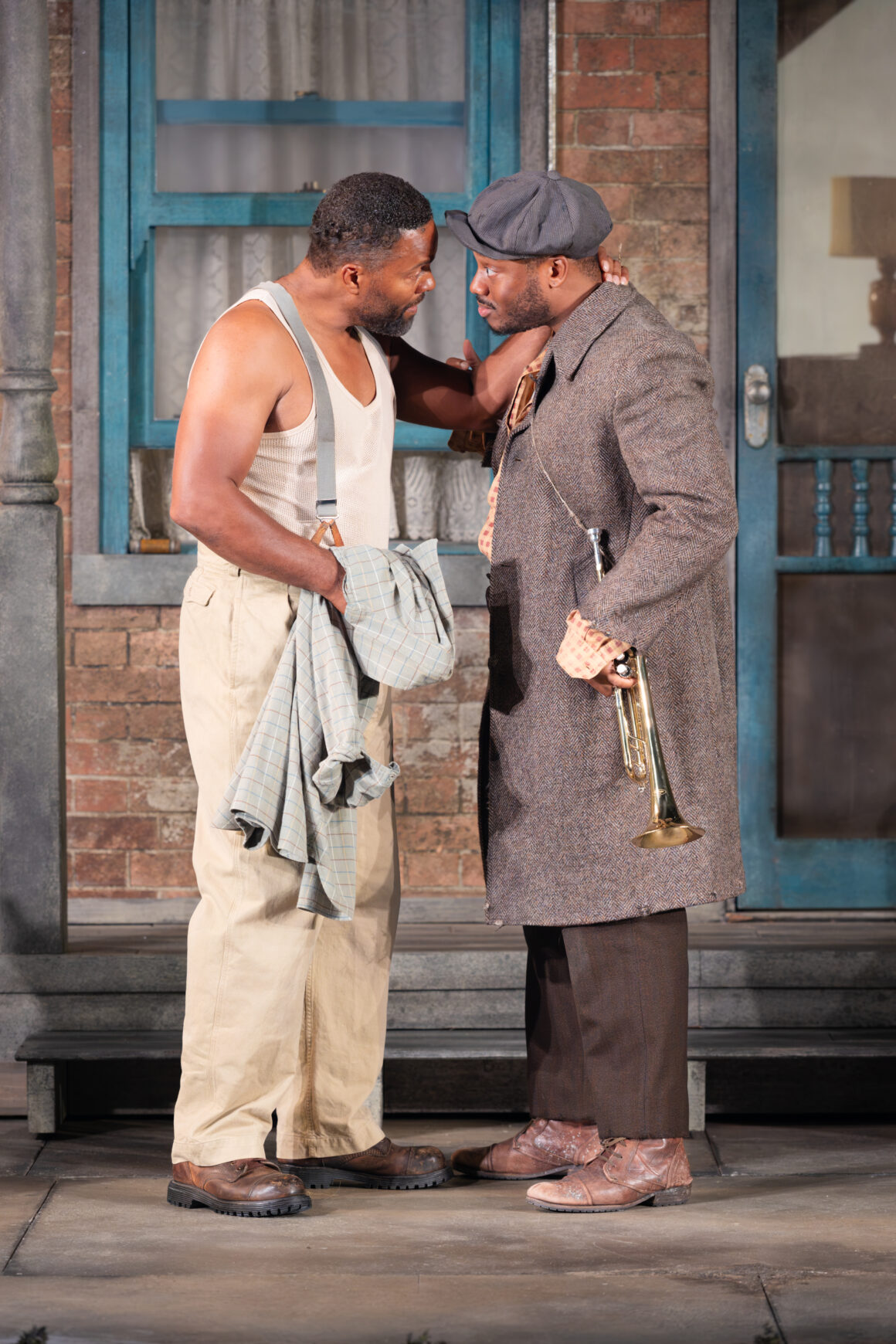
This relationship between script and stage becomes particularly effective through Troy’s storytelling. He recounts stories of his past: baseball, fighting death, meeting the devil, from the porch, while the house sits behind him. Wilson’s dialogue gives Troy a tendency to reveal himself through stories, yet the staging complicates this apparent openness. He may talk constantly, but the audience is kept outside.
The closed house becomes a visual equivalent of the things Troy cannot or will not reveal. His stories open his past while the set simultaneously closes off his present. In this way, the stage adds another layer to Wilson’s script. The physical boundaries surrounding Troy echo the psychological boundaries he creates within himself and between him and his family.
As the play progresses, our understanding of those boundaries changes. Troy’s stories begin to reveal the experiences that have shaped him: his mother leaving him, his father’s abuse, leaving home at fourteen, imprisonment, being denied opportunities in baseball and facing racial discrimination at work.
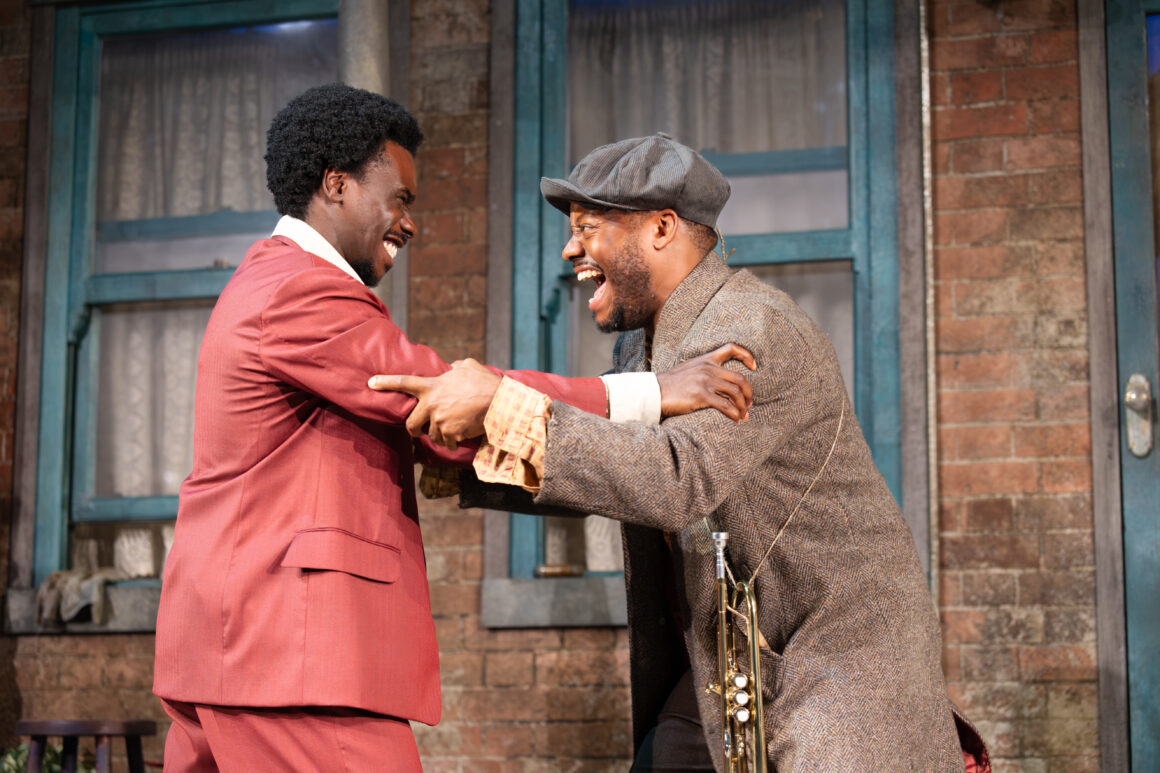
The more Wilson reveals about Troy through dialogue, the more the production reveals through the set. The gradual opening of the house therefore becomes almost a visual equivalent of the play’s gradual disclosure. As the audience is allowed further into Troy’s past, we are also allowed further into the physical space he controls.
Yet entering the house does not mean that its boundaries disappear. Instead, they become more pronounced. The two storeys and staircase are marked by bright strips of light, creating rigid divisions across the interior. The lighting effectively translates Wilson’s metaphor into the architecture of the home: there are fences everywhere. What begins as a literal fence outside the house has become a series of invisible and visible barriers within it.
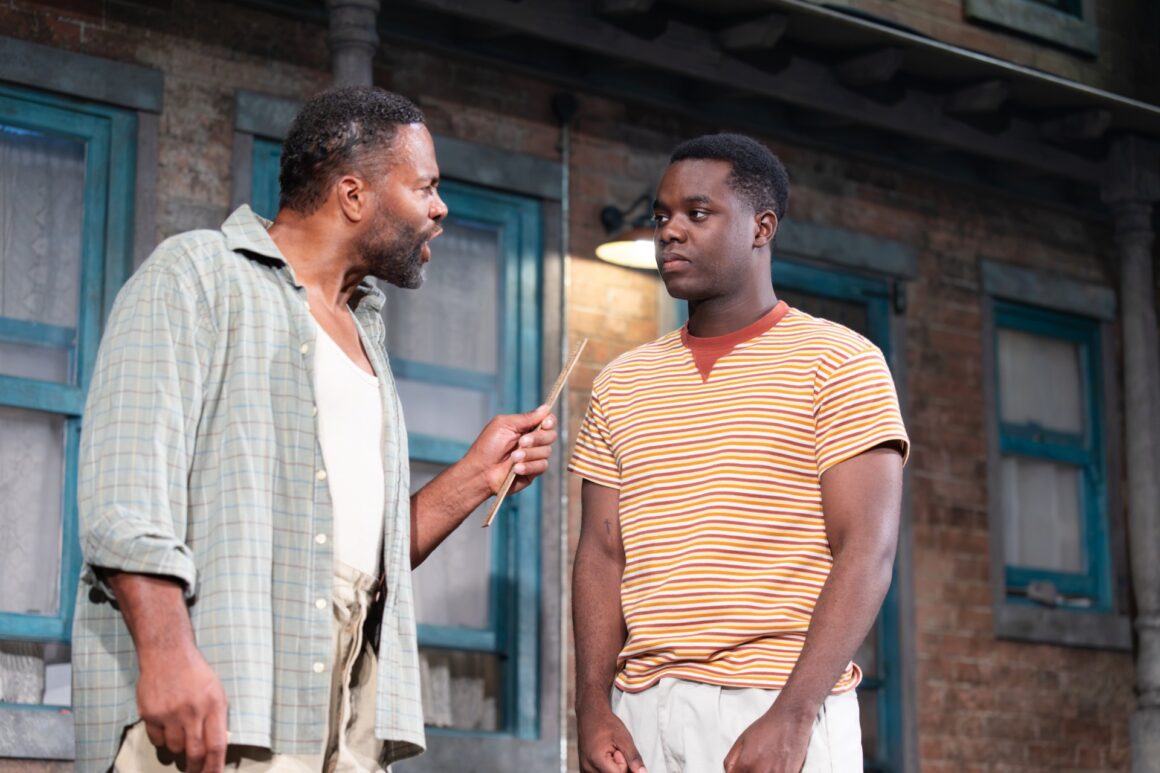
This is particularly powerful in Troy’s relationship with Cory. Troy attempts to control his son’s future, demanding that he prioritise his job over football and ultimately intervening to prevent him from pursuing a college opportunity. His own experiences of racism and disappointment have taught him to view the world through limitation, but he begins to reproduce those limitations within his own family.
The staging makes this process visible. When the house opens, harsh strips of light cut across the interior, creating hard lines through the space. They resemble fences within the home, transforming Troy’s control from something spoken into something we can physically see. The barriers imposed on Troy by the world outside have been carried into the home and imposed upon Cory.
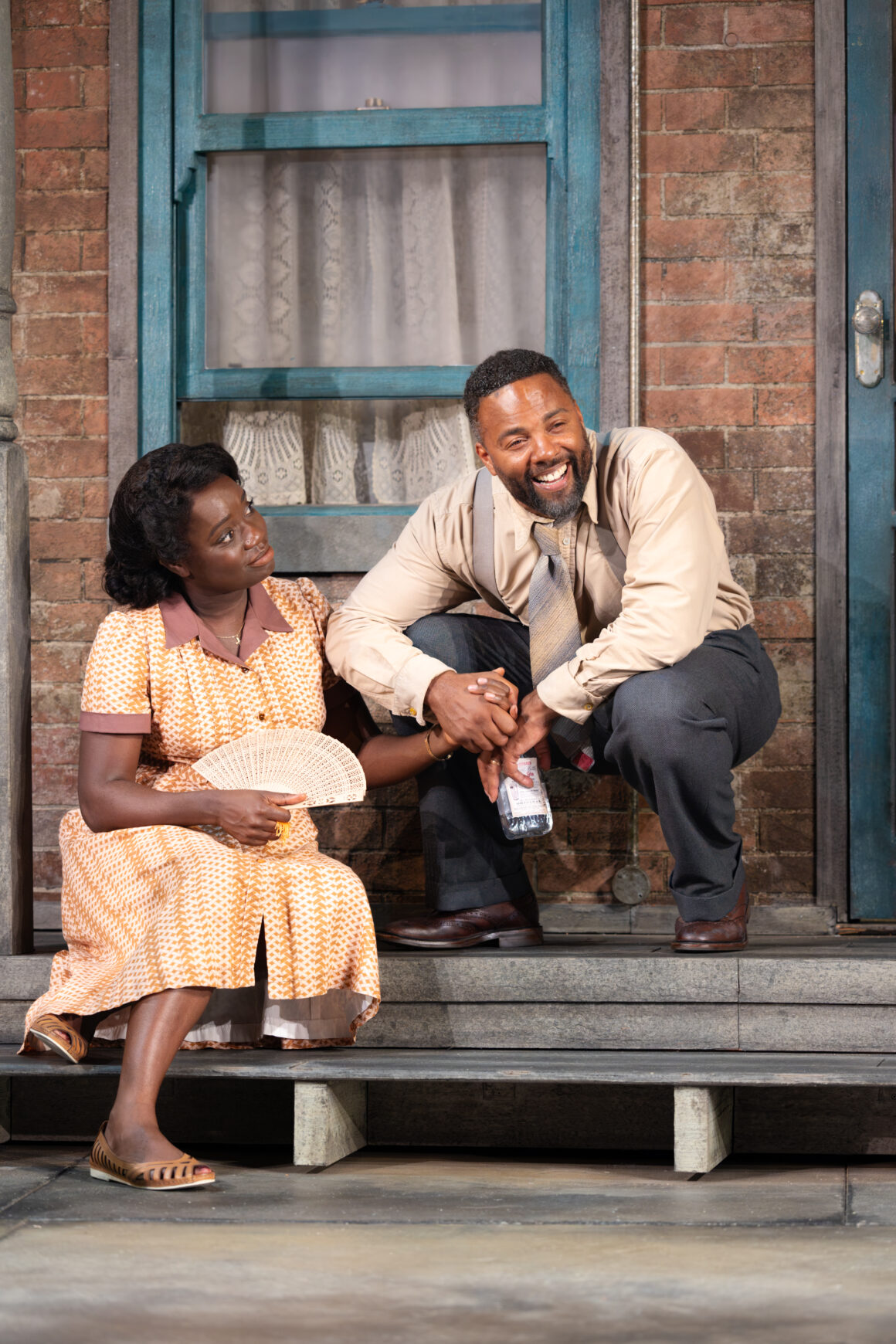
A standout element of the production is Madeline Appiah’s performance as Rose, Troy’s wife. Appiah brings a quiet authority to the role, holding her own against Troy’s much larger presence. Although Troy dominates the dialogue with his long, often rambling stories, Appiah ensures that Rose never disappears into the background. Her physical presence communicates a firmness that becomes increasingly important as the marriage begins to fracture.
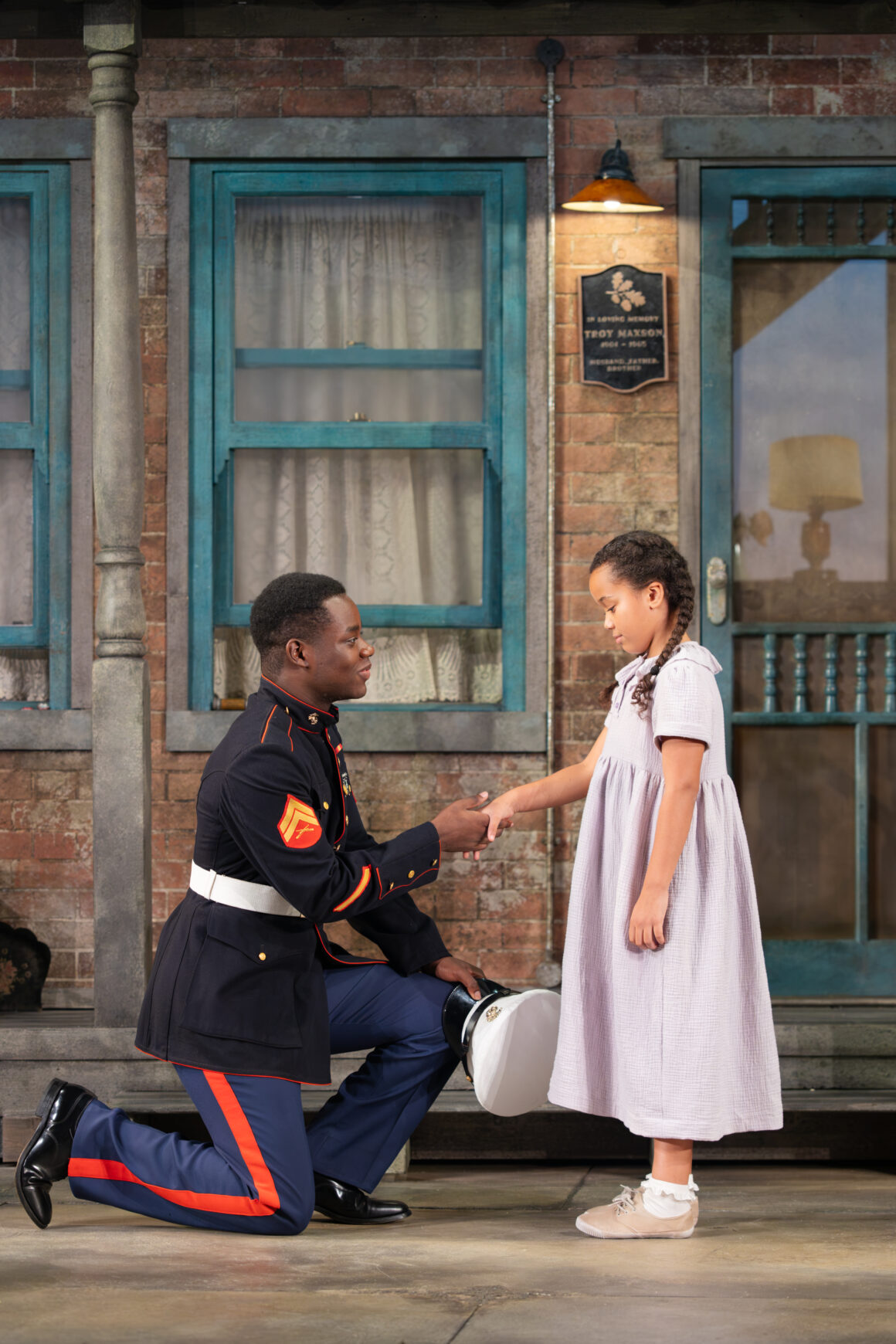
Ultimately, the strength of Leeds Playhouse’s Fences lies in the way it refuses to treat the stage as separate from Wilson’s writing. The production makes the script visible. The porch embodies the distance between the audience and the family; the closed house reflects the secrets and emotional barriers within it; and the harsh strips of light turn Troy’s control into physical architecture.
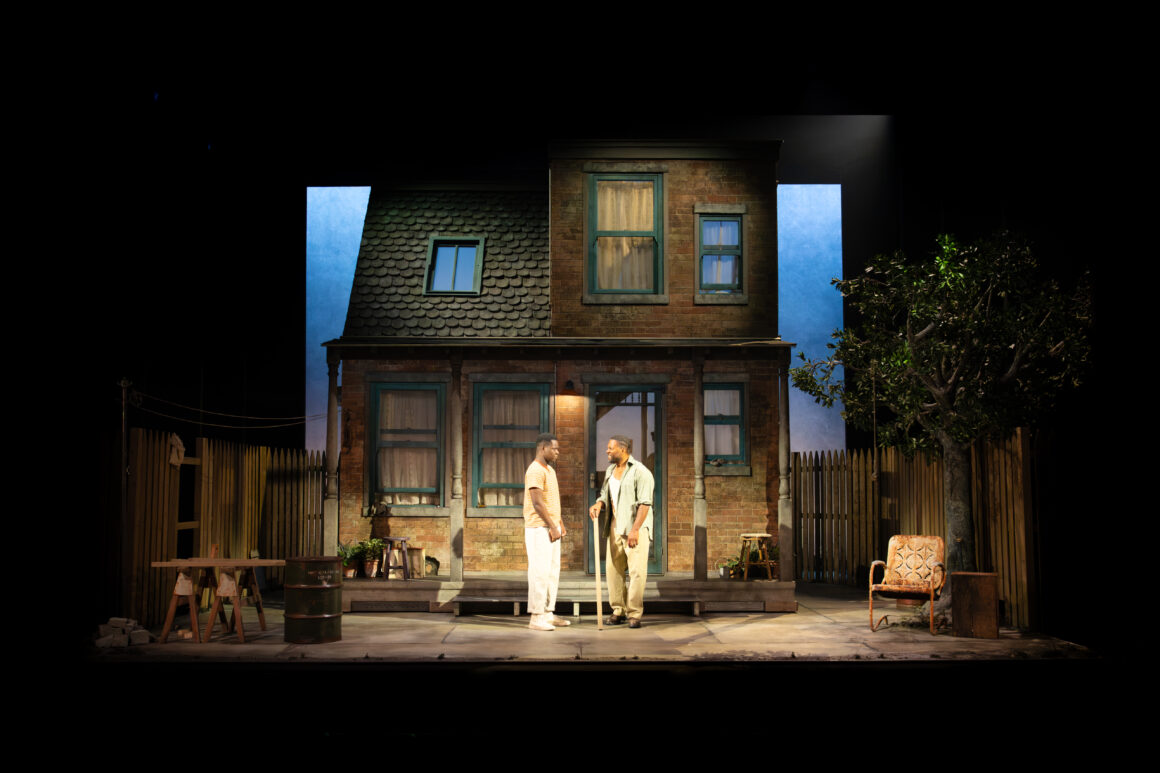
As Wilson gradually reveals the forces that have shaped Troy, the staging gradually reveals the spaces he controls. The result is a production in which the physical world of the stage becomes another form of storytelling.
Listings info
A Leeds Playhouse, Headlong, Lyric Hammersmith Theatre and HOME Manchester production
August Wilson’s Fences
Courtyard Theatre, Leeds Playhouse
11-26 September
Age guidance 12+
Book online at leedsplayhouse.org.uk
Call box office on 0113 213 7700
Main image: Madeline Appiah as Rose Maxson Everal A. Walsh as Jim Bono.
Photography by Tyler Fayose.