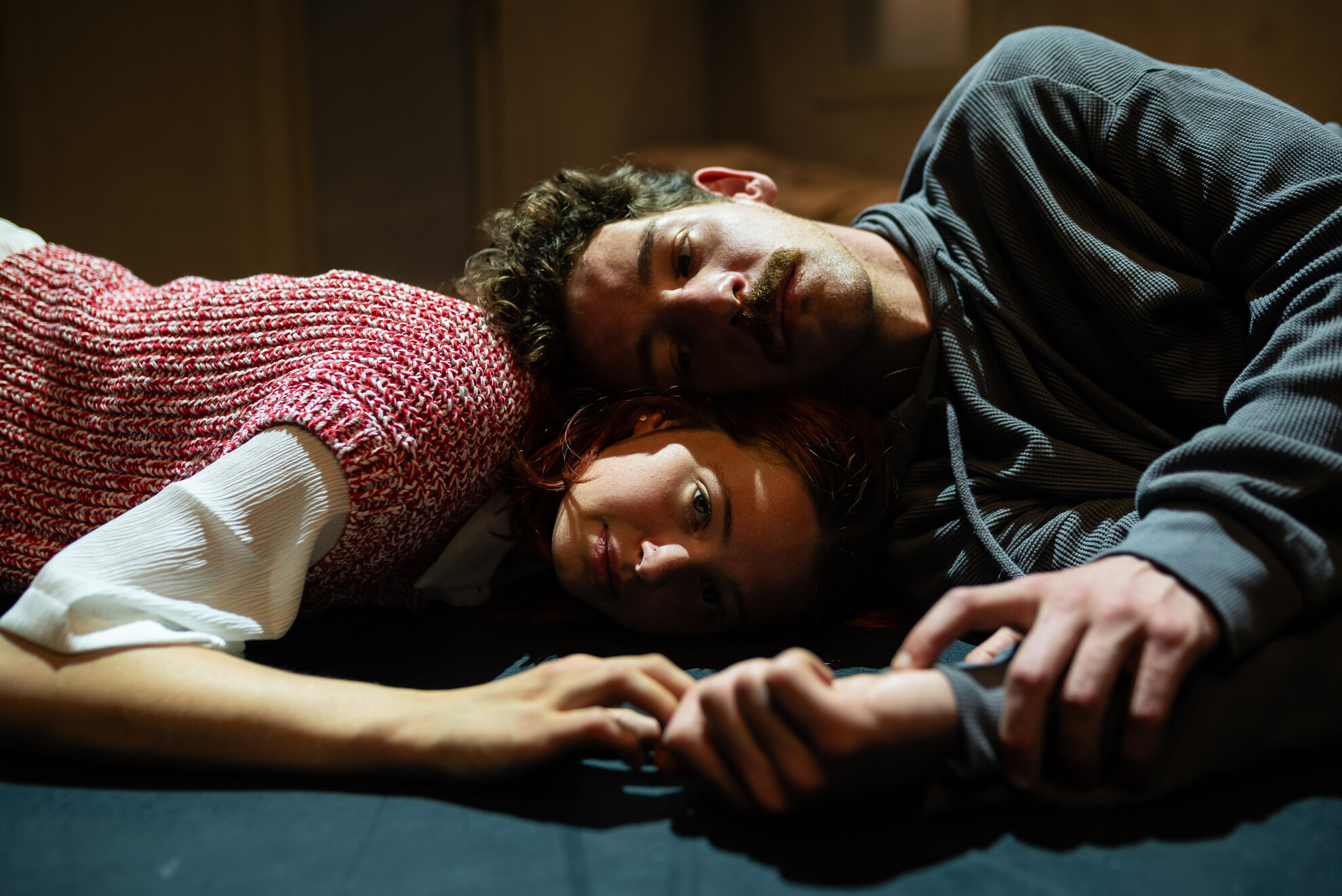
Andrew McNicol’s latest montage, Here & Now, marks the 5th anniversary of the McNicol Ballet Collective with a captivating programme of classical ballet and contemporary dance.
The montage presented a collection of tales captured through fluid movement and a minimalist underscore.
It is only fitting to begin this review with the performance that lingers both here in memory and now in emotion, ‘Of Silence’, a duet danced by Winnie Dias and James Stephen to Latvian composer Peteris Vask’s choral setting of a prayer by Mother Teresa.
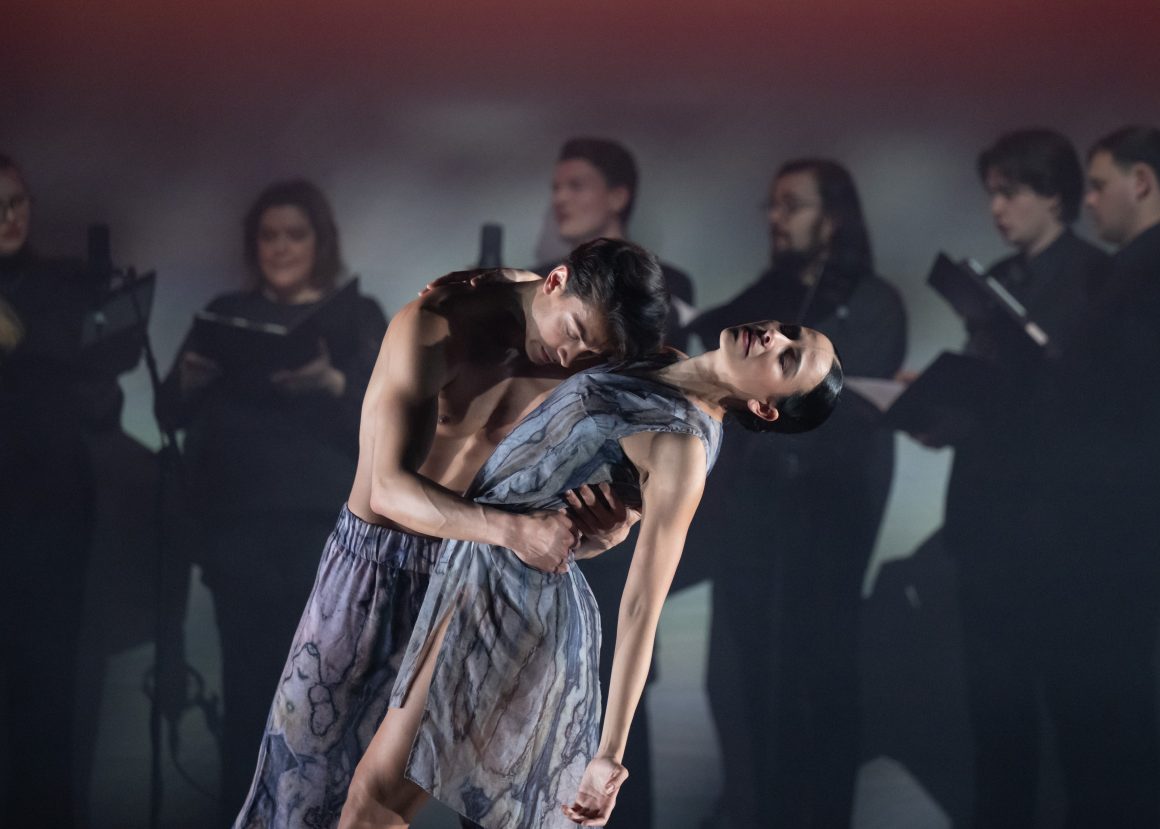
While previous performances featured live accompaniment by the VOCES8 Choral Ensemble, this rendition did not include the live choir. The choral recording, however, served to enhance the dancers’ movements and encourage focus on their performance.
The piece unfolds as a meditative journey with elongated movements suggesting yearning, punctuated by gentle lifts and precise angles that perfectly complemented each partner’s form. Particularly effective was Stephen’s deliberate stillness throughout much of the performance. His contemplative presence provided a compelling contrast to Dias’ fluid expressions. This dynamic culminated beautifully at the dance’s conclusion, when Stephen, positioned with his back to the audience in statuesque repose, became a distant focal point, while Dias embraced the viewers with an angelic posture and outstretched arms.
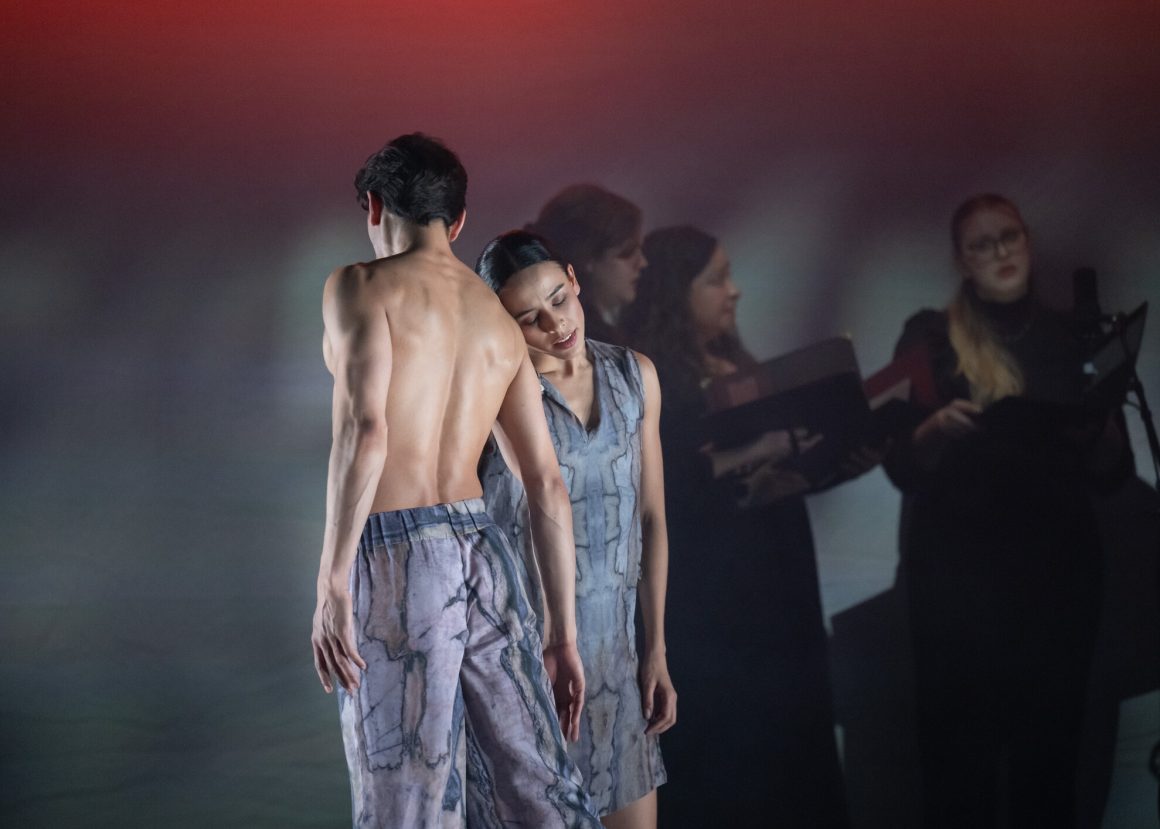
Compared with the intersecting lanes of light seen in ‘Liquid Life’, Yaron Abufalia’s ambient chromatic blue and red lighting in ‘Of Silence’ created an evocative backdrop – the blue light conjuring a sense of melancholy, with the red suggesting desire or passion, simultaneously fulfilled yet somehow lost or emptied by the performance’s end. Among all pieces in the collection, this was the one that brought a tear to my eye. The beauty of the performance was undeniable and this pairing of dancers deserves lasting recognition.
In striking contrast, the opening dance, ‘Bates Beats’, delivered pure exuberance. The movements were buoyant and ethereal, perfectly complementing the music’s sprightly, urgent rhythm. The choreography evoked the energy of a theatrical stage-show, with each dancer or pair executing slightly different motions around the central performer. Here, McNicol’s talent for live composition truly shone – watching the performance, one could imagine his directives during rehearsal, animating the scene in a manner simultaneously vibrant yet precisely controlled.
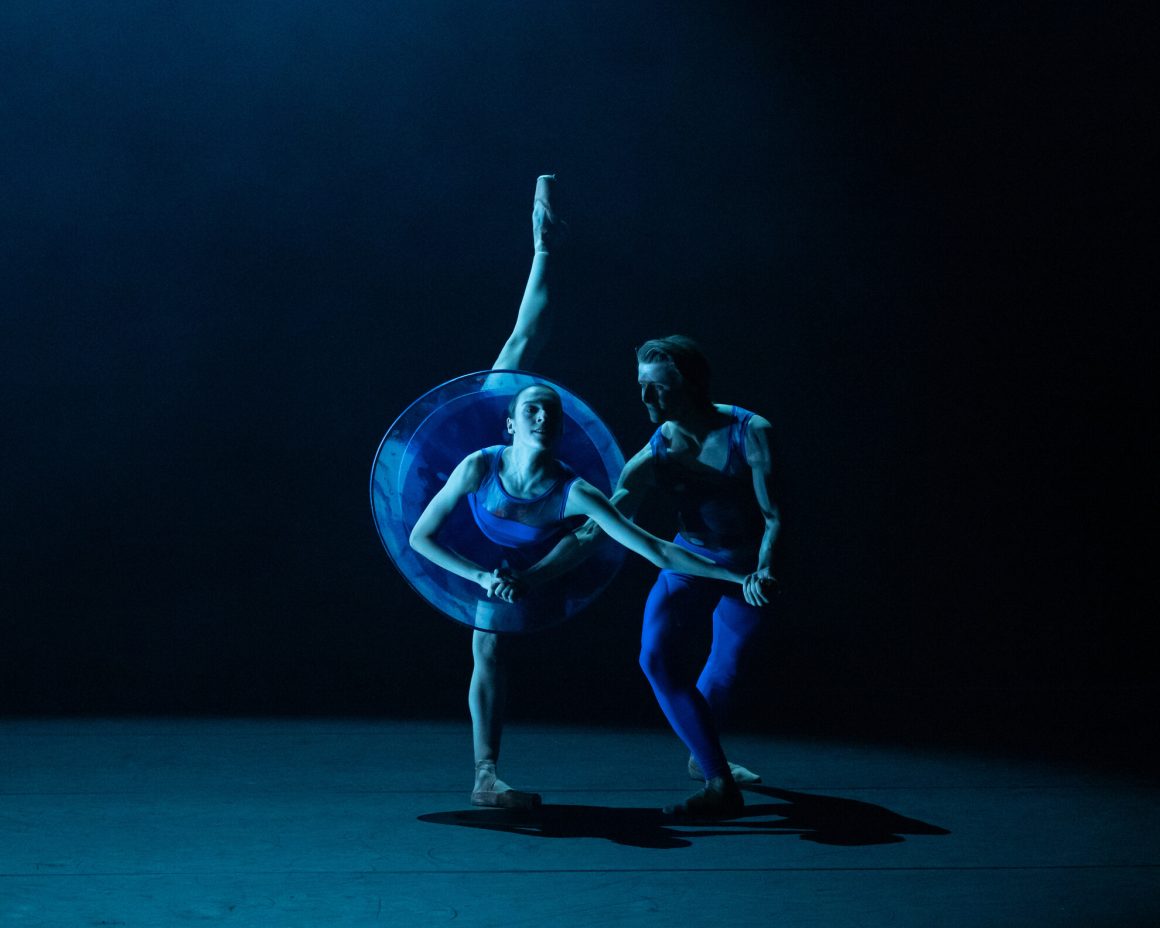
Louise Flanagan’s modern interpretation of the tutu, with its disc-like colourful design, brilliantly enhanced the vivacious feel of this opening sequence. The innovative costume seemed almost animated, folding and bending in perfect synchrony with each swirl and lift, creating the impression that the skirt was performing alongside the dancer.
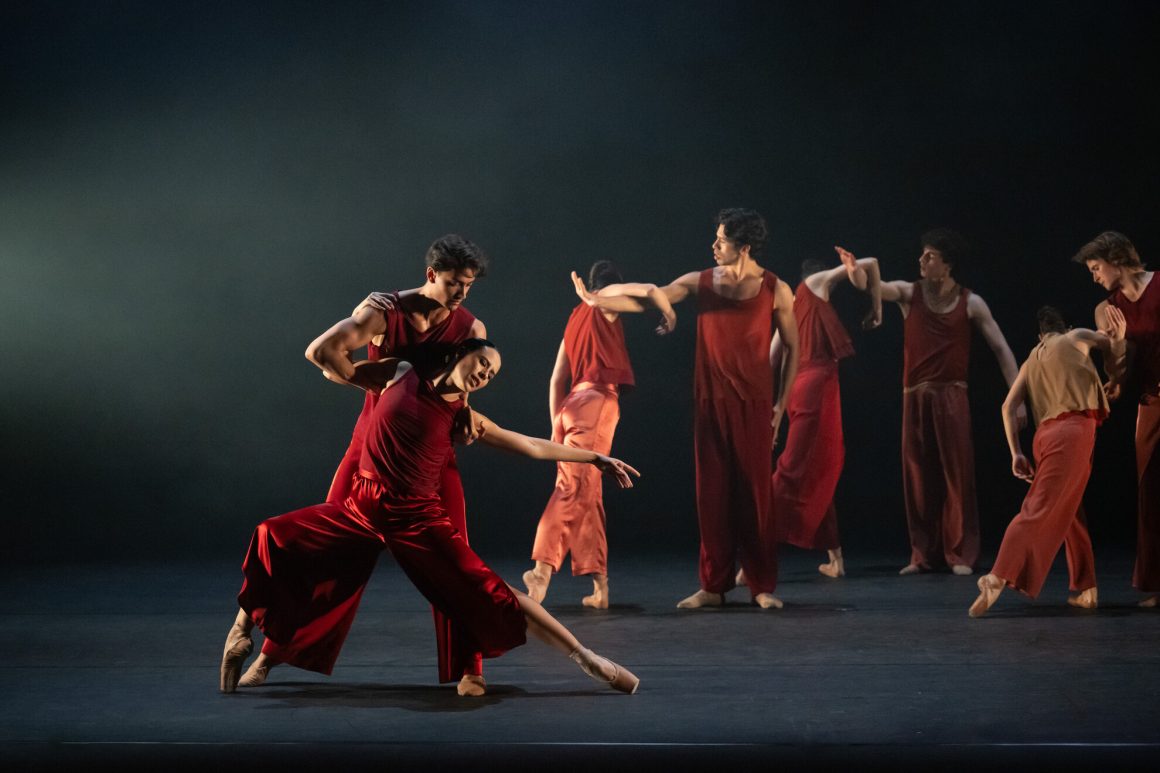
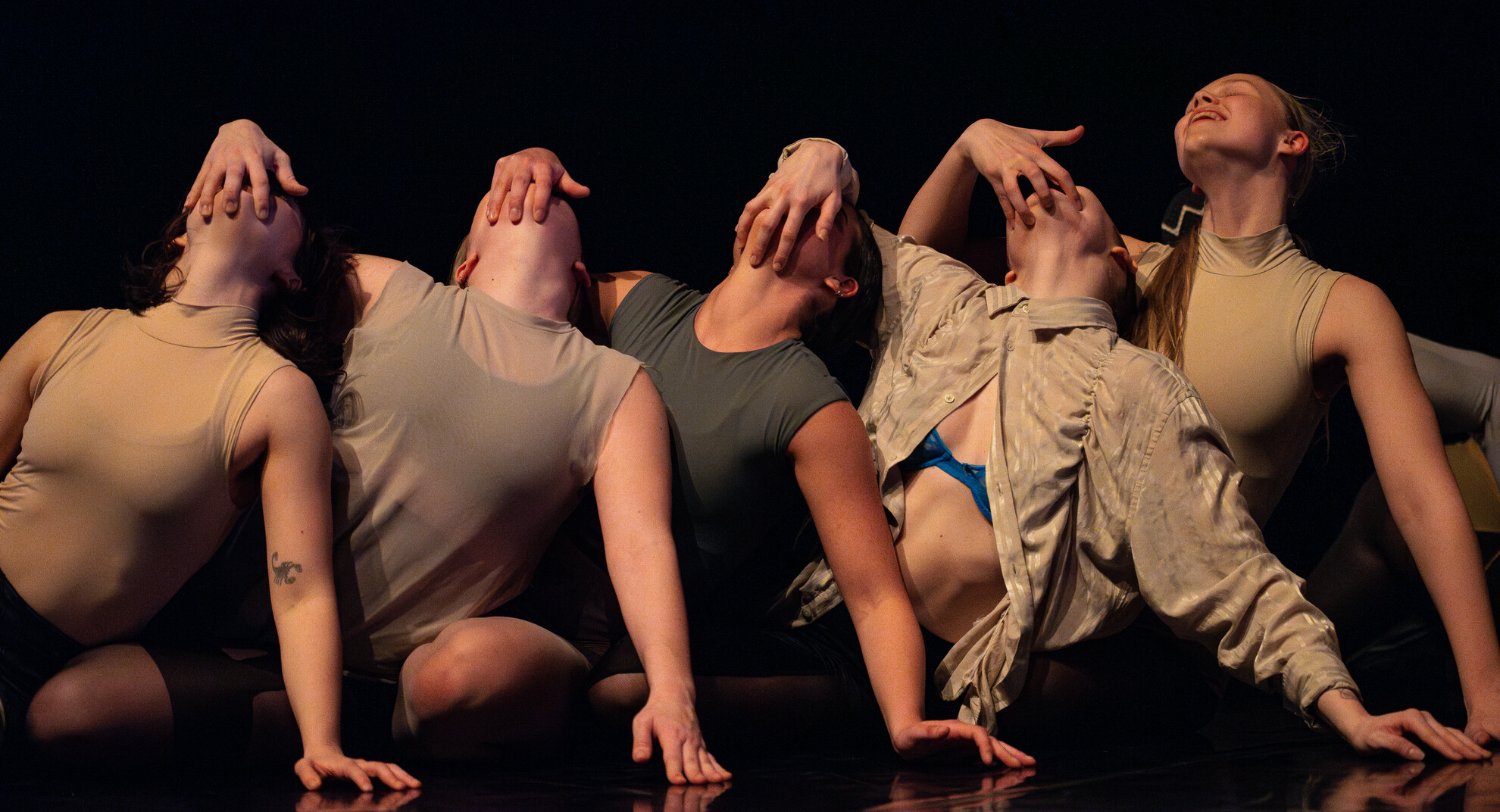
Following the behind-the-scenes film of the second half, which could have benefitted from introducing more of the dancers, we arrived at McNicol’s latest work, ‘Liquid Life’. The lighting design proved exceptionally effective in this performance. The stage transformed into a mesmerising grid of light beams, intersecting lines and patches of darkness. Particularly intriguing was the choreographic choice to position dancers within the shadows while others appeared almost imprisoned by the boundaries of light. This visual tension, combined with the music’s insistent, repetitive beats, conveyed a profound sense of suffocation and urgency as the dancers moved through and against these defined spaces.
As someone who has never performed ballet but has gained a deep appreciation for those who move with such fluid grace – having always identified as a street dancer myself – this show was nothing short of revelatory. There were some sections in the performance, particularly the jagged static bops or canons, that resonated with my experience as a street dancer and which I appreciated for their incorporation with classical ballet created something totally fresh and captivating.
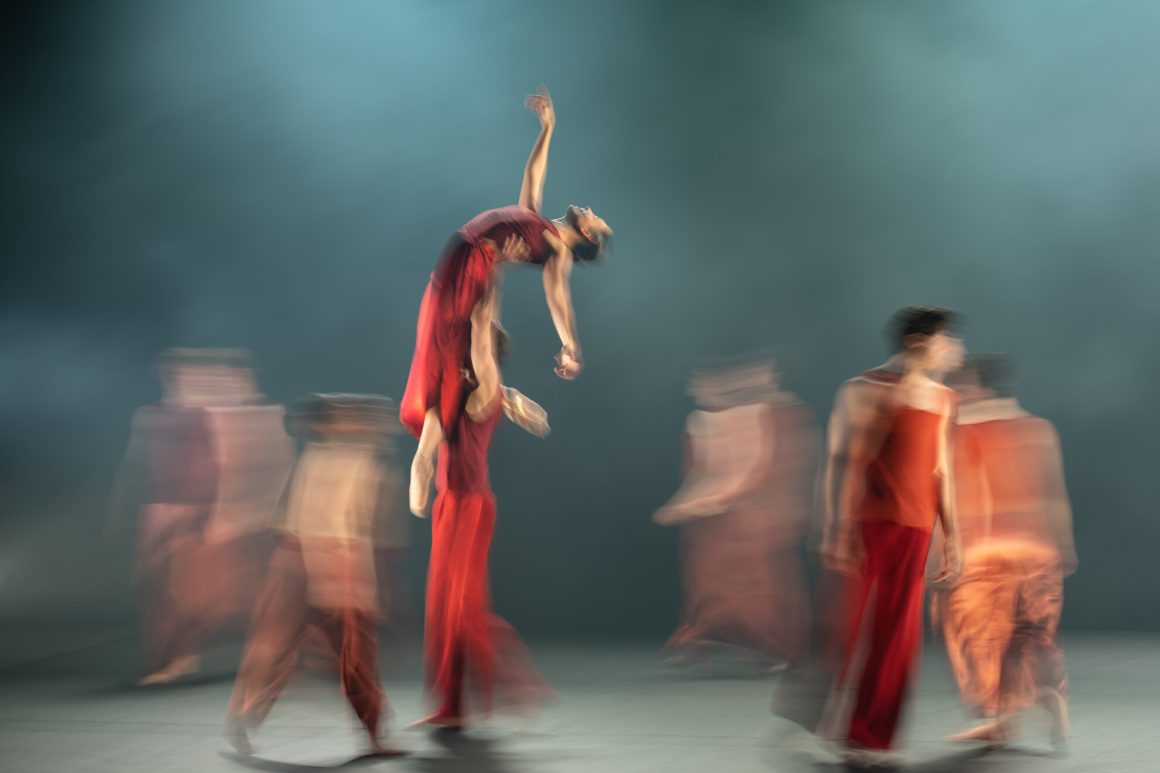
Liquid Life. Photograph by ASH
McNicol’s choreographic vision thrived on moulding and reshaping classical ballet into something revelatory, emotionally enthralling and fluid, just like the shape of life itself. Connections were made between dancers, then intimately lost, and simultaneously, connections with the audience that we yearned to restore at the show’s conclusion. I define this as the mark of truly successful dance – when the performance ends and leaves you longing for more, persisting even after the curtain fell, when I left the theatre inspired to attempt ballet movements myself!
McNicol’s collection speaks with such clarity and emotional resonance that even those unfamiliar with ballet’s technical vocabulary will no doubt be pleased they witnessed Here & Now.
Main image: Liquid Life. Photograph by ASH.