“It was a joy setting those heavenly words,” Britten was to write shortly after the June 1960 premiere of A Midsummer Night’s Dream.
Though having to make cuts to create a manageable musical evening from the source play, he and partner Peter Pears had not tampered significantly with the original Shakespeare text. Indeed, the pair, having just commissioned work to “make … a proper little Opera House” out of Aldeburgh’s tiny Jubilee Hall, were suitably attracted by the time-saving “essential advantage of having a libretto ready” for a piece destined to celebrate the venue’s forthcoming re-opening.
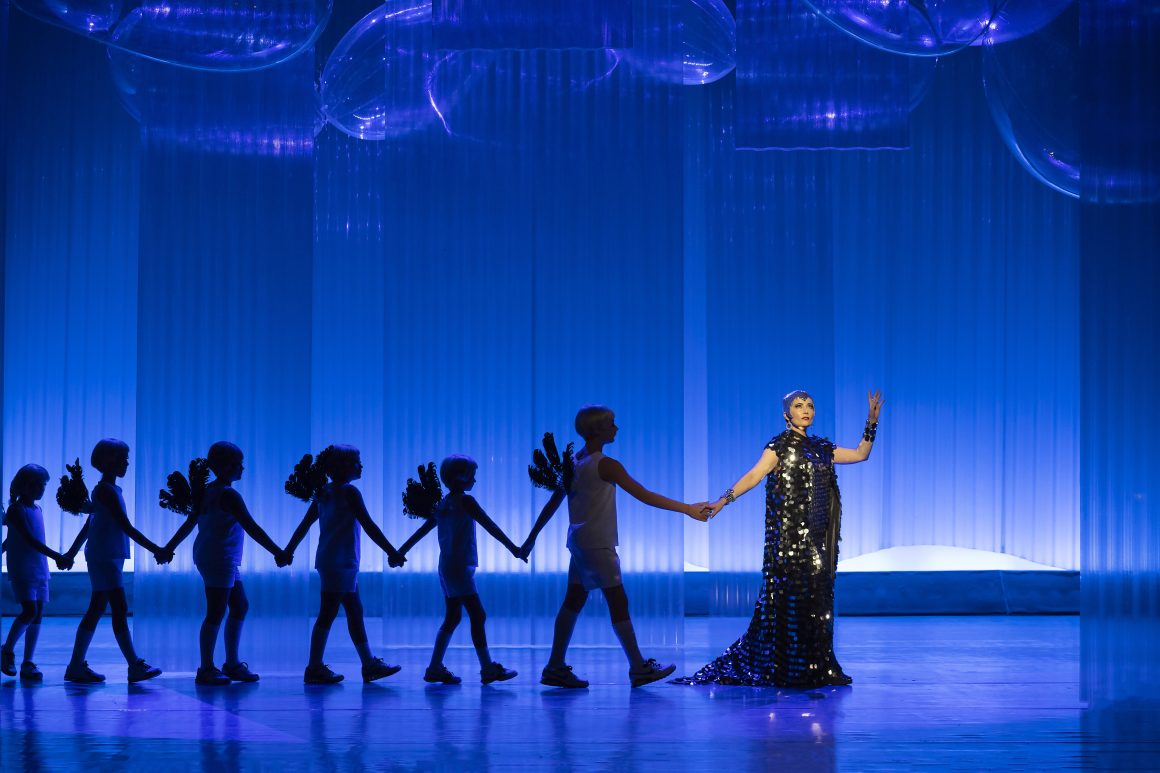
Not that there is anything rushed or perfunctory in Britten’s adaptation. The music cleverly embodies the three distinct groupings interwoven within the drama – the lovers, the rustics and the fairies.
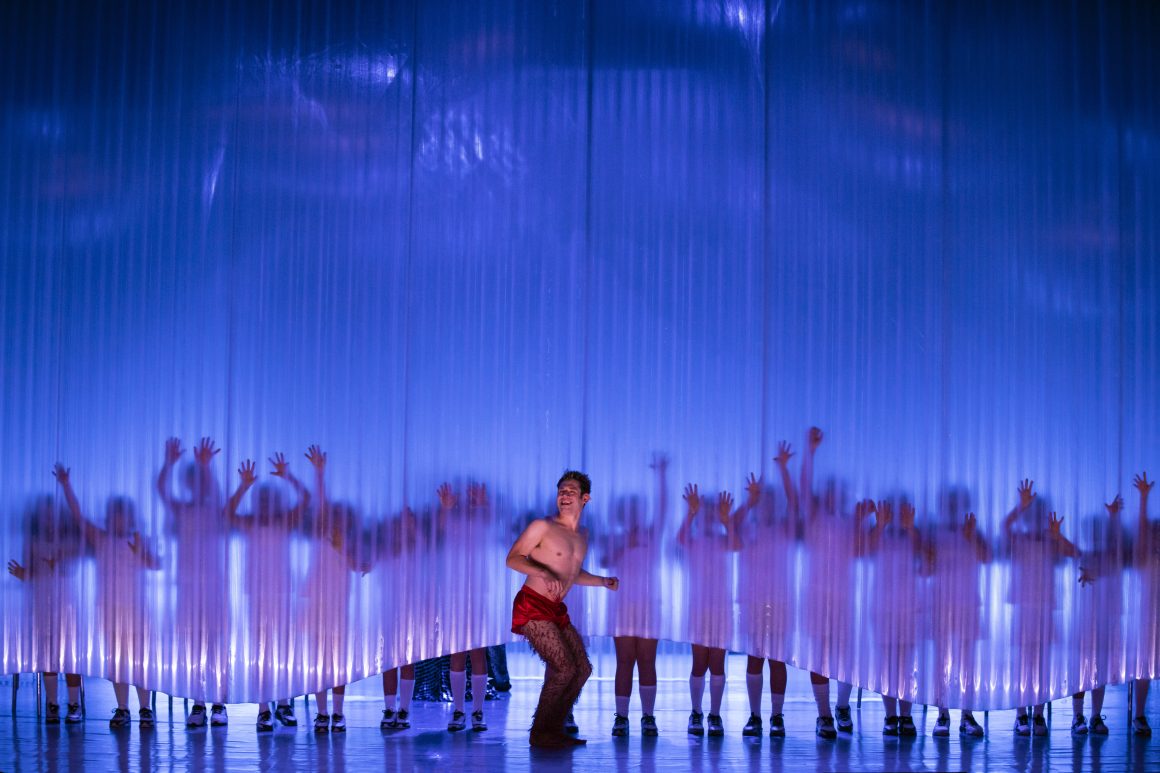
Johan Engels‘ remarkable set of lofty balloon canopy and corrugated perspex uprights is figuratively arboreal, yet transformed at curtain up from shrouded, mystical aether to the drama’s enchanted wood by Bruno Poet‘s magical lighting.
Britten’s unsteady, sliding string chords, in the rhythm of a sleeper’s breathing, inform us that what we see and hear hereon is to be the stuff of dreams …
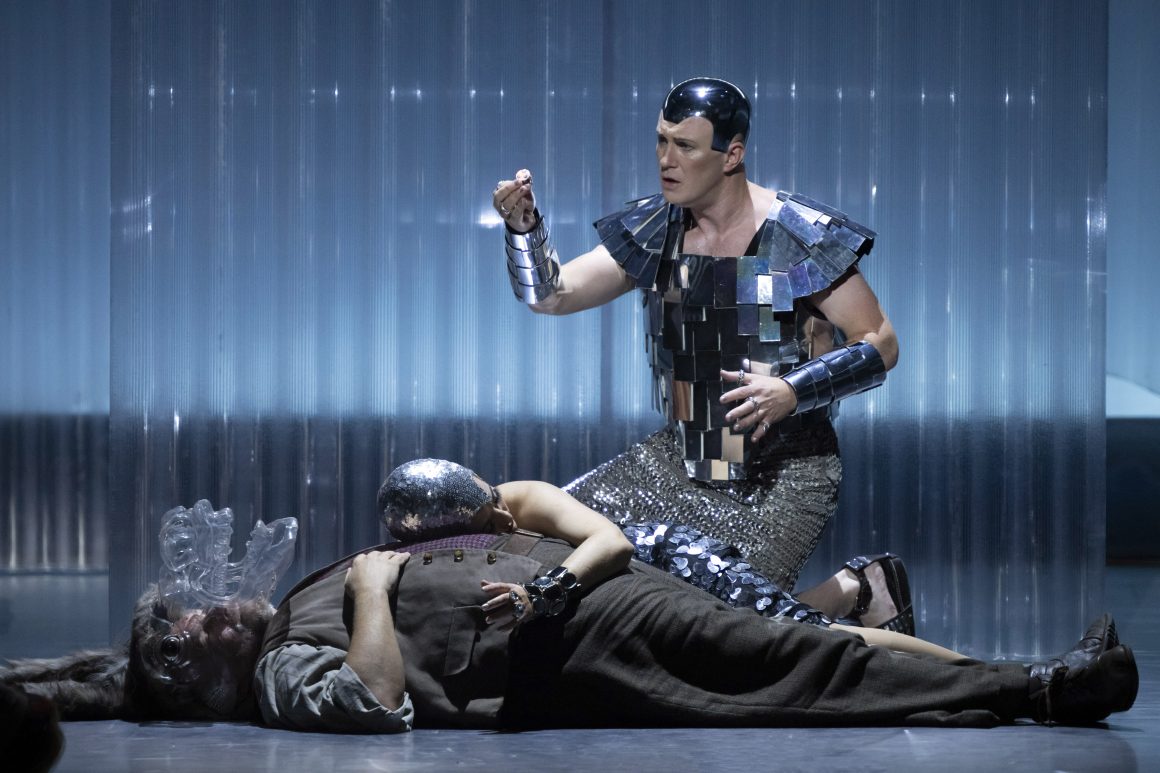
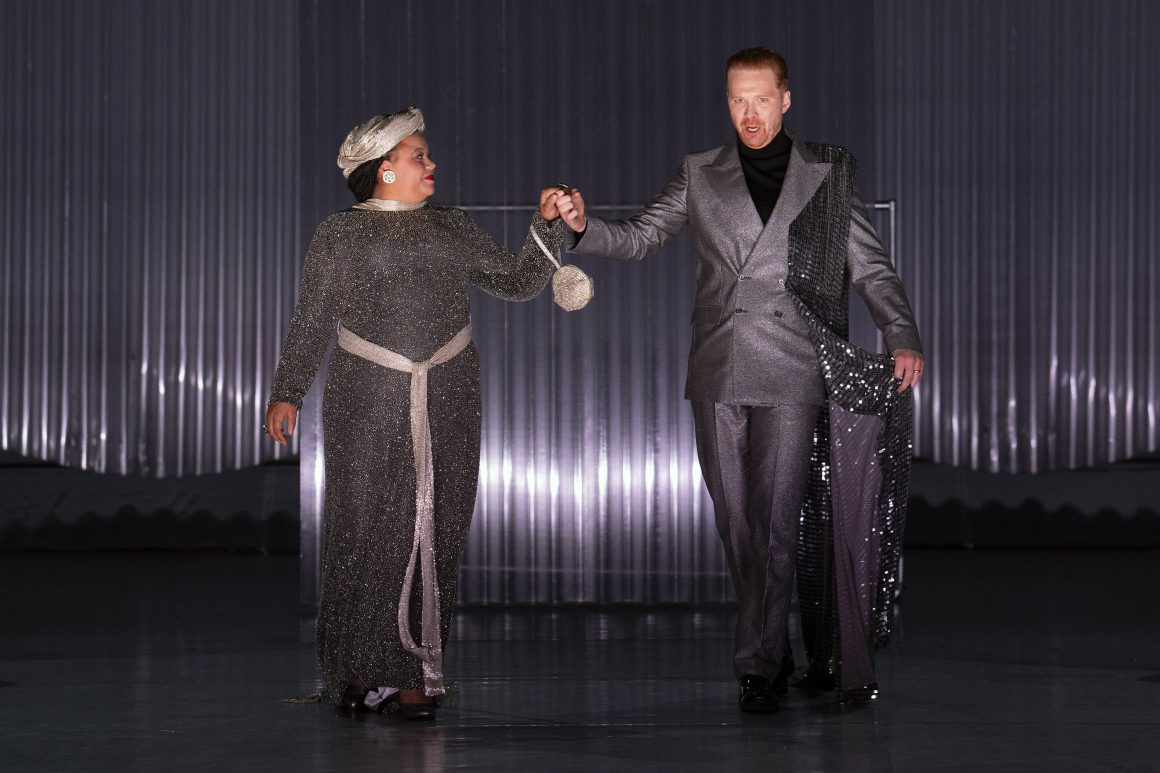
James Laing‘s Oberon, vocally imperious in his spirit domain, yet softening and empathetic to a mortal maiden’s distress, dominates every scene in which he is involved. His music is invariably most beautiful and he carries it off with seemingly easy high notes and shadings to suit any turn of mood. The counter-tenor voice is fitting here for its unworldly qualities and Laing should, perhaps, be grateful that he and modern fellow-exponents are no longer the lone curiosities that Alfred Deller was considered six decades ago when he took the part: “You are eunuch, Herr Deller?” asked a German woman. “I think you mean unique, madam.”
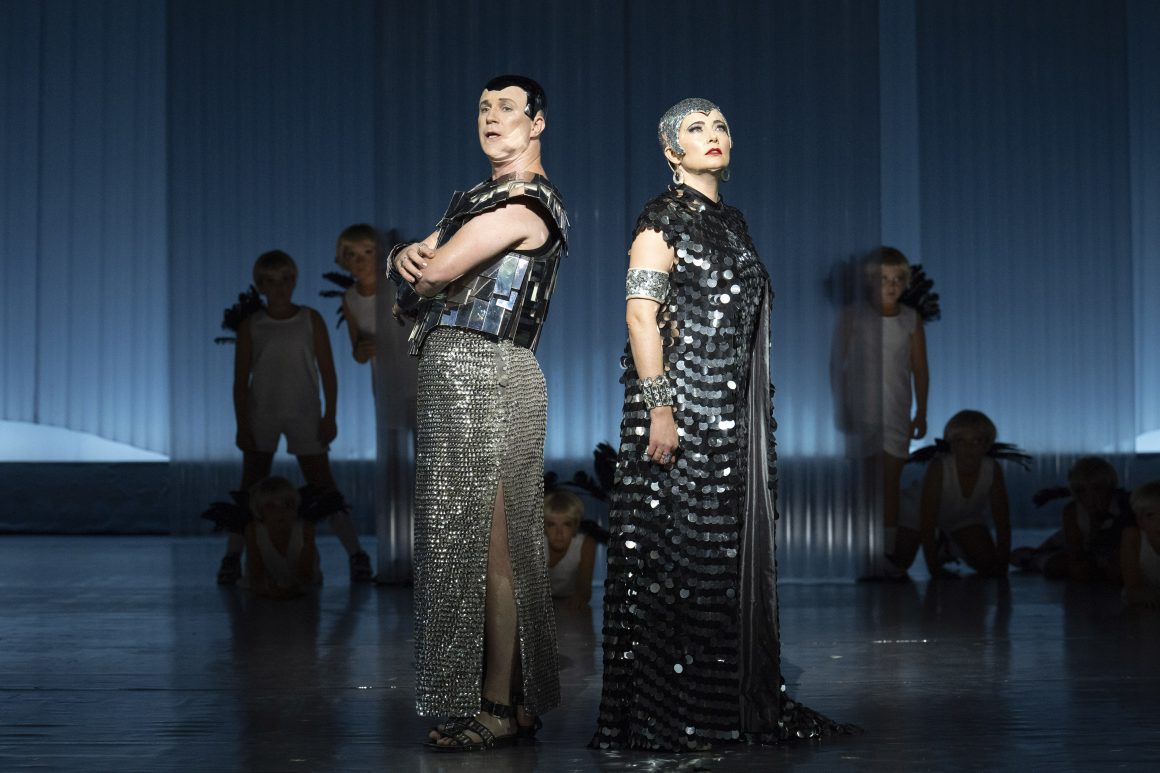
Bedecked similarly in glittering metallic sequins, Daisy Brown‘s dignified and lyrical Tytania (Britten’s spelling) is altogether less androgynous and vocally befittingly warmer and beguiling. She is assigned some treacherously angular melodic lines in her quarrels with Oberon, which she negotiates with much distinction, and there is an endearing kindness and geniality about her guardianship of the fairy youngsters. Her potion-induced romantic encounter with Bottom-turned-ass, a honeyed little waltz song, is tenderly suffused with a touching pathos, by which we might all like our ears caressed.
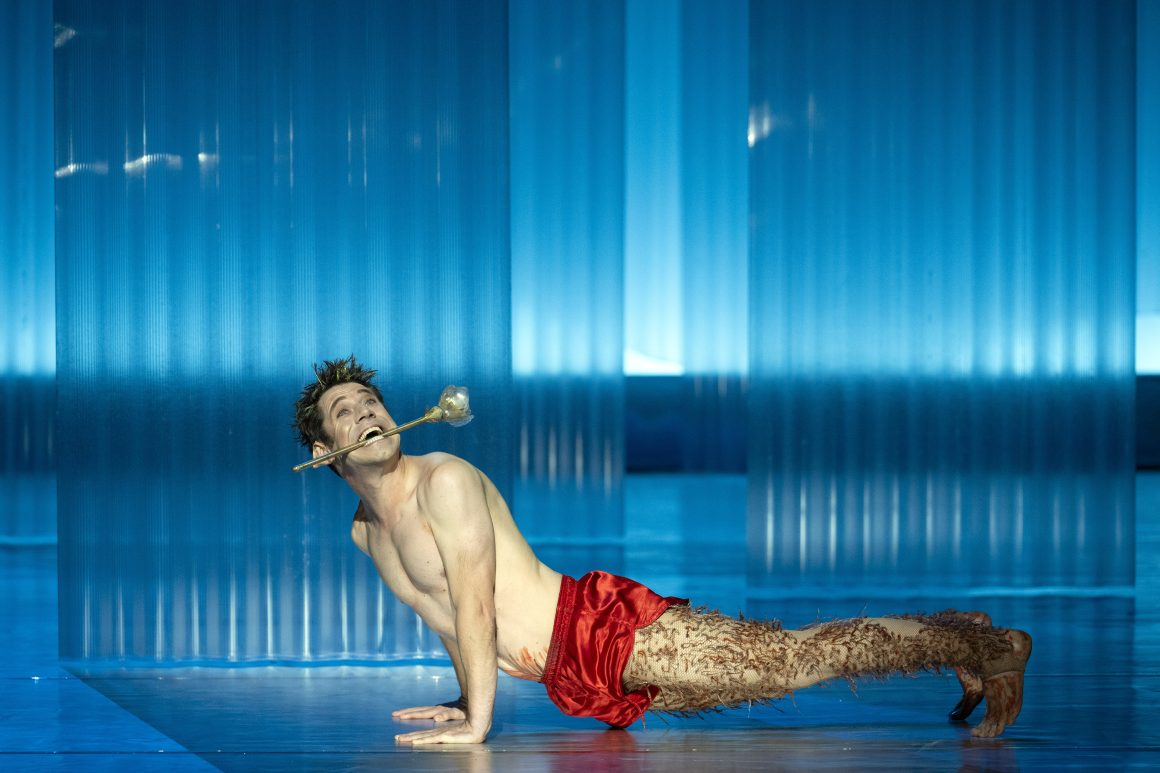
Daniel Abelson‘s Puck is everything we might have hoped for – manic, base, curious, agile and, perhaps, even a little cruel. As Oberon’s unquestioning underling, he squats and jumps, pokes and explores, half vassal, half pet, enjoying some comical encounters both with the human characters and the fairy children. Like a dog to cats, he does not always emerge unscathed. His is not a singing role, but his lines are delivered in an agreeable rhythmical Northern accent.
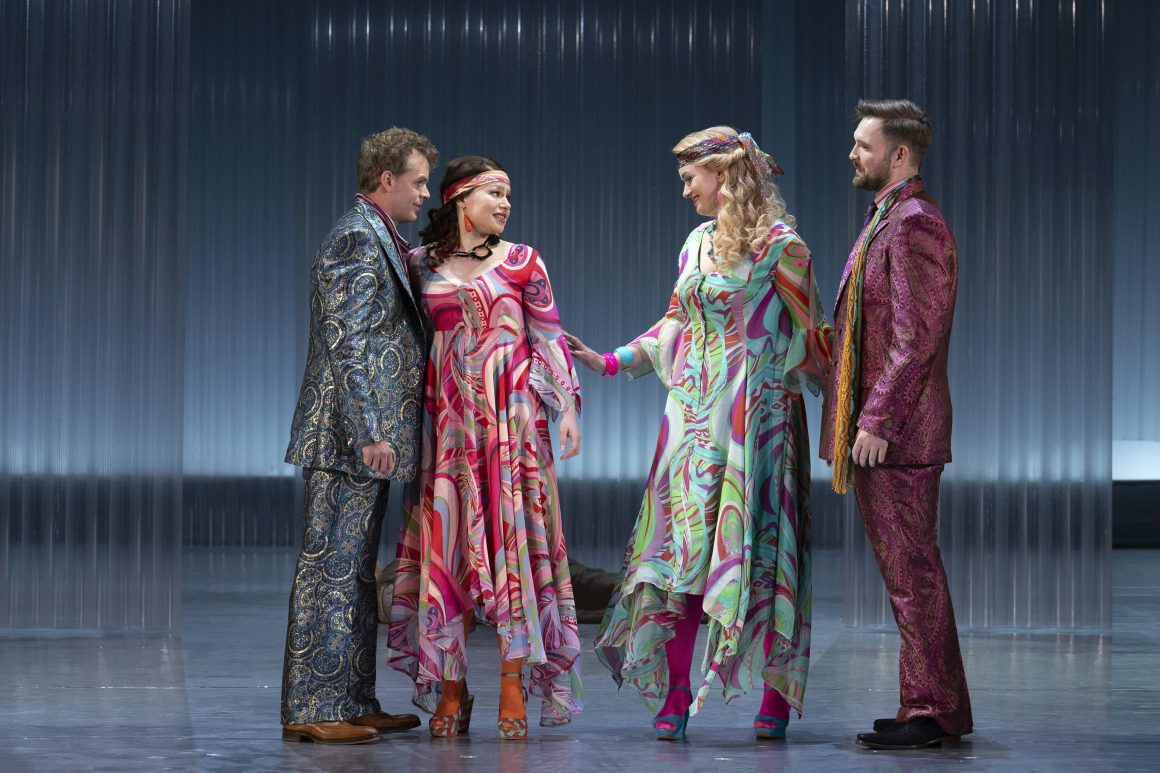
The costumes of the four lovers are, like the music, a product of the 60s. Camilla Harri as Helena, Siân Griffiths as Hermia, Peter Kirk as Lysander and James Newby as Demetrius fall in and out of love as hormones and fairy draughts dictate. They complement each other nicely and blend fittingly as a quartet. Each is impressively responsive to their oft-changing liaisons. There is a most exquisite tenderness in their ultimate reconciliations.
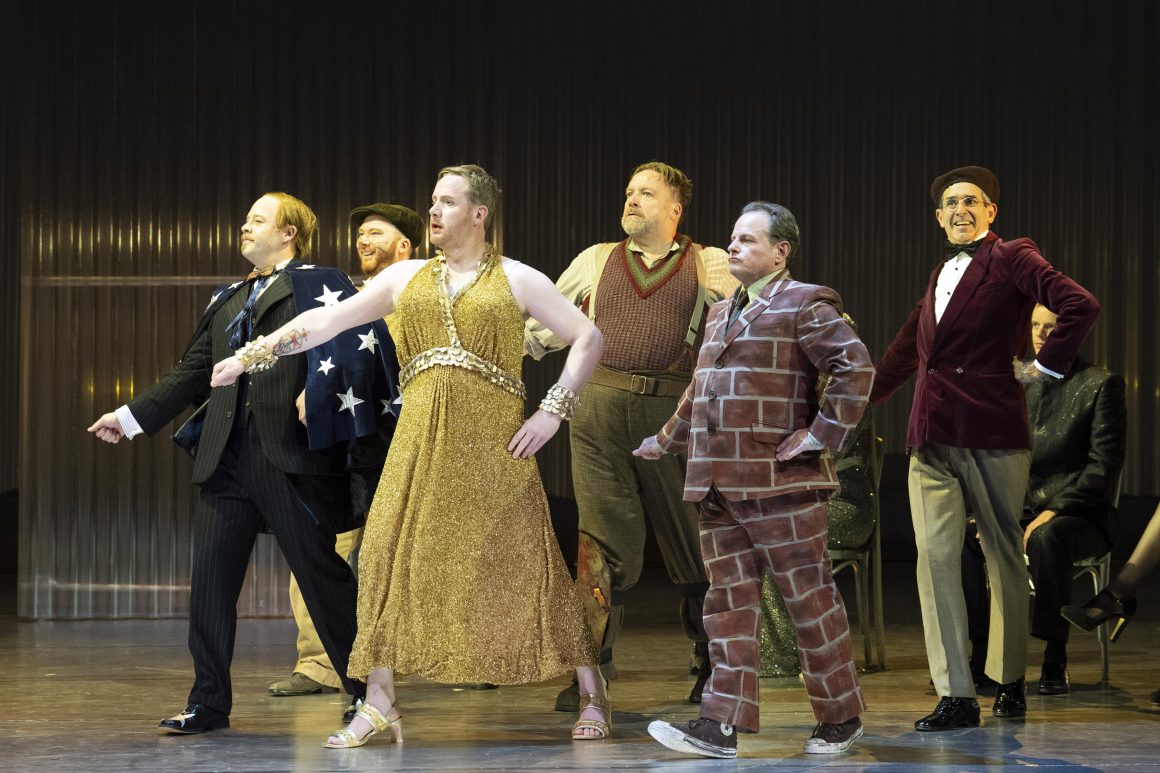
Britten’s “rustics” – Shakespeare’s “rude mechanicals” – are the innocent, well-meaning constants, whose lives are thrown into turmoil by the squabbles of unseen deities. Opera North chose well to have Henry Waddington as Nick Bottom. Waddington showed no little comic aptitude as the Company’s lead in Verdi’s Falstaff and he is the perfect embodiment of an unlikely swain, seduced by none other than the Fairy Queen and a humorously ill-fated Pyramus to Nicholas Watts‘ reluctant and awkward Thisbe.
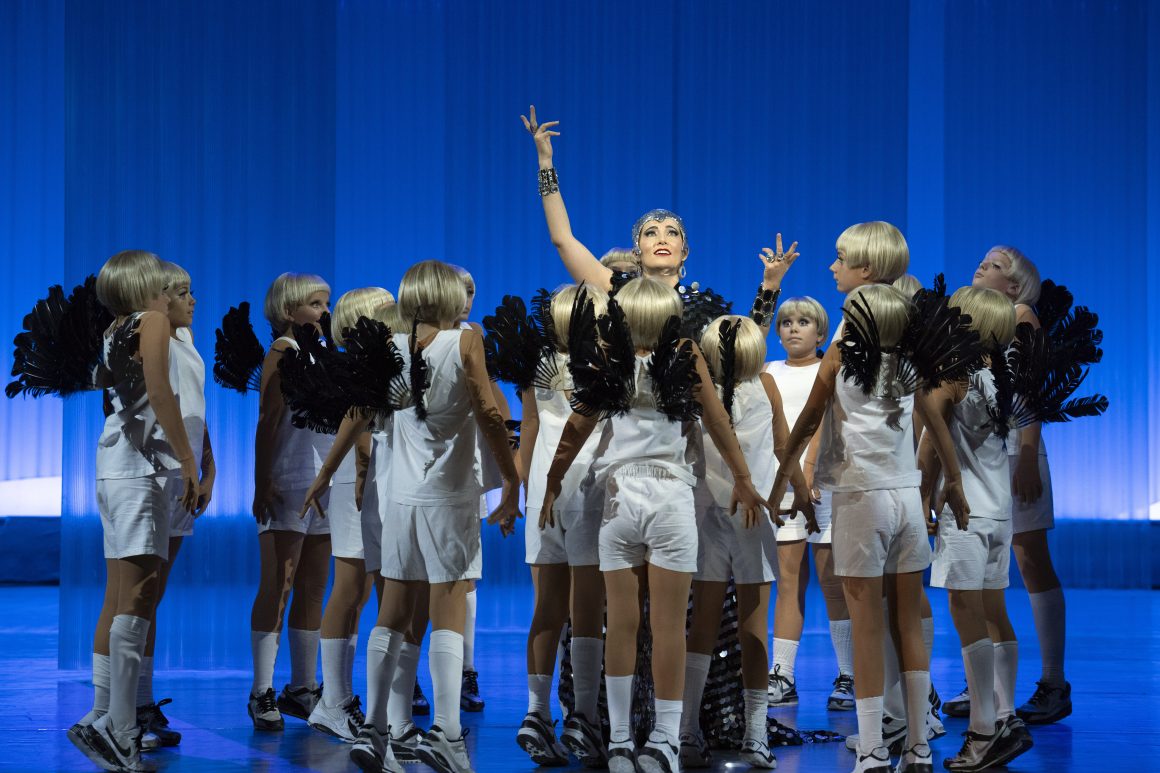
The children sing some taxing harmonies splendidly, though their diction is lost to the orchestra, which gives us what Donald Mitchell of the Daily Telegraph at the time coined “an audacious inspiration of a score” in an extraordinarily detailed account. Britten’s orchestration is motific in character – luminously chucklesome brass for the rustics, impassioned strings and wind for the embattled lovers, filigree celesta and harp for Oberon, tuned percussion for the fairies and horn fanfares for Athenian pastimes. Conductor Garry Walker has it all under his well-judged direction.
Sung in English, with English titles so none of those “heavenly words” get lost.
Conductor Garry Walker
Director Martin Duncan
Revival Director Matthew Eberhardt,
Set Designer Johan Engels
Costume Designer Ashley Martin-Davis
Lighting Designer Bruno Poet
Choreographer Ben Wright
Revival Lighting Richard Moore
BRITTEN: A MIDSUMMER NIGHT’S DREAM
Saturday 19 October, Thursday 24 October: 7pm
Thursday 31 October: 6pm
Leeds Grand Theatre
then touring Newcastle, Salford and Nottingham until 20 November.
Photography by Richard H Smith. Main image – Henry Waddington as Nick Bottom and Daisy Brown as Tytania with the children of A Midsummer Night’s Dream cast as Fairies.