
” … (the sea) … now as a fathomless abyss, now as a steep mountain peak … filled me with mortal dread.”
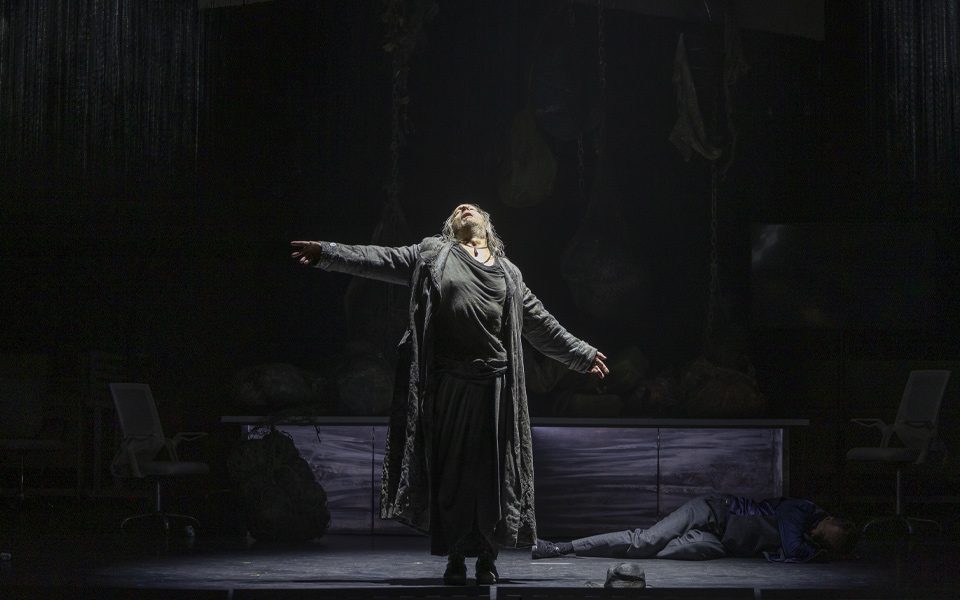
Wagner’s experience of a protracted and terrifying sea crossing in 1839, from Riga to London,
remained a mind-etching memory in the intervening two years before he began to compose his
fourth opera, Der Fliegende Holländer. Based on the centuries-old sailors’ legend of a ghost ship, the
Dutchman is cursed to wander the oceans forever, save for once in seven years to make landfall for a
night to find a woman who will be faithful and redeem his soul.
The composer had sold his furniture and borrowed heavily for that journey to escape his creditors,
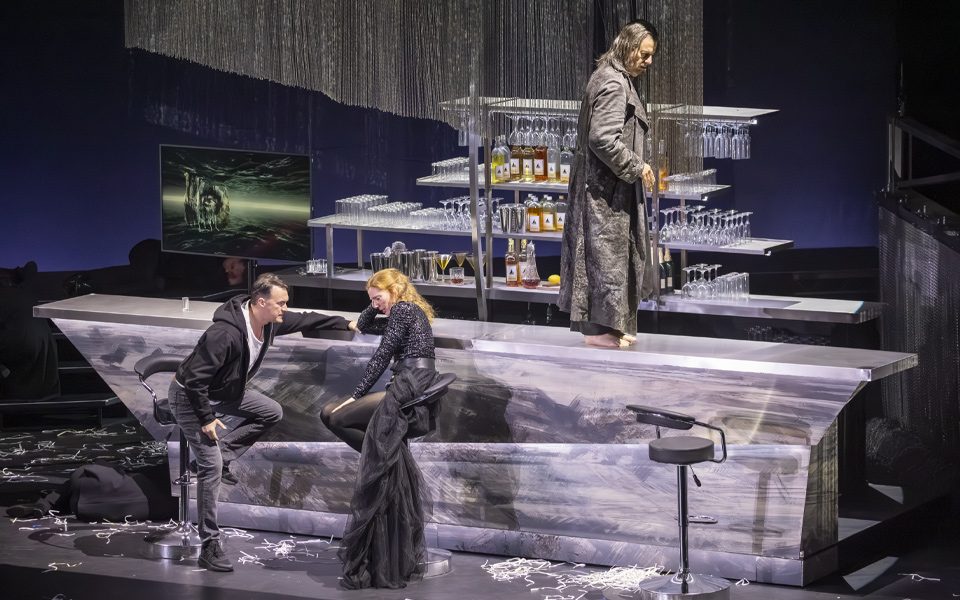
arriving on these shores with neither passport nor money, but director Annabel Arden sees closer
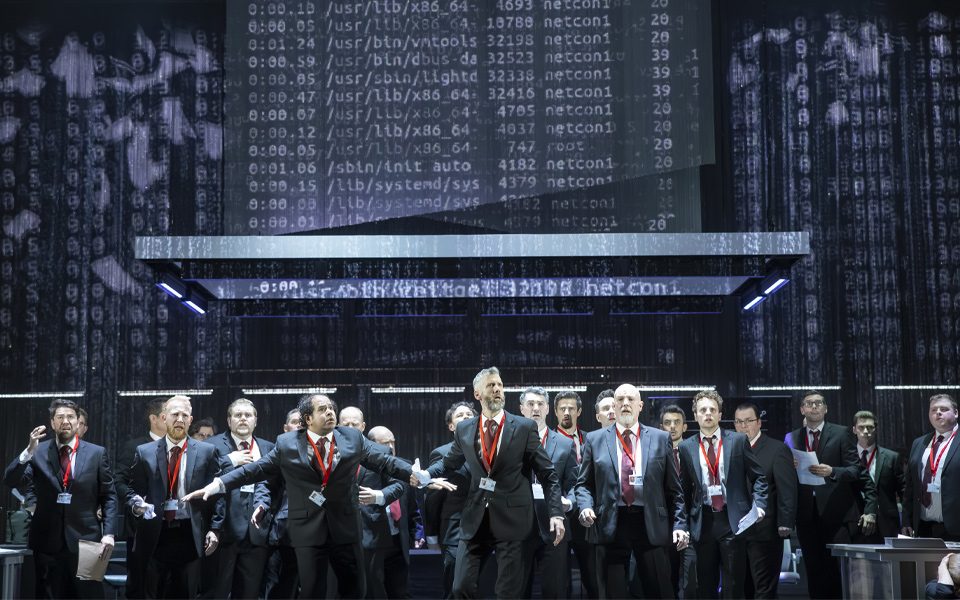
parallels between the Dutchman and those displaced and desperate arrivals nowadays seeking
sympathy, sanctuary and salvation from persecution. Government and citizenry are not always
welcoming.
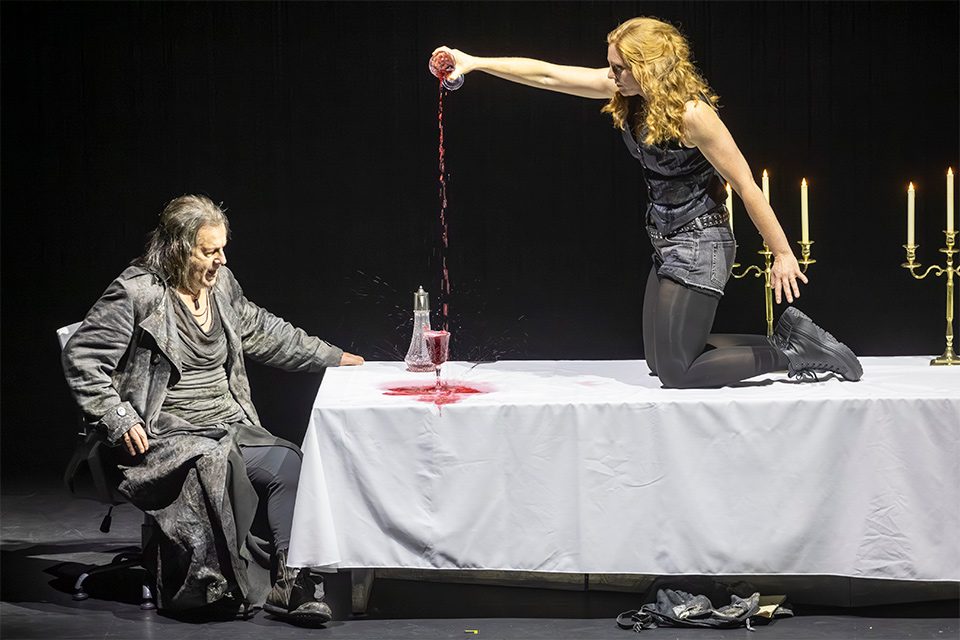
Daland, originally a fellow-mariner , but here a high-ranking civil servant at the Home Office, remains
avarice incarnate, and is drawn by the riches of the Dutchman into agreeing to allow his daughter,
Senta, to be taken in marriage. Senta, herself, transfixed by the sea-farer’s portrait, has already
convinced herself that this is her destiny, but her explanation to Erik, who considered her to be
betrothed to him, is misunderstood as treachery by the Dutchman, who sets sail once more into the
endless void.
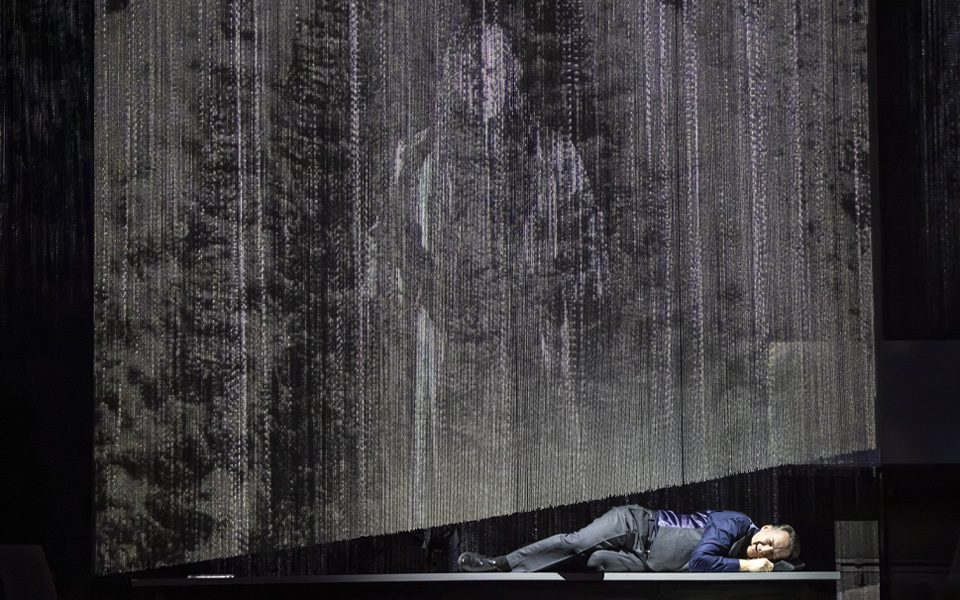
Robert Hayward and Edgaras Montvidas
The production, as ever, is a musical triumph. The action revolves about a number of rousing verse
songs, with Wagner’s characteristically vividly stormy and ghostly orchestral effects, muscular and
delicate, supporting the singers through every bar.
Bass Clive Bayley, whose comic genius as the Matchmaker in ON’s The Bartered Bride I still recall
from long ago, is big, bluff and resonant as Daland, with a trademark worldly and knowing glint in
evidence as the marriage negotiations with the Dutchman enter a cute 3/4 waltz charm-offensive
passage. Authoritative and imperious in the part of what I take to be the United Kingdom’s
Secretary of State for the Home Department, his voice is as grand as ever.
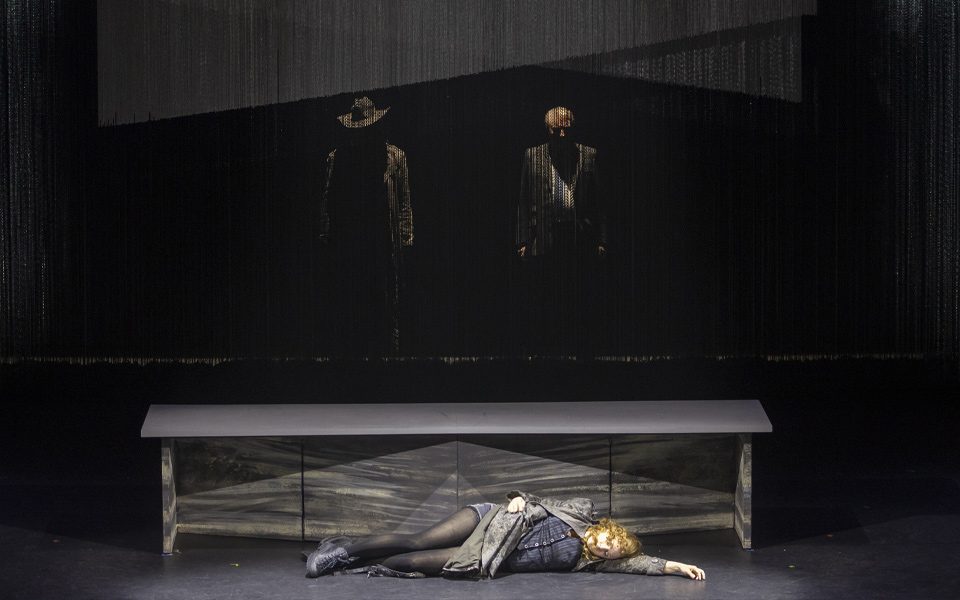
The original choice of Senta, Canadian soprano Layla Claire, fell ill shortly before opening night, so, though still able to “walk” the part, the vocalising fell to Welsh diva, Mari Wyn Williams, an unusual arrangement for both by which to make their Company debut. Ms. Williams is already taking the part for a production in Birmingham for Persona Arts and her portrayal displays the necessary young and naïvely vulnerable characterisation, with plenty of power in reserve for the big moments. As operatic roles go, Senta is a strange one to fill, her commitment to the Dutchman a dutiful fulfilment. rather than true murmurings of the heart, and to an image at that, rather than the man himself, but this combination of centre-stage mime and vocals from the wings worked very well.
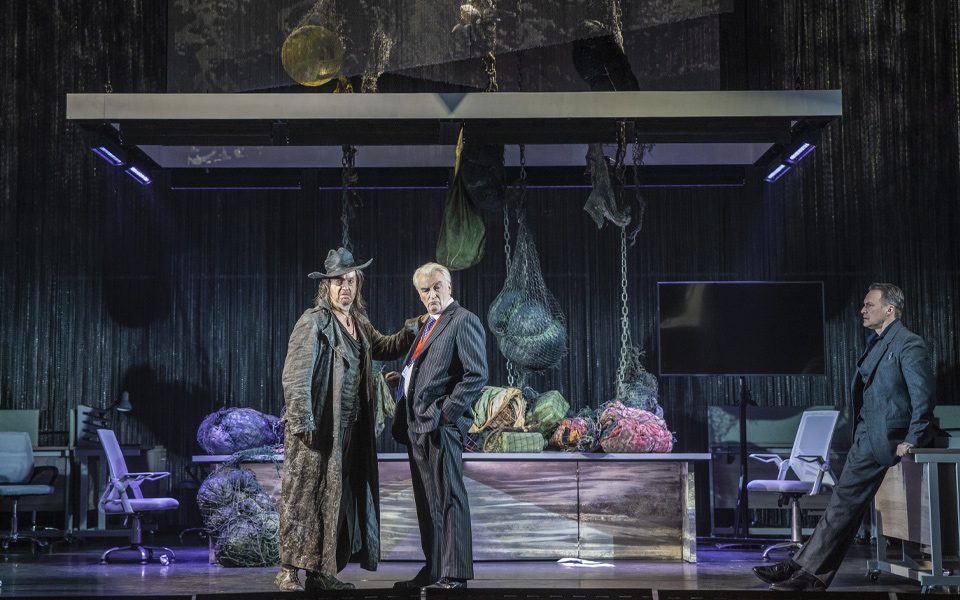
Robert Hayward, an ON regular, a playful and sympathetic Falstaff, for example, here had less scope
for character development and variety of circumstance. Wagner’s demands require a rich-voiced
baritone, of almost limitless stamina, domineering presence and intensity of purpose and Mr.
Hayward provided them all in spades. However, as a means of vocal projection, his vibrato is rather
wide and, at times, distracting, and Joanna Parker‘s costume designs could at least have presented
him better scrubbed and attired. One’s first opportunity in seven years to pull should not be
jeopardised by looking quite so dishevelled. But then, perhaps, the only suit we were supposed to
look out for was those lovely, eye-catching diamonds. Nevertheless, Mr. Hayward retained
throughout the gravitas of a consummately definitive, tortured Dutchman.
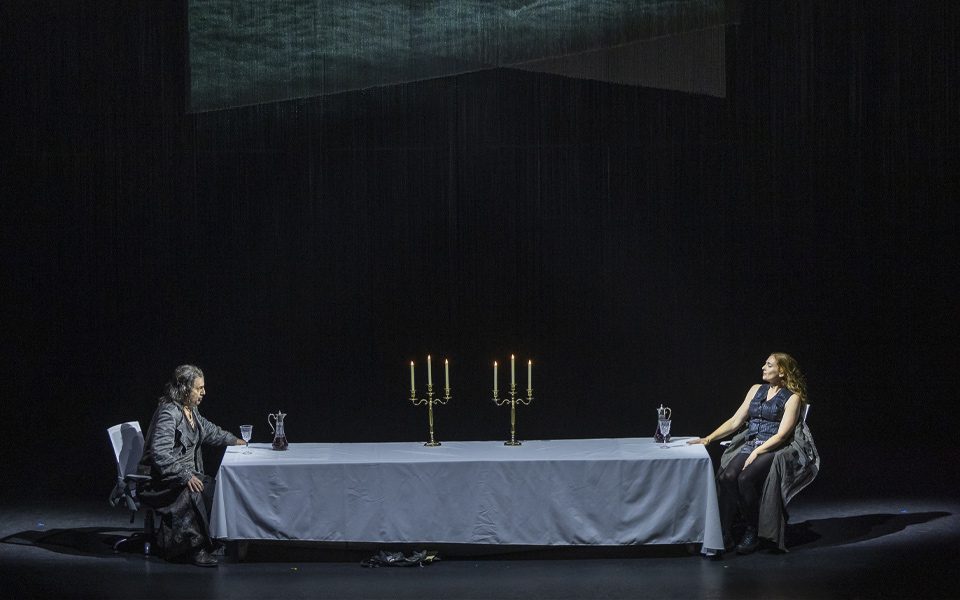
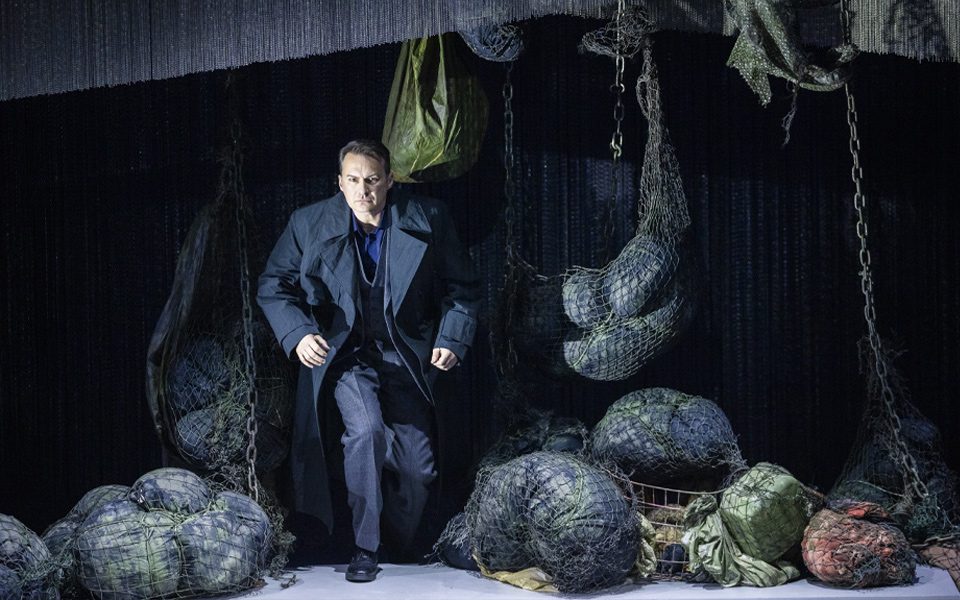
Most impressive on the night, and of any night in my ON season so far, was Edgaras Montvidas as both
Erik and the Steersman. The role of Erik is recognised as one of the composer’s most ungrateful, yet Mr. Montvidass proves expressively anguished, whilst remaining thoroughly musical, a brilliant, steady voice with incisive and assured top notes and a calming, smooth legato when tenderness requires it. There is more to come.
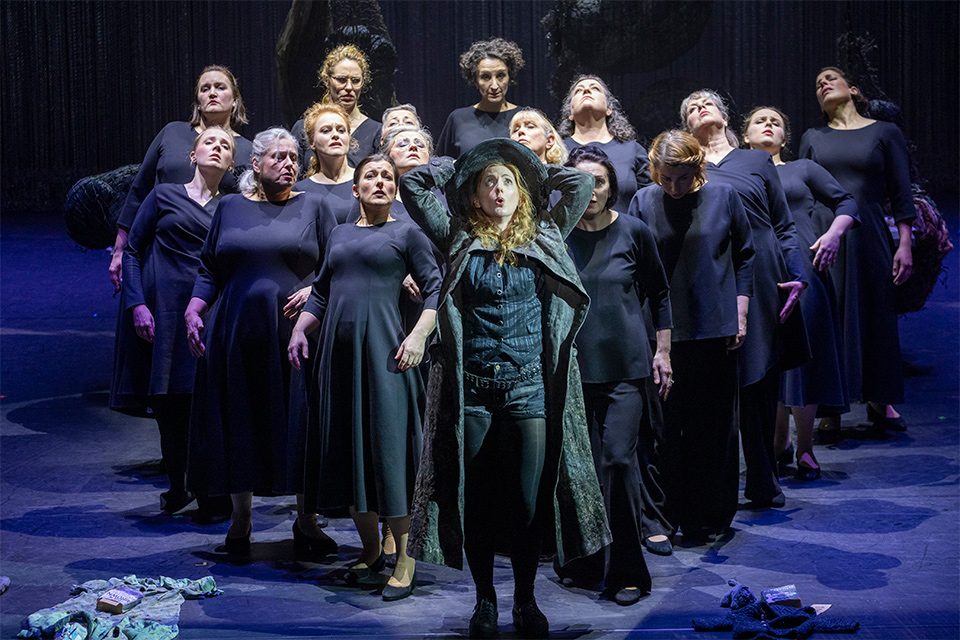
Running him close for top musical accolade were the chorus and orchestra. Wagner at 28 was on
the cusp of reaching his mature compositional style. There is a chorus in Act III that sees the
intoxicated, arrogant revellers of one vessel first cajole and then taunt the Dutchman’s crew,
mysteriously silent and unresponsive. There then follows an unrestrained retaliatory attack, quite
beyond their experience and understanding, in what proves to be one of the composer’s most vivid
and sustained apocalyptic scenes from his entire output. It comes off brilliantly.
Throughout, conductor Garry Walker keeps firm control of what is a superbly dynamic reading. The
moody sea, never far from the surface in its orchestral portrayal, sweeps us along with Mr. Walker’s
committed impetus. His predecessor, Richard Farnes, proved to be a masterly Wagnerian. In Garry
Walker, the company has undoubtedly found another.
This is a must-see. Swallow hard if you must at the director’s treatment of the work, and God knows
this is not history’s first attempt to politicise Wagner, but take in, and be nourished by, the music
and its incomparable story-telling.
By 1855, Wagner was back in London – bad boy made (temporarily) good – this time conducting
concerts of his own orchestral music, with Queen Victoria and Prince Albert no less, in attendance.
The topic of staging the operas arose and the Prince Consort complained that the Italian singers then
in residence were unsuitable for the roles, at which the Queen countered by pointing out that most
of those claiming an Italian origin were actually German. No doubt, we may assume their preferred
language for their conversation, but Opera North thankfully provides their audience with the
necessary English surtitles for this opera, sung in its original tongue.
Photography by James Glossop. Main image: Layla Claire as Senta and Edgaras Montvidas as Erik and Steersman.


