With poised mastery of both medium and space, David Cemmick brings to Leeds an elegant exploration of the animal kingdom.
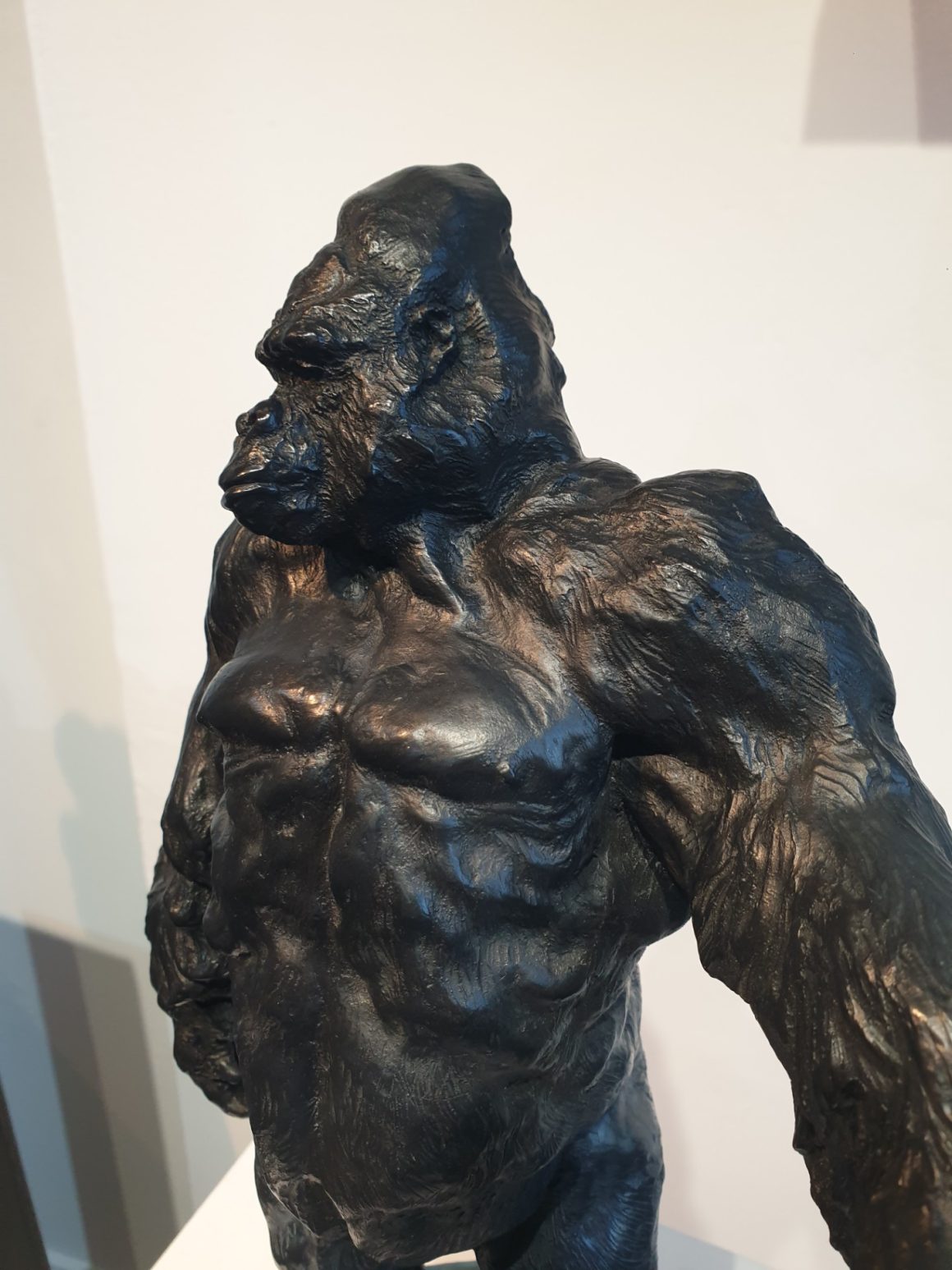
Cemmick’s exhibition this month at the Sculpture Gallery opens with the glare of a wolf, a confrontation no less impressive having been constructed by cardboard. Across the gallery an array of other animals find themselves in similar animation; a gorilla loses himself in contemplation, two frogs are on the cusp of kissing, a polar bear raises her nose in snobbery.

Cemmick has long described himself as an observer of animal life, his scientific enquiry taking him to remote locations where he is free to document wildlife undisturbed. And yet, within this exhibition, it appears to be his observation of the undisturbed space itself – the empty form around each animal – which imbues each work with its precise, and sometimes haunting, character. In ‘Silent Hunter’ a polar bear’s head lifts from nothingness so that it floats, almost untethered, in the centre of the exhibition, exposing the fragility, and with it the grace, of a bear alone at the hunt.
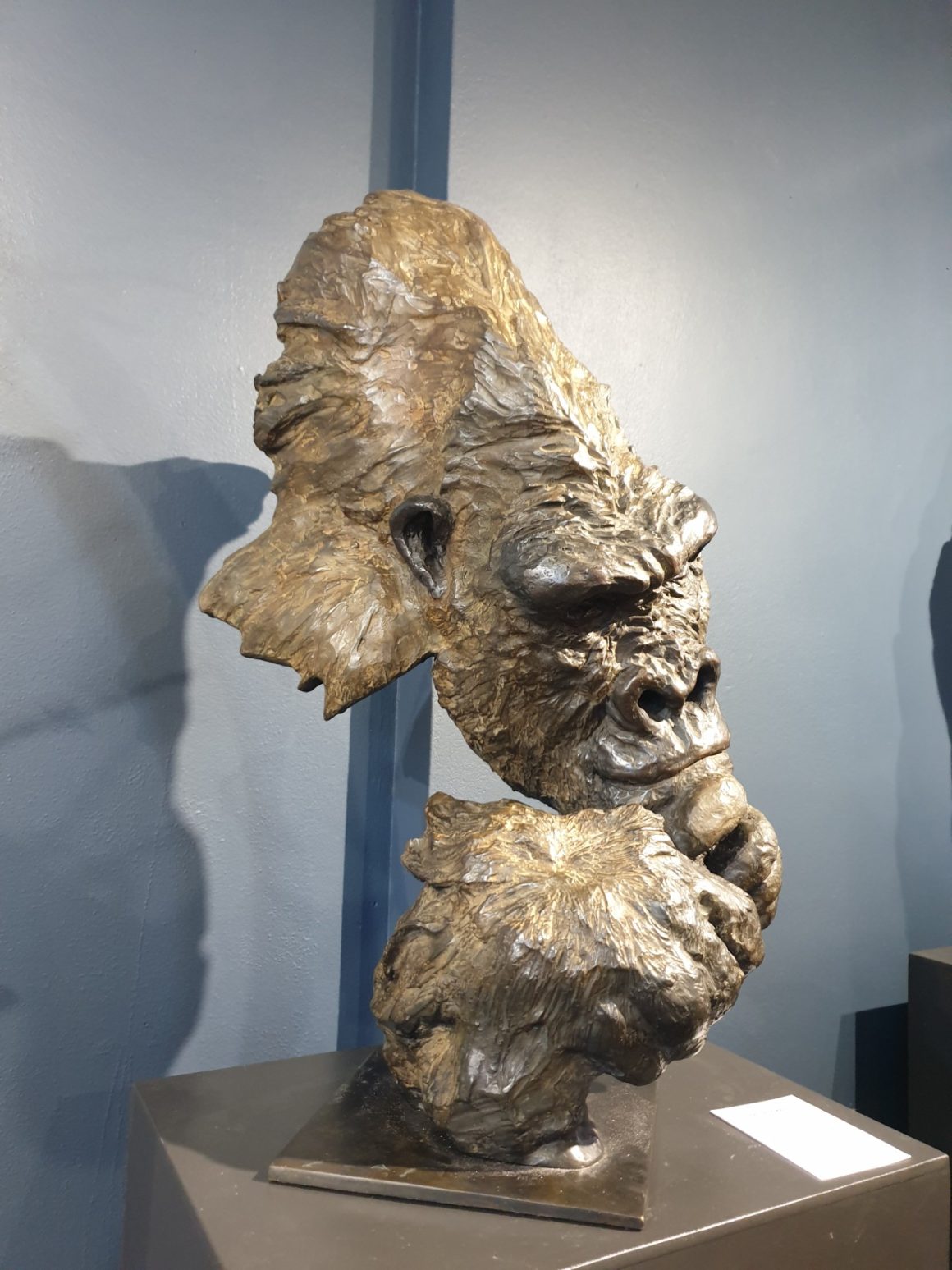
In ‘Thinker’ the sculpture convolutes around a gorilla’s facial expression – is he angry? Or cheeky? Or confused? – and then disappears into nothingness. This ‘nothingness’ increases the focus upon the face itself, as though the pinnacle of thought is the incomprehensible expression of it.

This sense of observation pervades more than just Cemmick’s relationship with each individual sculpture; the sculptures themselves appear to observe one another. ‘Silent Witness’ (another wizened gorilla in contemplative expression) watches over the ‘Silent Hunter’ and towards the ‘Wolf’ who himself appears to be watched over by the swifts within ‘Where White Swifts Fly’. It is this intricacy between the sculptures which reveals the exhibition’s depth – these animals are not merely individual objects of observation, but part of a beating ecosystem unfolding itself within the gallery walls.
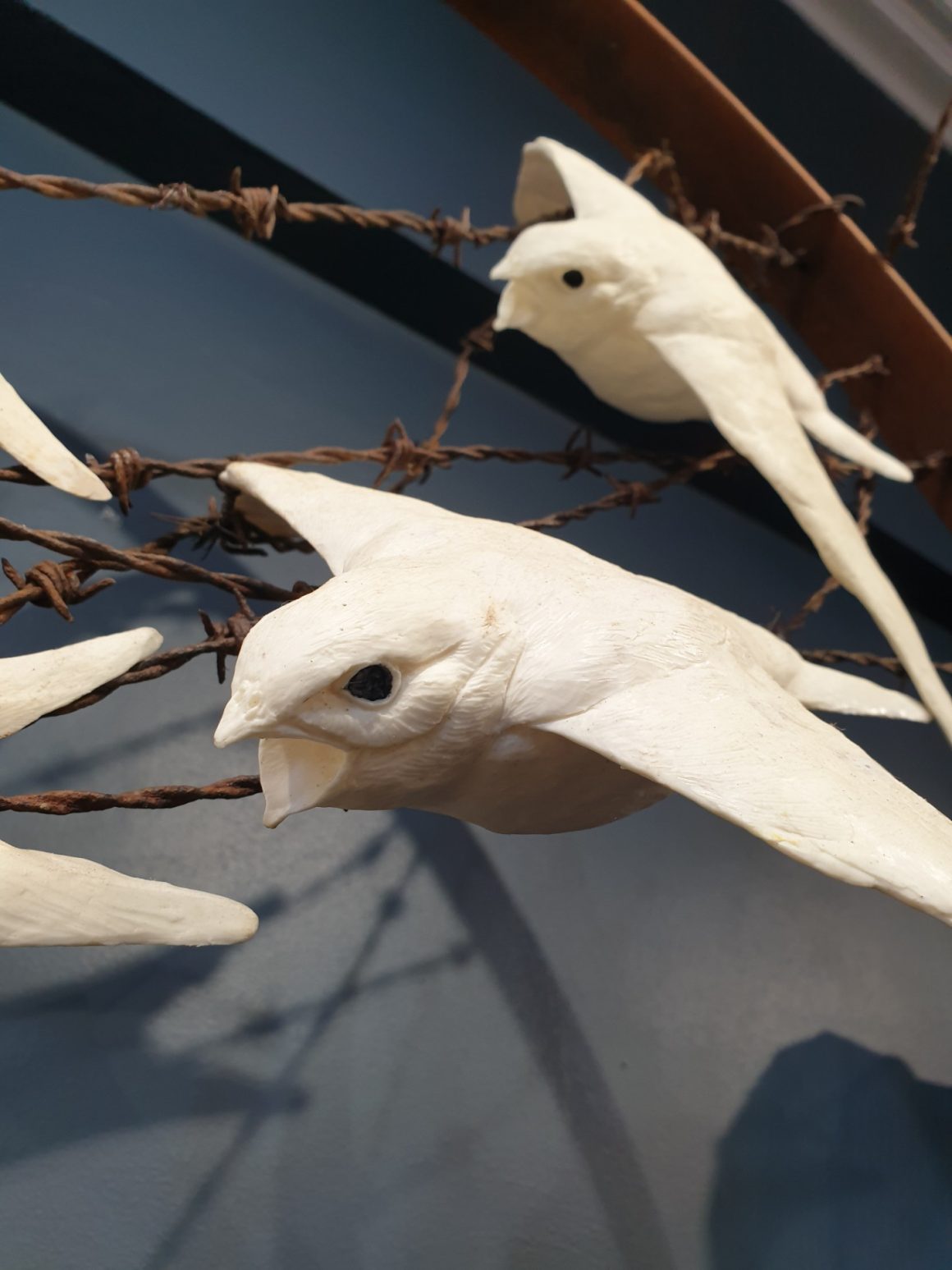
The use of paper lacquering, in which paper is coated in layer after layer of gloss until it is strengthened, allows for the fine-tuned play between delicacy and might which gives Cemmick’s works their dignity. Even in the sculptures not made from paper, such as ‘Where White Swifts Fly’ (Steel Hoop, White Resin and Barbed Wire), the same contrast plays out. Here, the depiction of ashen wings pierced with barbed wire while mid-flight creates a claustrophobia is maintained through the steel hoop which binds such delicacy and might together in a defined frame of reference. It this same skilful containment which gives Cemmick’s entire exhibition its clarity and impact.
Cemmick’s exhibition can be found within the Sculpture Gallery at the Corn Exchange until the end of September.