Waxing lyrical: discover the beautiful batiks of Java and beyond at the University of Leeds.
Exquisite, intricate and inimitable, a varied selection of Indonesian fabrics is shown in the context of the
cultures they emerged from and the techniques that produced them, in a new display at the University of
Leeds’ Stanley & Audrey Burton Gallery.
The exhibition celebrates the cataloguing and digitisation of over 250 fabrics in The Coleman Collection of Indonesian Textiles. Batiks comprise around a third of the Collection, and curators Jill Winder and Dr Bintan Titisari have packed a wide and colourful variety into the Gallery’s Small Exhibition Room.

‘Batik’ refers to a method of decorating cloth by applying heated wax. The wax resists the absorption of
colour during dyeing, leaving a patterned negative when removed. Batik has developed as a craft in parts of Asia and Africa, but it is in Indonesia, and particularly on the island of Java, where the technique has reached its height, and is recognised as a cultural asset by UNESCO.
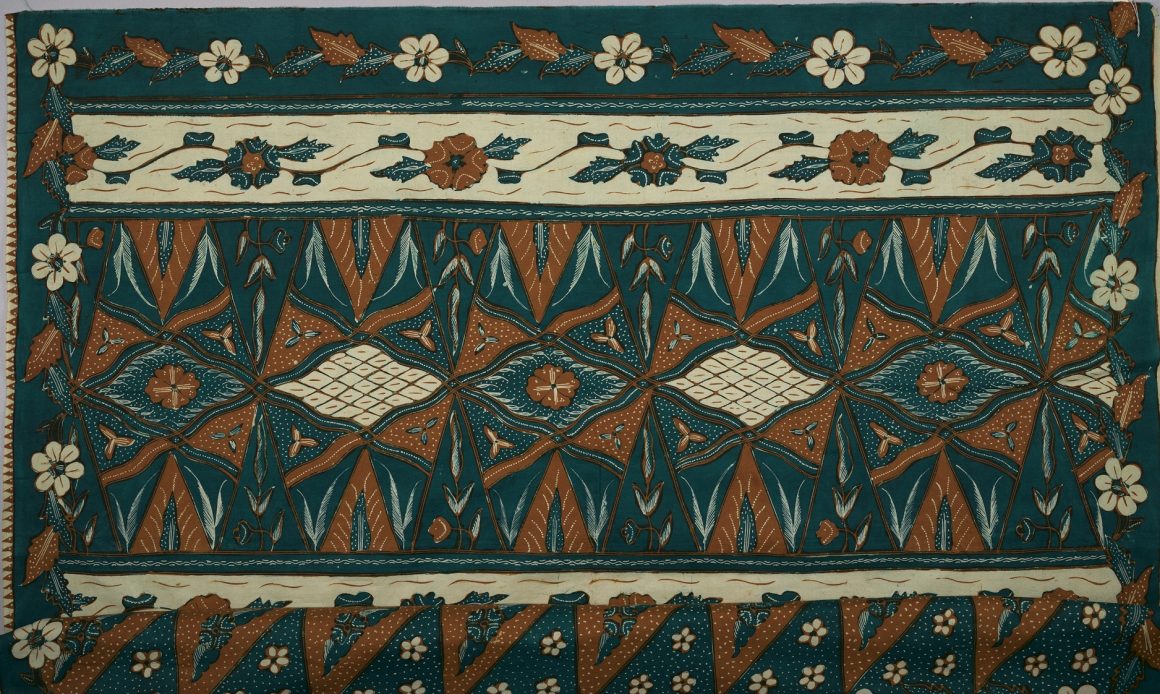
The exhibition tells the complicated story of Indonesian batik production, showing how geographic variations and historical influences have come together to create a wealth of distinctive styles.
Honorary Senior Research Fellow in the School of Education and a Life Fellow of the University of Leeds,
Hywel Coleman first visited Indonesia in 1972. He began collecting textiles in the following year, with many items purchased directly from the creators or given to him as gifts. He now lives on the outskirts of Jakarta as an Indonesian citizen, and he donated his Collection to the University of Leeds in 2022.
“Indonesian textiles are fascinating for many reasons, including the cultural and social roles that they play”, says Mr Coleman. “In many cases, cloths are produced for gift exchange, between individuals as a sign of friendship, between families in wedding ceremonies, and from institutions to individuals in recognition of services rendered.”
Dating mostly from the last five decades, the exhibits reflect the rich diversity of cultures, religions and
languages that co-exist on Java. The geometric designs of ‘classical’ batiks (batik keraton) from the royal cities of Yogyakarta and Surakarta (Solo) in the centre of the island are restrained in colour, and until the 1920s, certain motifs were restricted for use by royalty. Pesisir batik is produced on the north coast of Java, its motifs of flora and fauna influenced by trade with China, India, the Middle East and Europe.
“The exhibition shows how batik production has spread from its origins in Java across the country, from
Aceh in the west to Ternate in the north and Papua in the east”, Mr Coleman adds. “Regional varieties of
batik have flourished since the end of the Soeharto military dictatorship (1965-1998), which attempted to
suppress local identities in favour of centralisation. I have travelled to Sumatra, Maluku, West Java, Central Java and elsewhere to meet batik makers and collect examples of their work. Many of the items were given to me over the last 50 years by friends, universities, schools and other organisations. So, the exhibition is a testament to the extraordinary generosity of the people of Indonesia.”

At various points in its history, batik has seen off threats to its integrity and viability from rival techniques and
the pressures of colonialism and trade. In the 19 th century European factories – particularly in the
Netherlands, which had colonised Indonesia since the 16 th century – attempted to export fake, machine-made
‘batiks’ to Indonesia. These cheap copies were easily identified, and roundly rejected, by the Indonesian
market. A less expensive method of producing genuine batiks, Batik cap, where wax was block-printed instead
of hand-drawn, thrived in response.
The Europeans moved their attention to West Africa as a market for their batik-style cloths, which have
become commonly known as Ankara, or Dutch or African wax. These brightly-coloured patterns can be seen
in the work of the artist Yinka Shonibare, including Hibiscus Rising, his recent tribute to David Oluwale in
Aire Park, Leeds. An example of the technique is displayed alongside the genuine articles in the exhibition.
Today in Indonesia, screen-printed batik-like designs are made more rapidly than is possible with any true
batik process. Supplying the tourist market and the recent demand for batik for corporate, government and
school uniforms, this mass production brings with it negative impacts on the environment and on the
livelihoods of artisan batik makers. Yet authentic batik continues to be created for those who can afford it,
with traditional fabrics worn at events such as weddings.
The result of two months’ work, an unfinished batik on display illustrates the complexity and delicacy of the
technique. The ornate piece is divided diagonally into two distinct motifs, each featuring birds. This pagi-
sore (‘morning and afternoon’) batik form emerged during the Japanese occupation of Indonesia in World
War II, when materials were scarce. The brighter coloured motif is intended to be shown in the morning,
and the darker one in the late afternoon or evening, saving on laundry and giving the impression that the
wearer owns two different cloths.
Jill Winder, Associate Curator: Textile and Object Collections Cultural Collections and Galleries, University of Leeds, comments: “This exhibition is the celebratory culmination of a programme of cataloguing and digitisation of Mr Coleman’s textiles. His generous donation to the University has made Cultural Collections the custodian of one of the largest collections of Indonesian textiles in the country. Our exhibition reflects the rationale of his collecting in that it considers social aspects as well as highlighting the complex techniques and importance of identity seen through pattern and motifs.”
Co-curator Dr Bintan Titisari, Postdoctoral Researcher in the School of Design, University of Leeds,
comments: “I’m deeply impressed by the breadth of the batiks in The Coleman Collection, which spans both traditional and contemporary pieces. It will offer a valuable starting point for UK-based scholars to engage with Indonesia’s rich textile heritage – without needing to travel to Indonesia, though they are, of course, always welcome to explore its cultural roots further there. I’m honoured to be co-curating this exhibition with sensitivity to both historical context and contemporary relevance. I hope it inspires new conversations around heritage, cultural sustainability, and innovation.”
Batiks of Indonesia: Java and Beyond runs at The Stanley & Audrey Burton Gallery, Parkinson Building,
University of Leeds, from Tuesday 3 June – Saturday 30 August. Admission is free, with no booking
necessary, and the Gallery is open from 10am – 5pm, Tuesday – Saturday.
For more information, visit the University of Leeds Library Galleries website.
Main image: Detail of an unfinished Jarik batik from Wiro village Central Java in the pagi sore morning and afternoon form. Credit The Coleman Collection University of Leeds.