An oboe buried on a moor; a lichen-encrusted name carved into a rock; a lost grave; an empty plinth in a Bingley park; a chipped Burmantofts ceramic plaque… A new display in The Treasures of the Brotherton Gallery, University of Leeds, tells the cautionary tale of ‘The Bingley Byron’, John Nicholson – and playwright and poet Tony Harrison’s efforts to bring his story to the stage.
Born on the Harewood estate north of Leeds in 1790 and raised in Eldwick, John Nicholson showed early promise as a poet, but left school at 12 to work as a woolsorter. He married at 19, but his devastation at the death of his wife in childbirth led him to take the temperance pledge and become a Wesleyan preacher. He eventually remarried and continued to write, alongside woolsorting and preaching. In 1825 his poem Airedale in Ancient Times was published, bringing him local success.
He left his mill job and began to travel, selling copies of his book around the country, and writing about the world he knew. It might fall short of the standards of his near-contemporaries John Clare and William Blake, but Low Moor Iron Works (1829) offers a thundering first-hand account of a foundry near Bradford, its ‘roaring Blast… Crown’d with flame’.
Convinced of his place in literary history, Nicholson had his bust made in the studio of a leading sculptor in London. While in the capital, he got into a drunken argument with a bust of Shakespeare at the Drury Lane Theatre and was arrested. Although he seems to have charmed the court and escaped without charge the following morning, the episode indicated his steepening decline into alcoholism.
Worse was to come, as Nicholson was persuaded to follow up his socially-conscious poem ‘The factory-child’ – commissioned by a radical politician – with a sequel that completely contradicted it. Commissioned by the establishment editor of the Leeds Mercury, ‘The factory-child’s mother’ argued in favour of child labour for the wages it brought in to the poorest families. For Beeston-born Tony Harrison, one of Britain’s most celebrated poets and playwrights, the bust became a symbol of how “Nicholson swapped his integrity for… fame, acceptance, compromise”

Harrison was persuaded to write a play about Nicholson by his friend Jonathan Silver, the Bradford entrepreneur who bought Salts Mill in Saltaire and opened it as a gallery in 1987. John Nicholson had sorted wool for Sir Titus Salt on the site where the manufacturer would later build his Mill, and Salt was so impressed by his poetry that he turned a blind eye to Nicholson’s drinking.
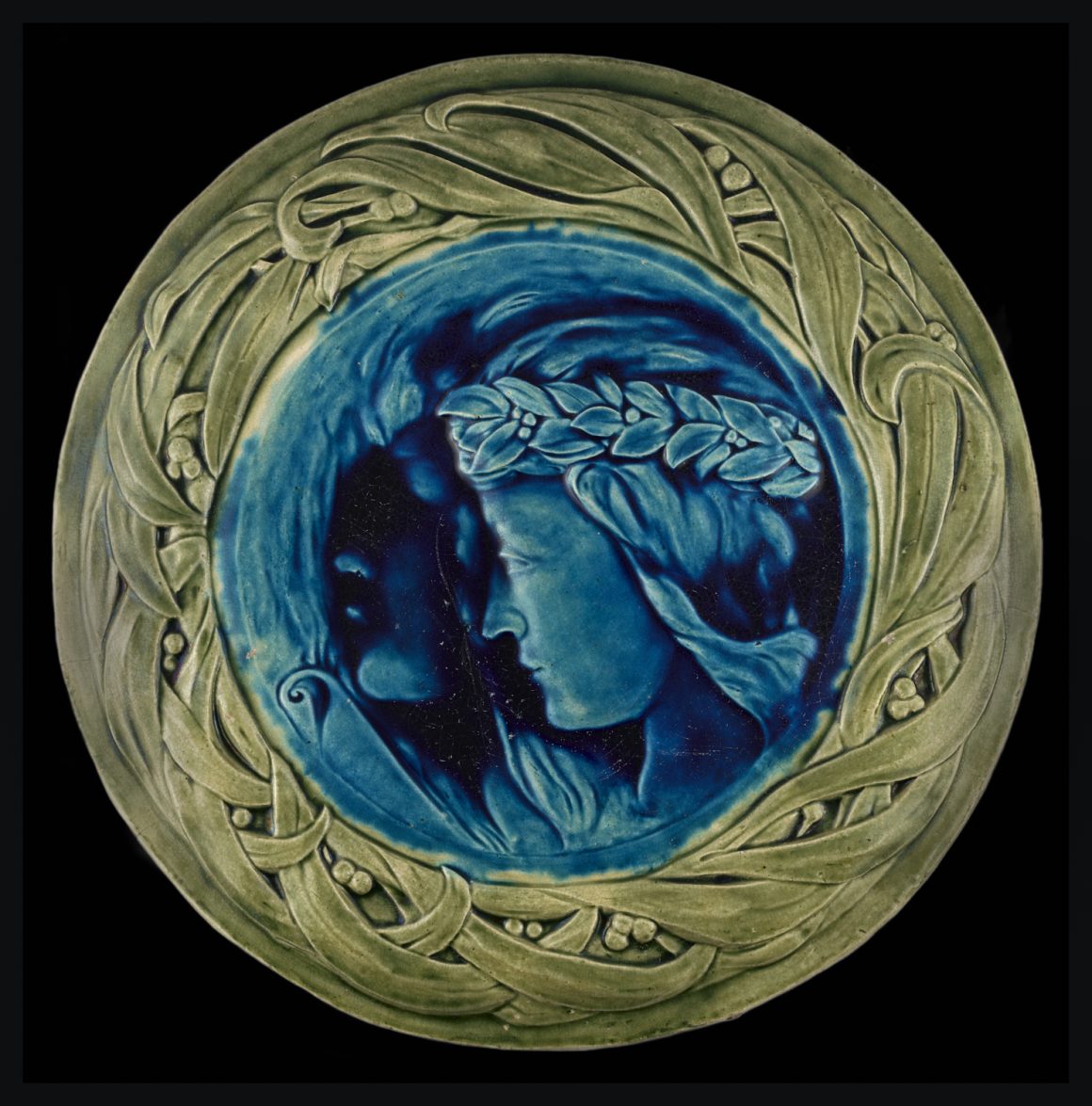
Silver gave Harrison an apparently impossible deadline of under three months in which to complete the play, as he wanted it to be performed at the Mill to coincide with a David Hockney exhibition, under the billing ‘Two Local Artists’. His payment would be a large plaque of Dante and Beatrice, made by the Leeds-based Burmantofts Pottery, which the writer had admired in Silver’s office.
Harrison finished the play on schedule in what Barrie Rutter, who took the role of Nicholson, calls “a creative orgy”. Poetry or Bust was premiered by Rutter’s company, Northern Broadsides, in September 1993 in the woolcombing shed at Salts Mill, a matter of yards from the site where Nicholson had worked. At one of the performances, an old woman in the audience told Harrison that she had the original bust of the poet and that he could have it, as it was “about as much use to me as a chocolate fireguard.”
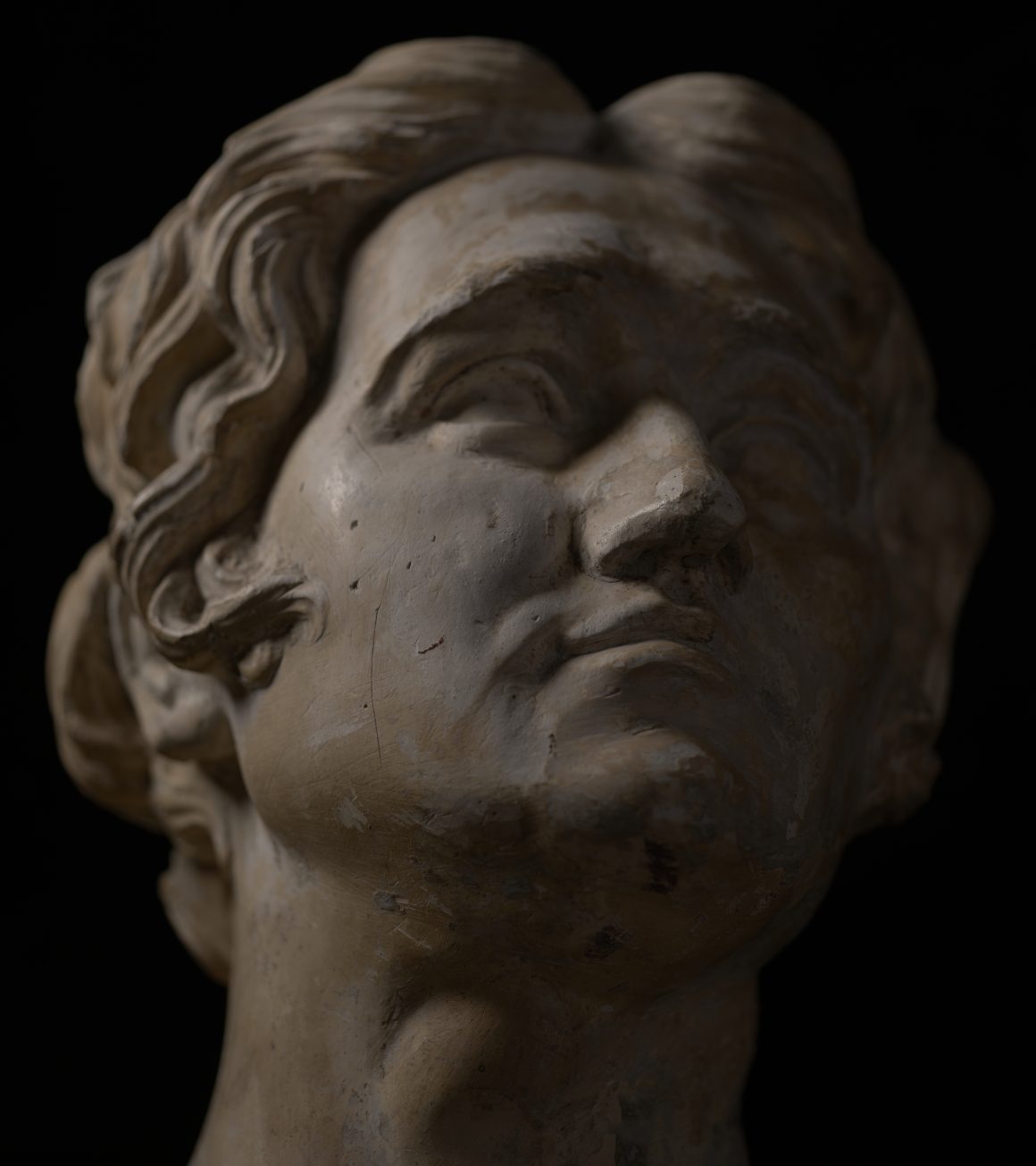
The sculpture sits at the centre of the new display in Treasures of the Brotherton, along with further selections from Harrison’s archive, which the University holds. Notebooks and photograph albums reveal his intensive research into the poet’s life, including, as Rutter recalls, the “hot, mosquito-bitten adventure to Eldwick Rocks, where we found Nicholson’s carving of his name and washed it clean with champagne, polished off the other bottles in celebration and returned for the evening performance at Salts”.
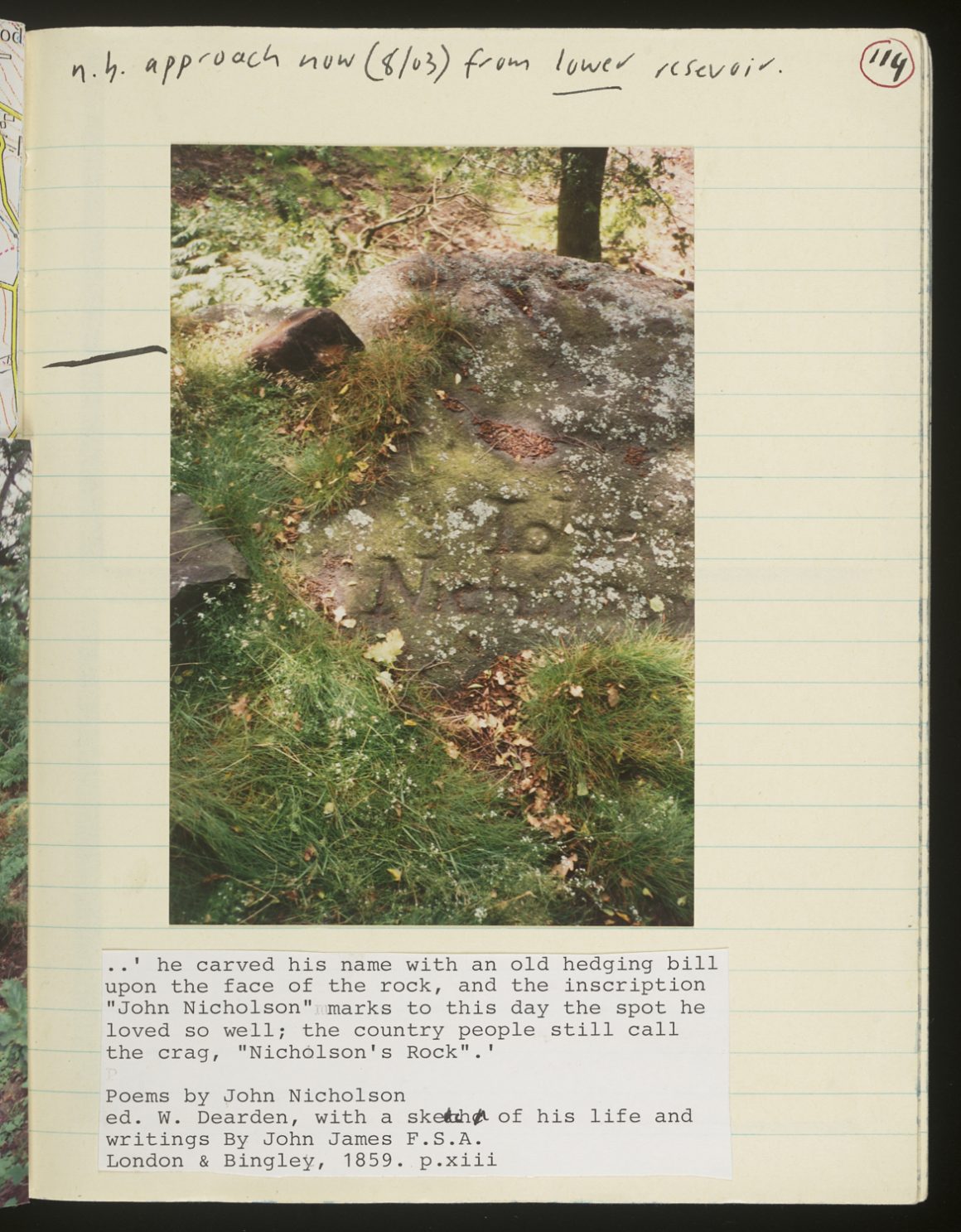
Recording his dogged traipsing around West Yorkshire, turning up only traces or absences, Harrison’s archive is also an ironic postscript to the life of Nicholson, who was so concerned with how he would be remembered. At around midnight on Good Friday 1843, the inebriated poet slipped on the stepping-stones in the River Aire as he returned to Saltaire, managed to extract himself from the river, but died on the bank. The stepping-stones themselves were removed shortly afterwards, and even his original grave site was lost – to the B6265 when it cut across the churchyard of All Saints in Bingley.
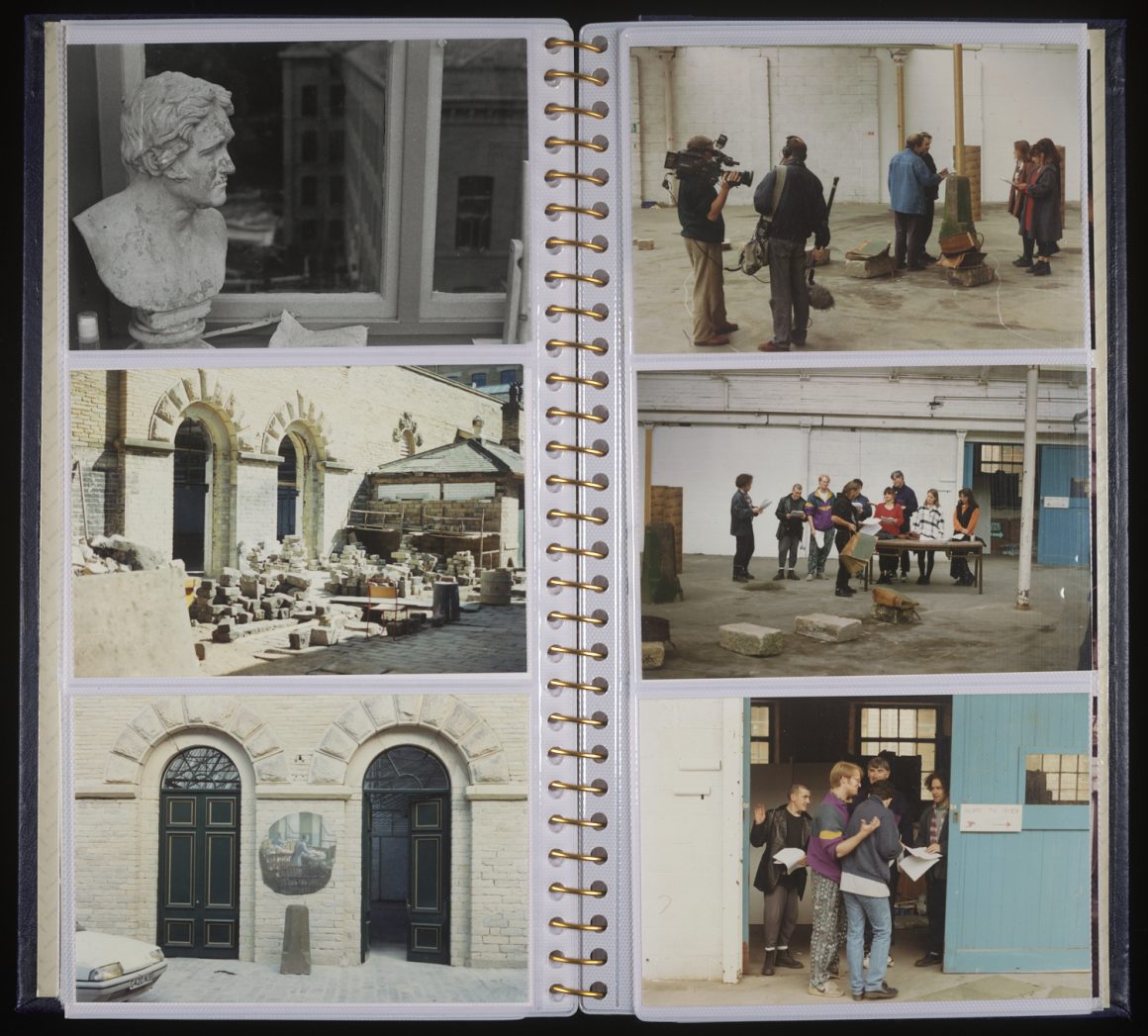
In Poetry or Bust, Harrison brings Nicholson back from the dead to unveil the ‘busts of the great bards’ one by one, certain that he’ll be among them. Needless to say, he’s disappointed, although he finds one that portrays his employer and supporter, the founder of Saltaire, Sir Titus Salt.
Rutter remembers vividly “the theatrical ‘charge’ of performing in a found space with real ‘ghosts’ as colleagues – and a River Aire graced by David Hockney flourishes (he visited during rehearsals, adding his deft touches to the painted blue version of the water)”. He rates Poetry or Bust as “theatre at its best: gutsy and tender, raucous and sweet, surfing on the muscular, thrusting rhythms of Tony’s poetic genius”.
Other objects on display in The Treasures of the Brotherton include Hockney’s designs for the book of the play – which the artist drew in Salts Diner, two days before the first performance – and the Burmantofts plaque of Dante, given by Silver to Harrison as promised and later chipped when it rolled off a shelf in the writer’s home and caught him a glancing blow.
All together, says Dr Rebecca Wade, Associate Curator of Special Collections at the University of Leeds, the display offers “a tragicomic exploration of working-class experience, the corrupting influence of commerce on creativity, and the meanings of sculptural memorials”.
Main image: Conservation work on the bust. Copyright University of Leeds.