In 1924 French poet André Breton, in reaction to the brutality of the First World War, wrote his, Surrealist Manifesto. Only “the omnipotence of dreams,” he said, could liberate humanity. The passion of his belief has inspired a century of unusual painting, photography and sculpture. Two key exhibitions, in Leeds and Wakefield, shine a light upon how surrealism has developed.
The Traumatic Surreal, Henry Moore Institute
Whilst surrealism appeared in the wake of the First World War, it is World War II that influenced the art in The Traumatic Surreal at the Henry Moore Institute.
The work here is generationally, geographically and gender specific, reflecting how women in German-speaking
countries have used surrealism to overcome the trauma of fascism, particularly in relation to the social manipulation and objectification of women.
The Traumatic Surreal is co-curated with Patricia Allmer, Professor of Modern and Contemporary Art History at the University of Edinburgh, and is based on her book of the same name. Her research, and the diverse art on display, shows recurrent themes in the work: the use of fur, feather or hair, cages and captivity and domesticity.
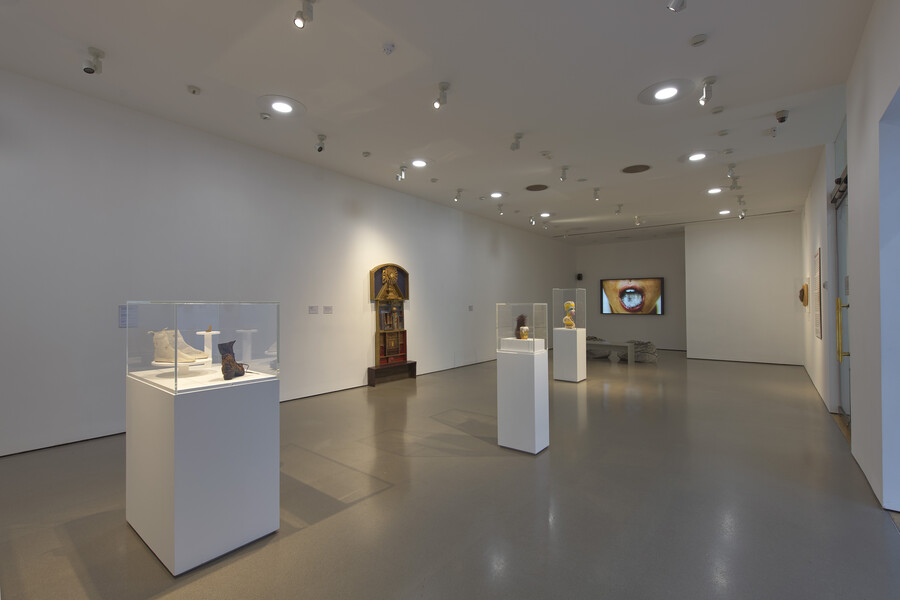
One of my favourite pieces is Bady Minck’s 2005 film La Belle est la Bête. Her work subverts Cocteau’s imagery with a furry tongue that emerges from a woman’s mouth, the wild creature fighting to escape from captivity and domesticity.
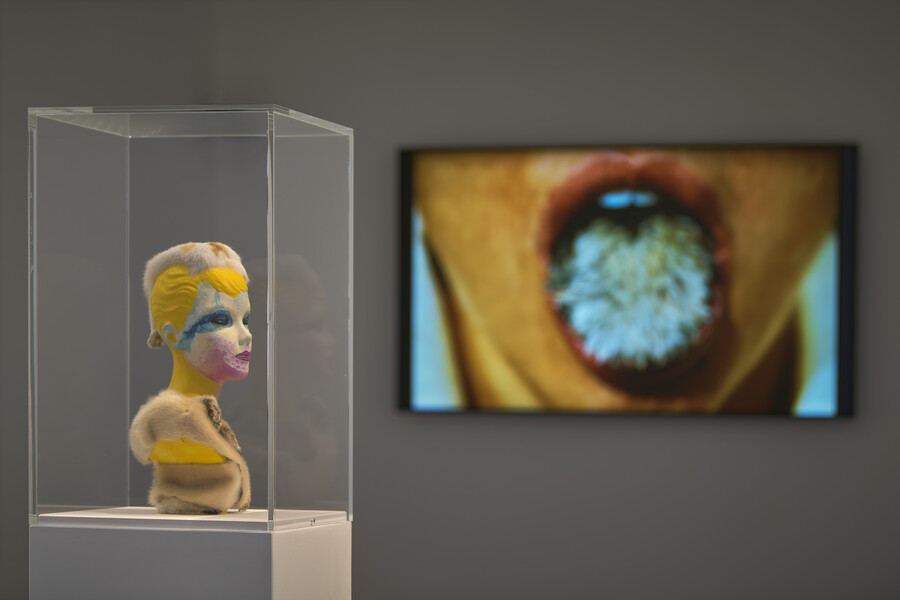
Birgit Jürgenssen’s shoes play with our perceptions of everyday items, forming footwear from dead flies, wax, bread and bacon. The wax model is connected by the artist’s own hair, a personal legacy following her death in 2003. Her Caught Happiness 1982 shows a form bound, pinned and trapped within a cage
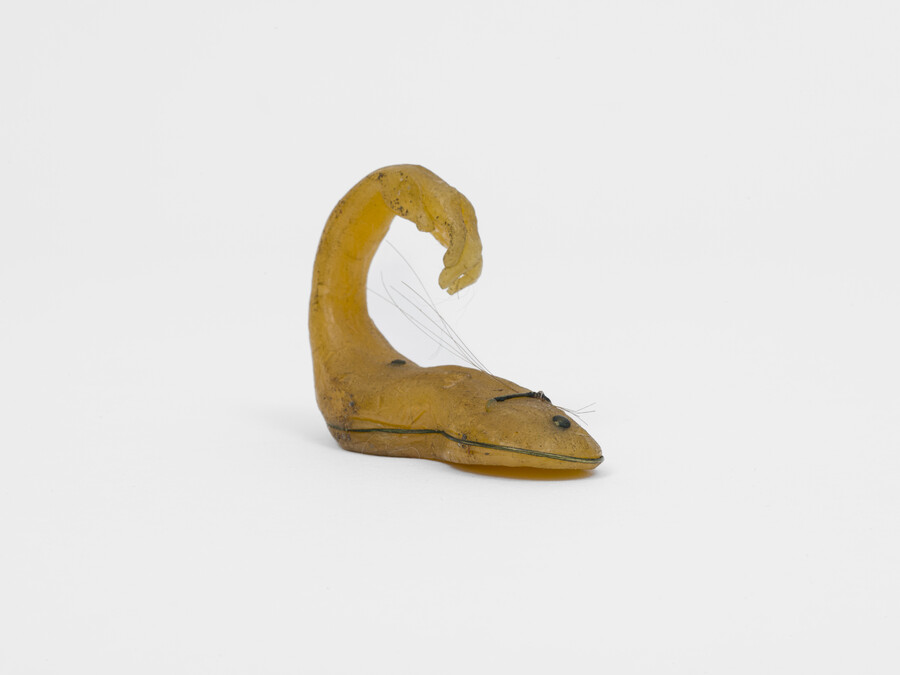
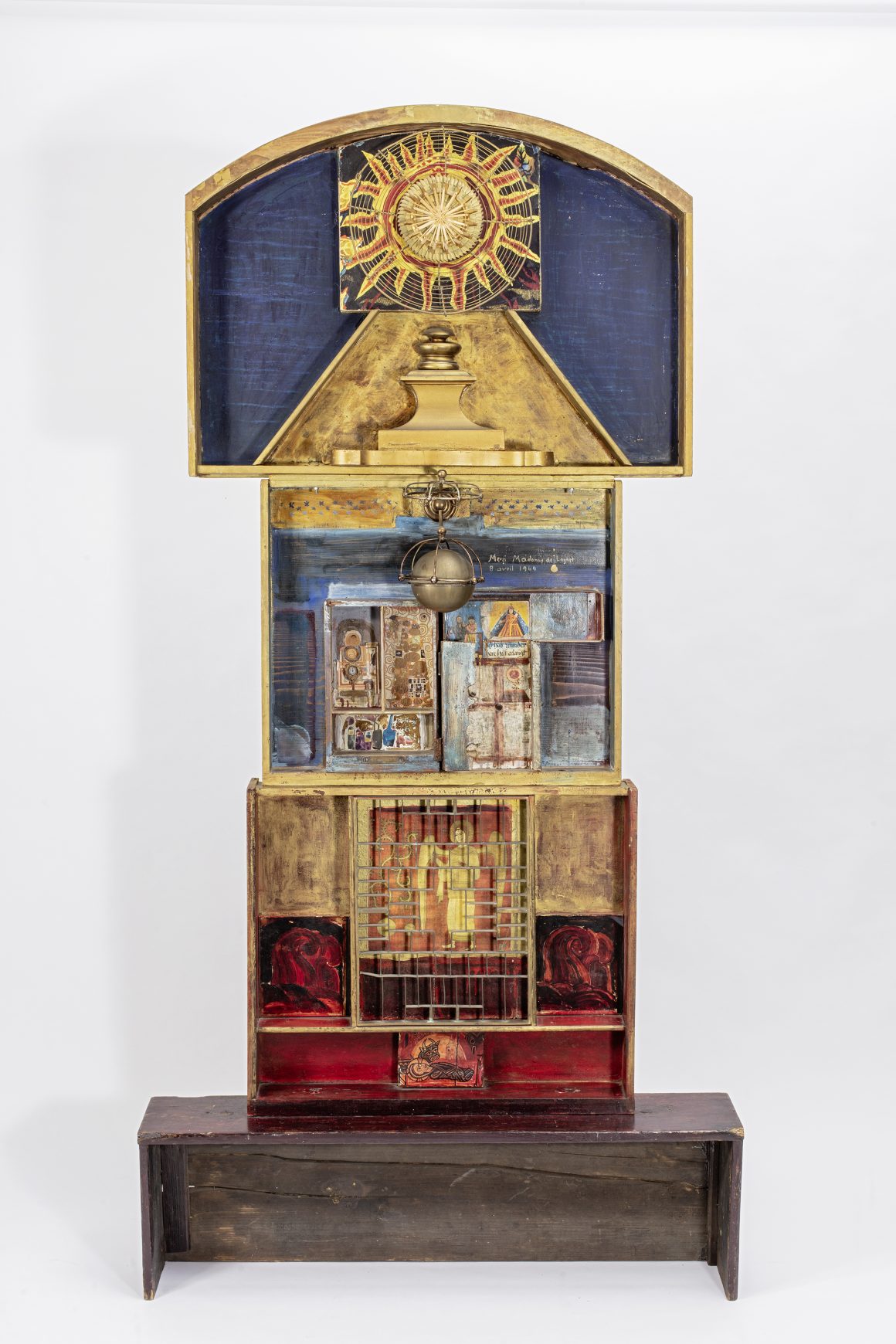
Some of the artists have never been exhibited in the UK, whilst this is the first time the work of Eva Wipf has been exhibited outside her native Switzerland.
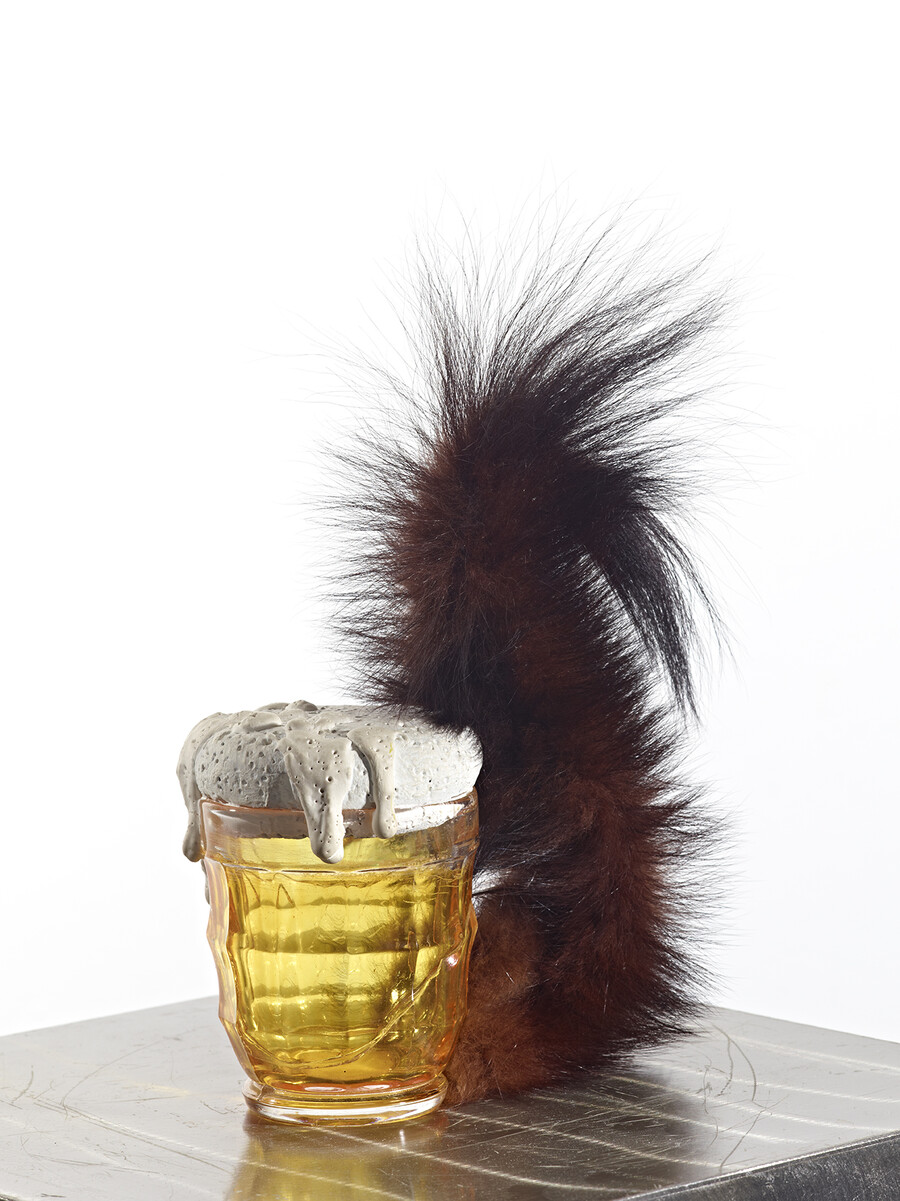
The only woman here to have been openly acknowledged as part of the early Surrealist movement is Meret Oppenheim. Her Squirrel 1969, combining a beer glass and fur tail, another good example of the themes running through the exhibition.
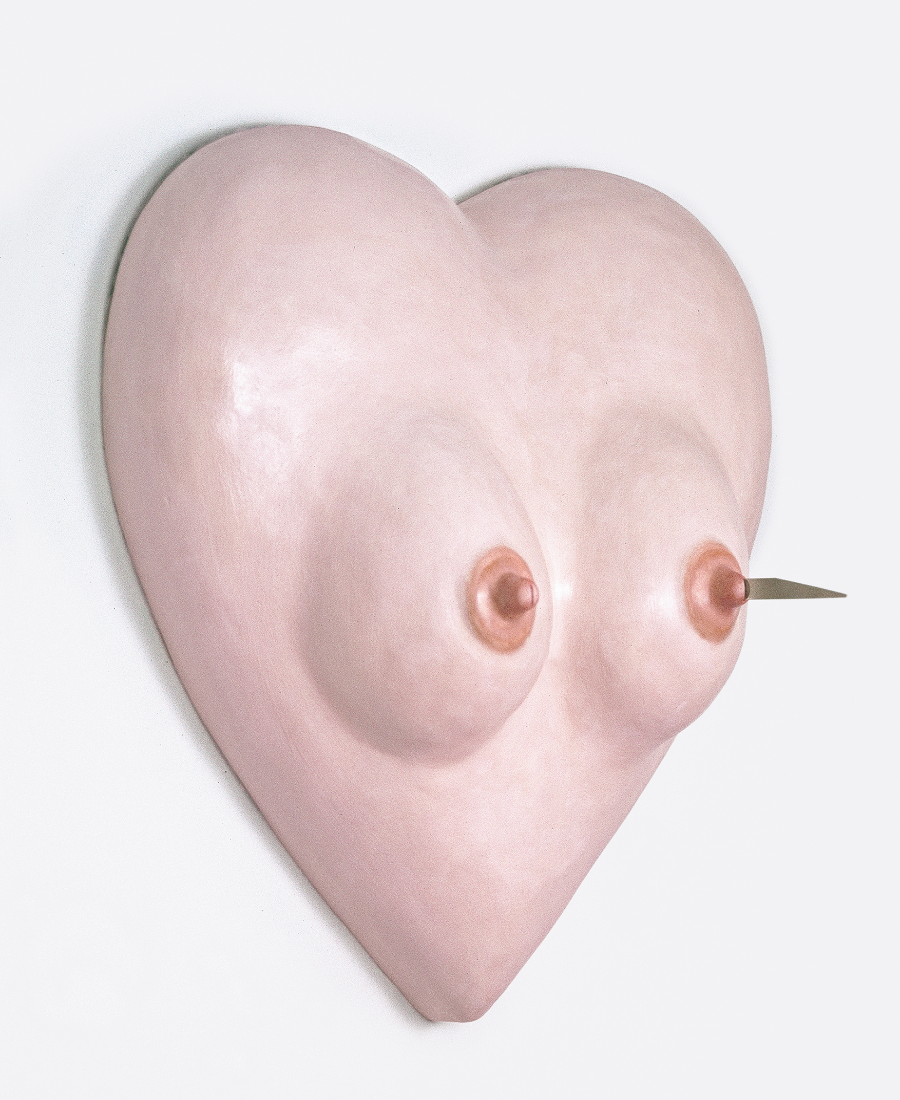
Some of the imagery here is shocking, as in the case of Renate Bertlmann’s knife bearing breast, Ex Voto 1985. Others, such as her Carmen – enfant terrible 2001 offer a certain glamour.
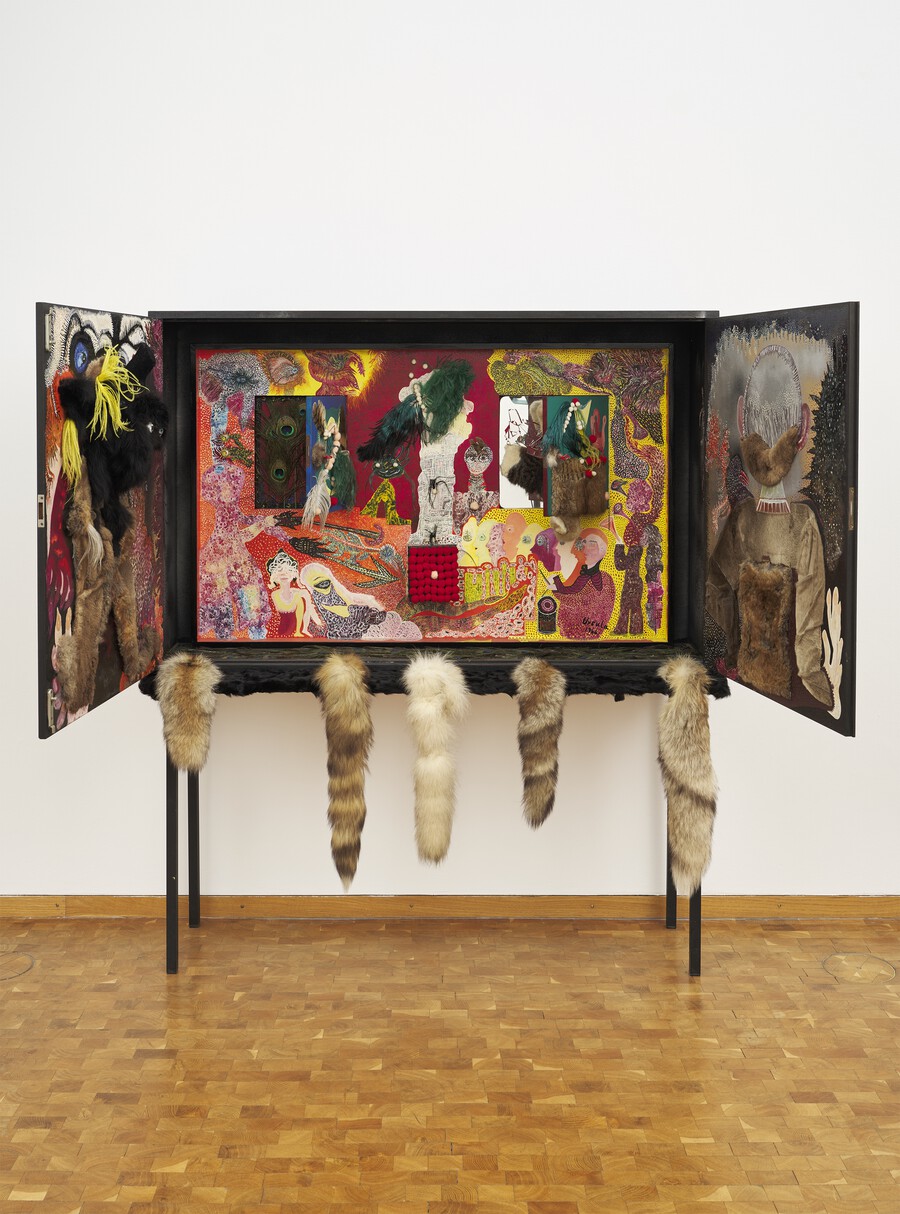
Whilst Ursula’s Pandora’s Large Cabinet 1966 and Eva Wipf’s Votive Shrine III draw upon religious and folklore
iconography to present detailed, colourful structures.
This exhibition provides a very unique view of surrealism where you will be rewarded by spending time looking at the sculptures from a variety of viewpoints.
Forbidden Territories: 100 Years of Surreal Landscapes, Hepworth Wakefield
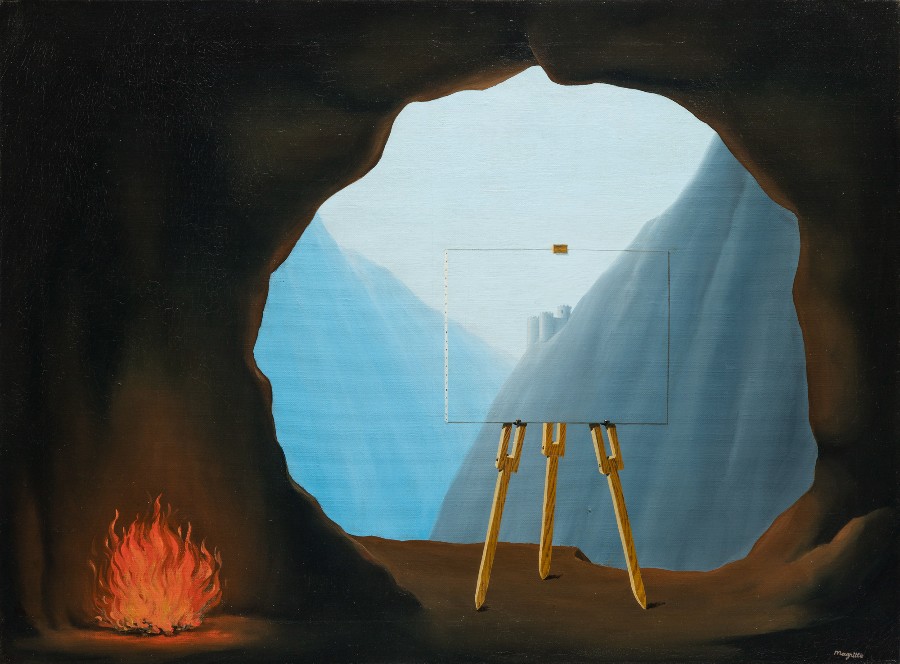
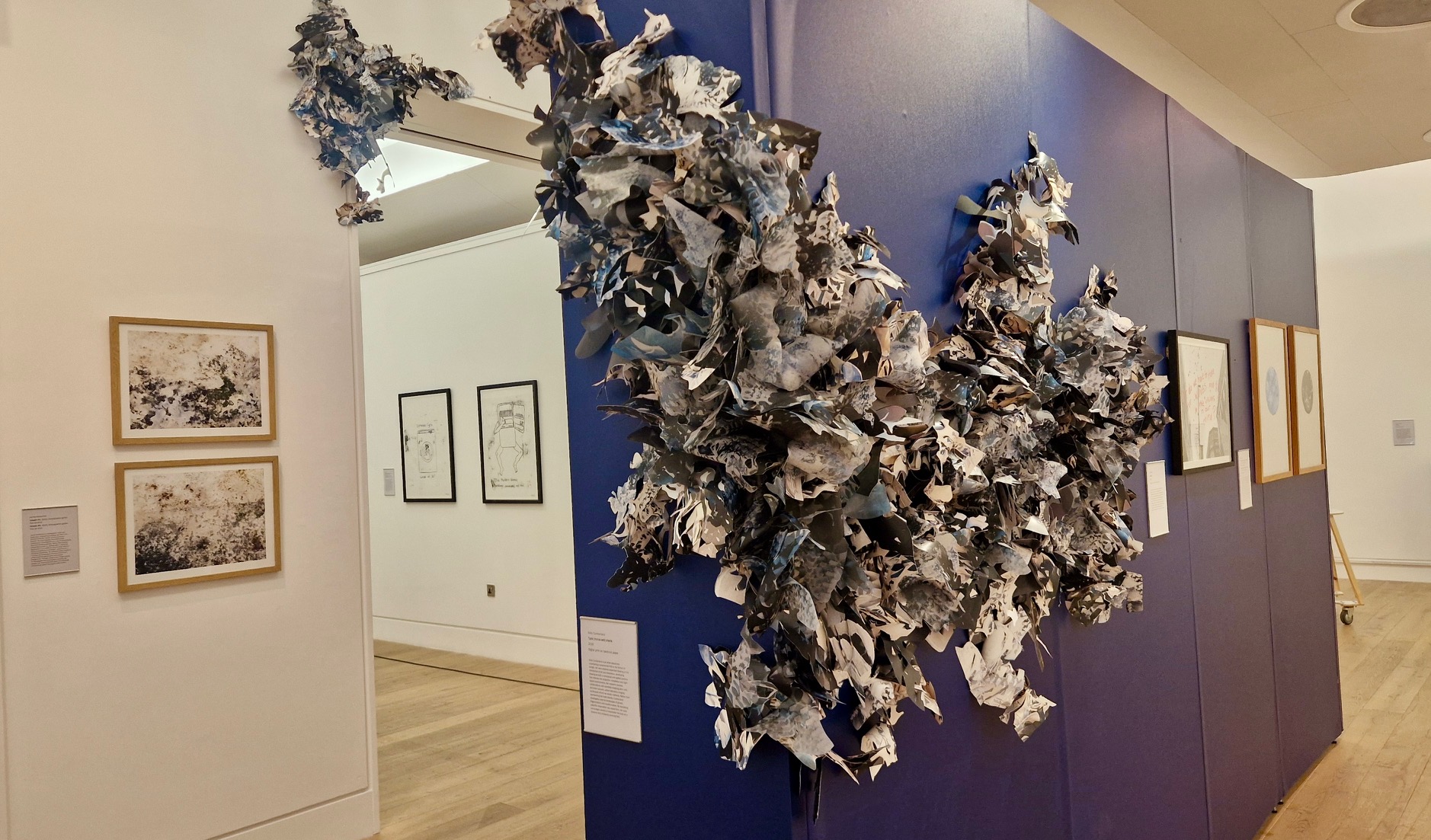
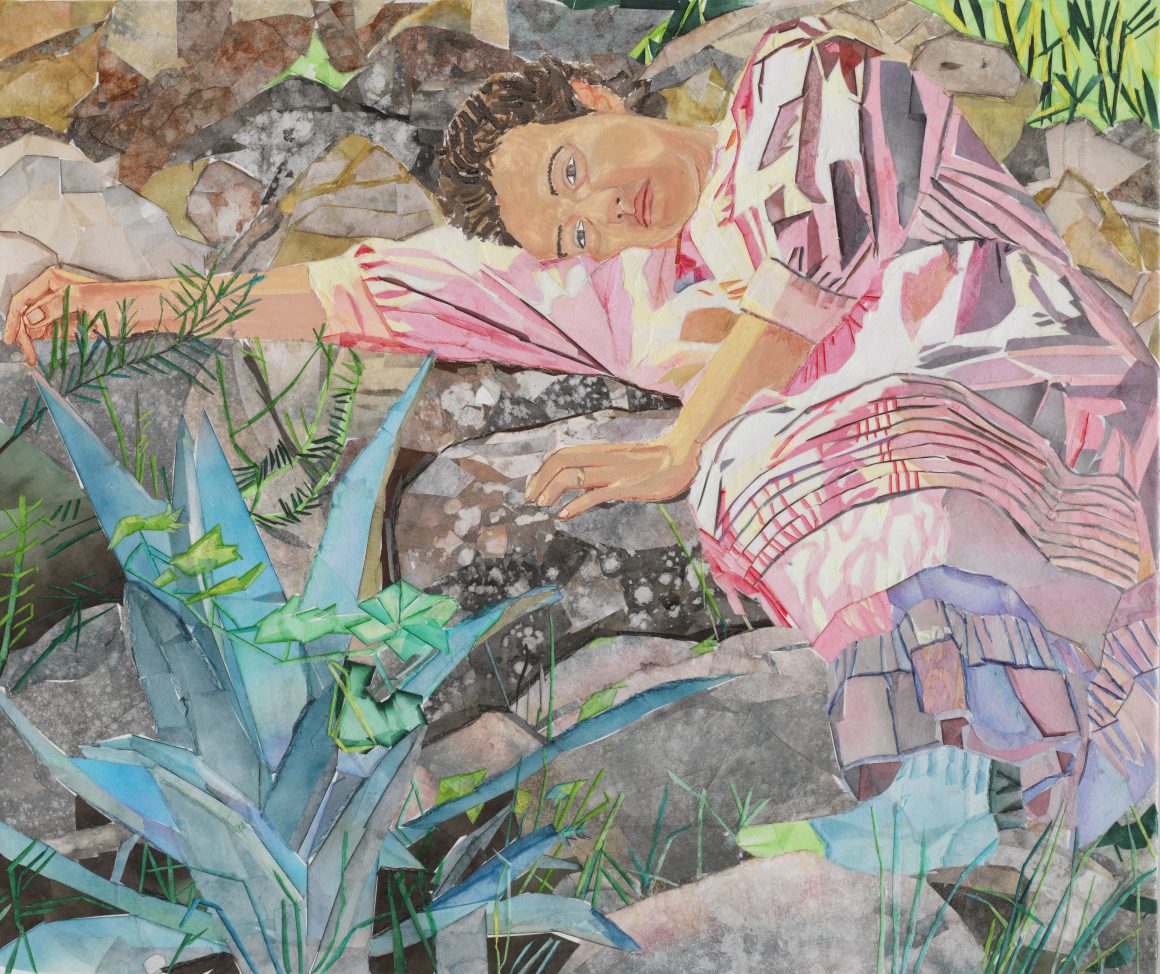
The Hepworth exhibition, Forbidden Territories:100 Years of Surreal Landscapes includes some of the big names of surrealism: Yves Tanguy, Rene Magritte, Salvador Dali, Max Ernst and Leonora Carrington. With over 100 pieces on display, it is an exhibition that looks to the past, present and future and includes three site-specific commissions by Nicolas Party, Aliyah Hussain and R Robertson.

The exhibition was at its most interesting when the new and old are juxtaposed. Nicolas Party is a Swiss artist, known for monumental pastels. At the Hepworth, he has surrounded the darkness of Max Ernst’s Bavarian Forest with floor height brightly coloured trees. In another room, Lee Miller’s photographs of an Egypt emerging from colonial rule sit alongside the images and sculptures of contemporary Egyptian artist Wael Shawky.

Surrealism, a movement largely begun by European men, is shown to have branched in many different directions. A section entitled Bodies of Water shows how artists have used bodies of water to explore the flow of sexual identities and stereotypes. Marion Adnams, Eileen Agar, Dora Maar and Edith Rimmington all used water to explore the female presence. Contemporary artist Ro Robertson uses metal sculpture to focus upon their relationship to the sea and the fluidity of gender.
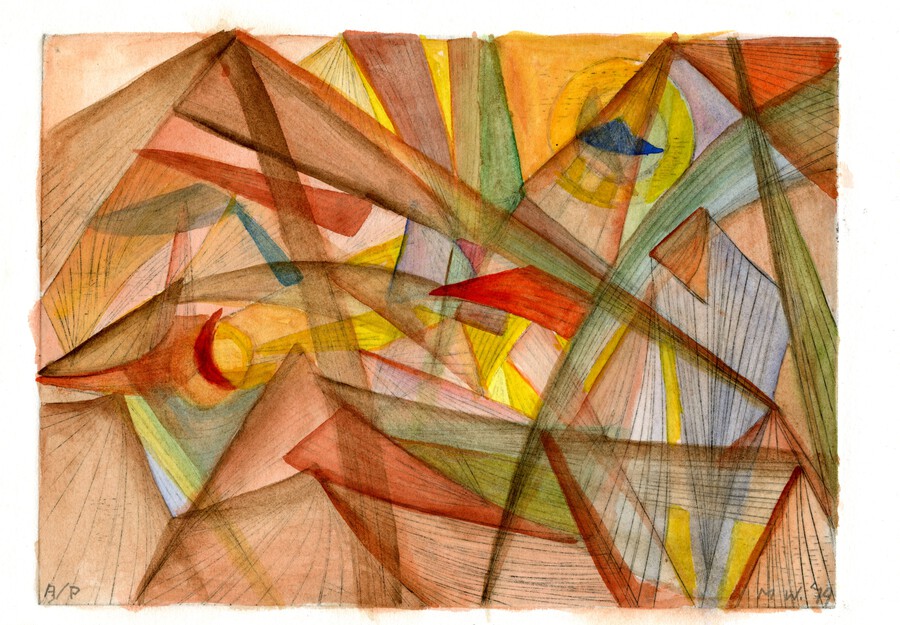
Within the exhibition is an area devoted to paintings and prints by Mary Wykeham. Last year, Silvano Levy published Mary Wykeham: Surrealist from the Shadows. He will be speaking about her career at the gallery on Saturday 1st March. Wykeham’s journey included working as a nurse, attending the Slade School and Grosvenor School, studying under Fernand Léger and Henry Moore, and becoming a war artist. She painted, made prints and published poetry but then abandoned her artistic career to become a nun. This is the largest public showing of Wykeham’s work since her solo show of 1949 in Paris. A large group of works by this under-recognised Surrealist artist have been donated to The
Hepworth.
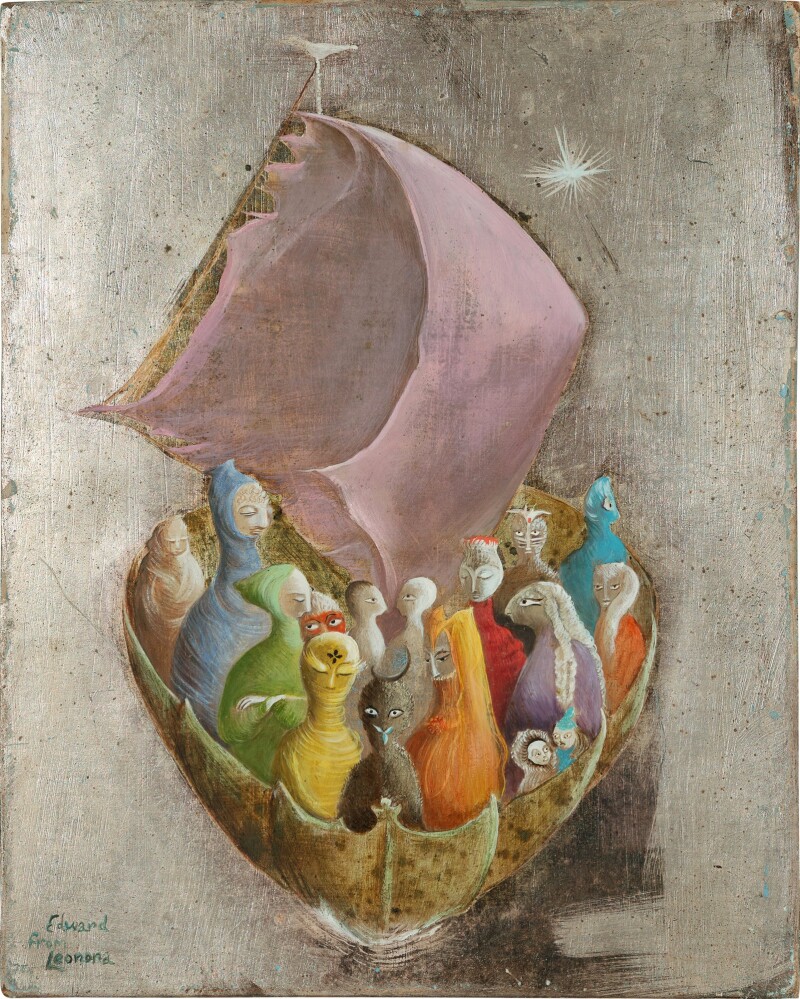
The final room in the exhibition is entitled Biomorphic Natures. We are back to that thin line between human and nature. As we enter a period of ecological crisis, then our relationship to the environment seems even more relevant than when surrealism was born, at the same time as the term ecosystem first developed in the 1930s. Biomorphic sculptures on display here include works by Henry Moore, Hans Arp and Leonora Carrington. These stand alongside contemporary sculpture and drapes designed by Aliyah Hussain.
Leeds has a long relationship with surrealism. This year, Alex Robertson, who worked at Leeds Art Gallery for over 30 years, sadly died. Robertson was the driving force behind the 1986 landmark, exhibition ‘Surrealism in Britain in the Thirties: Angels of Anarchy and Machines for Making Clouds’ that recreated the London exhibition 50 years on that had first introduced surrealism to a UK audience. He would be glad to know that gallery visitors are still finding pleasure in surrealism in Leeds and Wakefield and that the genre still has a lot to offer.
Henry Moore Institute, The Headrow, Leeds, LS1 3AH
Free entry
Open Tuesday – Sunday, 10am–5pm
The Hepworth Wakefield, Gallery Walk, Wakefield WF1 5AW
Exhibition entry is £13 / £11 / FREE for Members, Wakefield District residents and under 18s
Open Tuesday – Sunday, 10am – 4pm
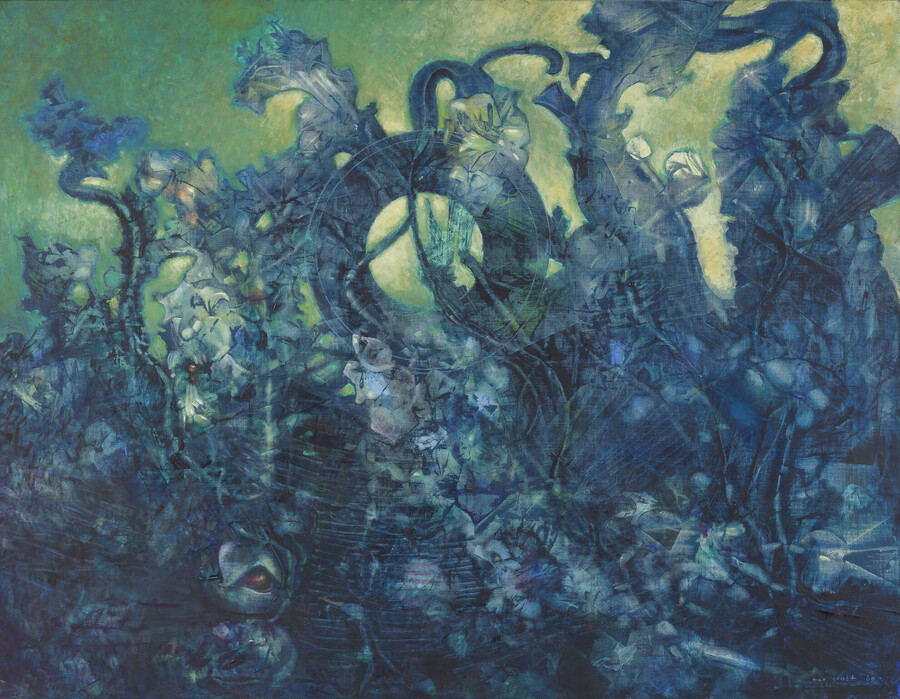
Above and Main image: Max Ernst,La dernière forêt,1960-1970. ©ADAGP, Paris and DACS, London.Deposit of theCentre Pompidou, Paris Musée national d’artmoderne / Centre de création industrielle.Photo: Cyrille Cauvet / Musée d’art moderne.