Last week, the 3-day UK Real Estate, Investment & Infrastructure Forum (UKREiiF) came to Leeds.
With panel discussions on every aspect of construction and property management, itwas difficult to know what to focus on, but I was impressed by the number of organisations stressing the importance of culture and creativity to developing projects, whether that be urban renewal or developing new sites.
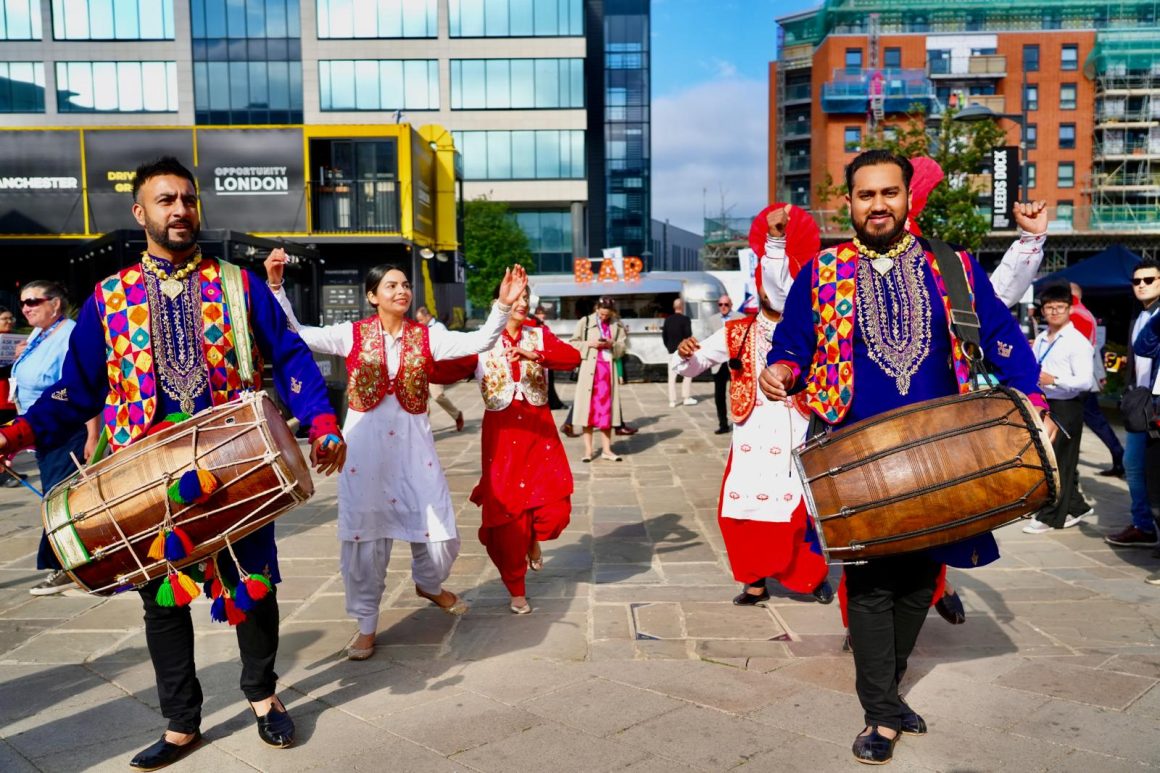
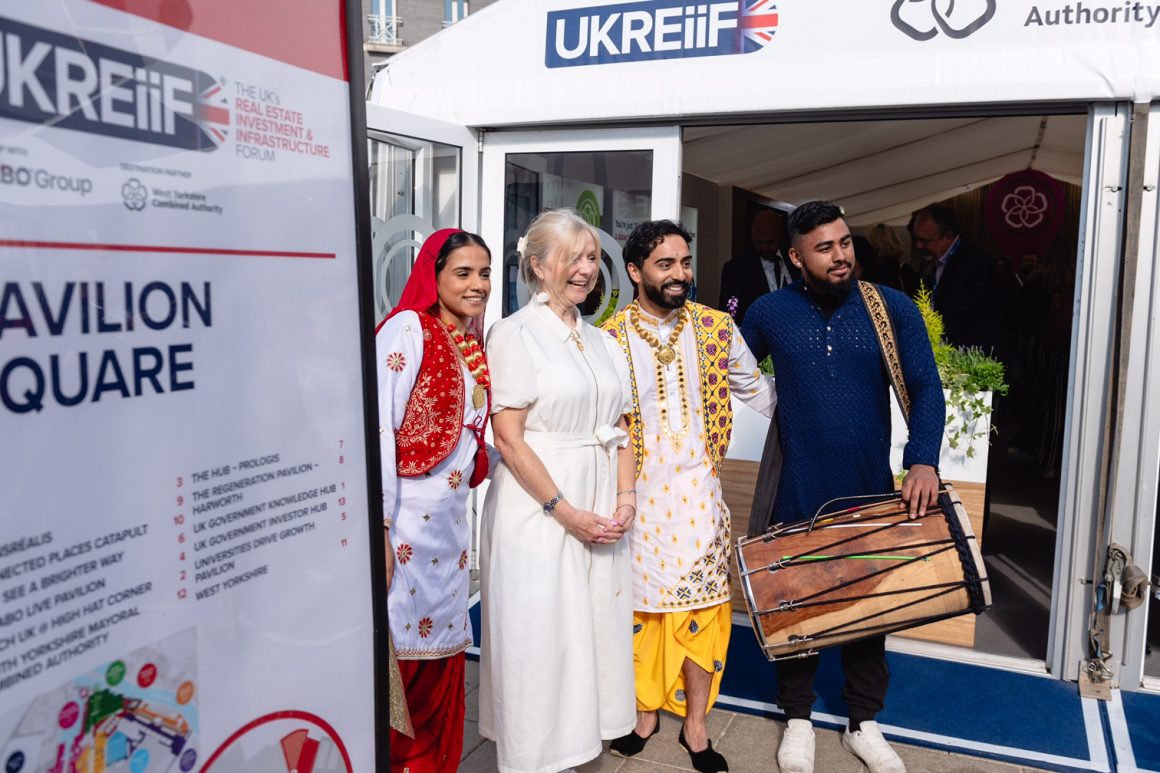
West Yorkshire set the tone for the week by starting day one with music and dance. Northside Bhangra, a troop of dancers and drummers from South Asian Arts (SAA), toured the site before finishing at the West Yorkshire Pavillion. Following a short welcome from Mayor Tracy Brabin the music continued with Misha, a multi-cultural group sponsored by SAA.
An hour later I was attending a panel discussion entitled Let’s Get Cultural, which made the case for uniting towns and cities through the arts. Examples came from across the country.
Anthea Harries talked about her experience of developing the area around Kings Cross station. In my youth, I would arrive at Kings Cross just in time to grab a coffee, before heading North. Now, I am happy to dwell: to walk along the canal admiring permanent or temporary installations, visit a bar or restaurant or just sit and read. The redevelopment has encouraged me to spend money and contributed to my wellbeing.
We were told that a Bristol evaluation estimates that their cultural strategy has contributed £150 million to the local economy. This includes income from cultural visits but also savings through wellbeing impact. Laura Dyer from the Arts Council talked about how places become memorable through joining with others, whether that be watching a performance, eating at a restaurant or sharing heritage.
South Yorkshire ran a session entitled Culture as a catalyst for innovation and growth, outlining developments that have promoted the area and grown community. Speakers were asked for their personal favourites which included Barnsley Youth Choir (which now has 900 members), the Danum Museum, Art Gallery and Library, Cannon Hall, Elsecar Heritage Centre and Wentworth Woodhouse.
The South Yorkshire examples were valued for their community involvement as well as their cultural contribution. Wentworth Woodhouse is the UK’s largest stately home, but it is run as a community asset. CEO Sarah McLeod talked about how the community raised funds to buy the estate and how they continue to be central to its development. If you are looking for a day out from Leeds there are some great options in South Yorkshire.
Both South and West Yorkshire are fast becoming alternatives to London for the film and music industries. Sheffield-based Warp was behind Adolescence, the second most watched Netflix series. We are now familiar with seeing Leeds, Bradford and Calderdale take starring roles on TV and cinema screens.
I spent some time at Mumtaz on Leeds Dock talking to people from Bradford. The greening and pedestrianisation of Bradford City Centre combined with Bradford City of Culture 25 has seen a 25% increase in City Centre footfall this year. The opening event, RISE, in January, attracted thousands of people to the City Centre despite the icy weather and this month the Bradford Progress saw a musical journey across the Bradford Area. Forthcoming highlights include the Turner Prize at Cartwirght Hall, a BBC Prom at St Georges Hall and performances of The Railway Children which begin with a train journey from Keighley station.
Cultural announcements regarding Leeds were also made at the event: the purchase of freehold by Royal Armouries, the extension of the Bristish Library at Boston Spa and plans for a new library at Temple Works. However, I wanted to experience art rather than just hear about it. I joined Sarah Priestley from Leeds City Council’s Culture Programmes team for a Netwalking Tour: Interweaving Regeneration and Public Art.
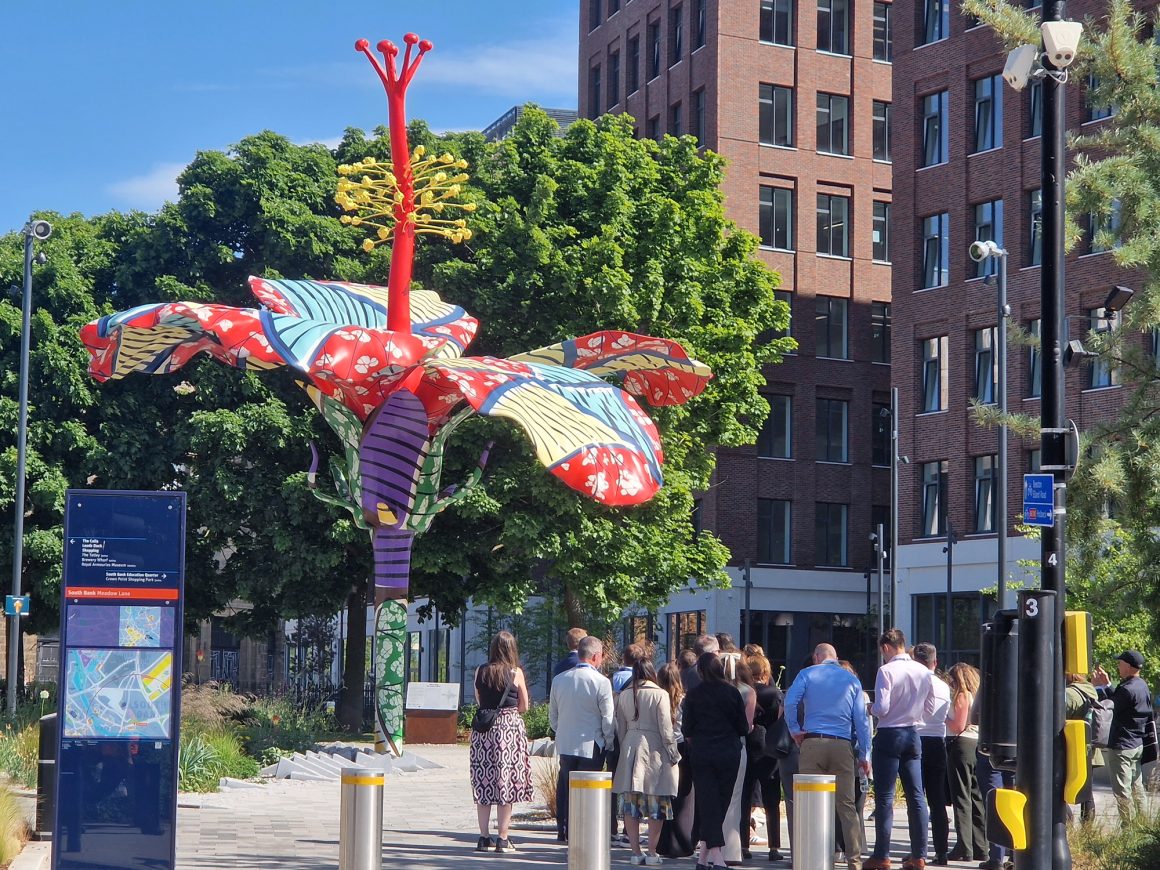
The route of the walk, from the Armouries to City Square, enabled us to consider how art can be commissioned in different ways and for different reasons. We saw art used as part of a development in Steeped Vessels at Brewery Place, a sculpture that references the area’s brewing history. We saw art that has added interest to a drab area as in the case of Grey Heron (Peter Barber 2019), painted on a bank of the River Aire. We saw how the statues in City Square have perhaps lost their cultural significance, having been selected on the whim of the powerful and rich of the day without any real link to Leeds. However, we really enjoyed Hibiscus Rising, the striking sculpture from international artist Yinka Shonibare. Commissioned by the David Oluwale Memorial Association (DOMA), with contributions from many individuals and organisations, honouring the life of the British Nigerian and Leeds resident whose personal story inspired local people to create a legacy to mark his life – a good example of how art can be attractive, socially relevant and tell the story of a place.
I left UKREiiF with a renewed belief in the importance of culture to placemaking. In the past this has sometimes meant gentrification, with culture that failed to draw upon the history and culture of a region and events beyond the pocket of most people. It was good to see that projects are now attempting to involve the local community and preserve historical roots.