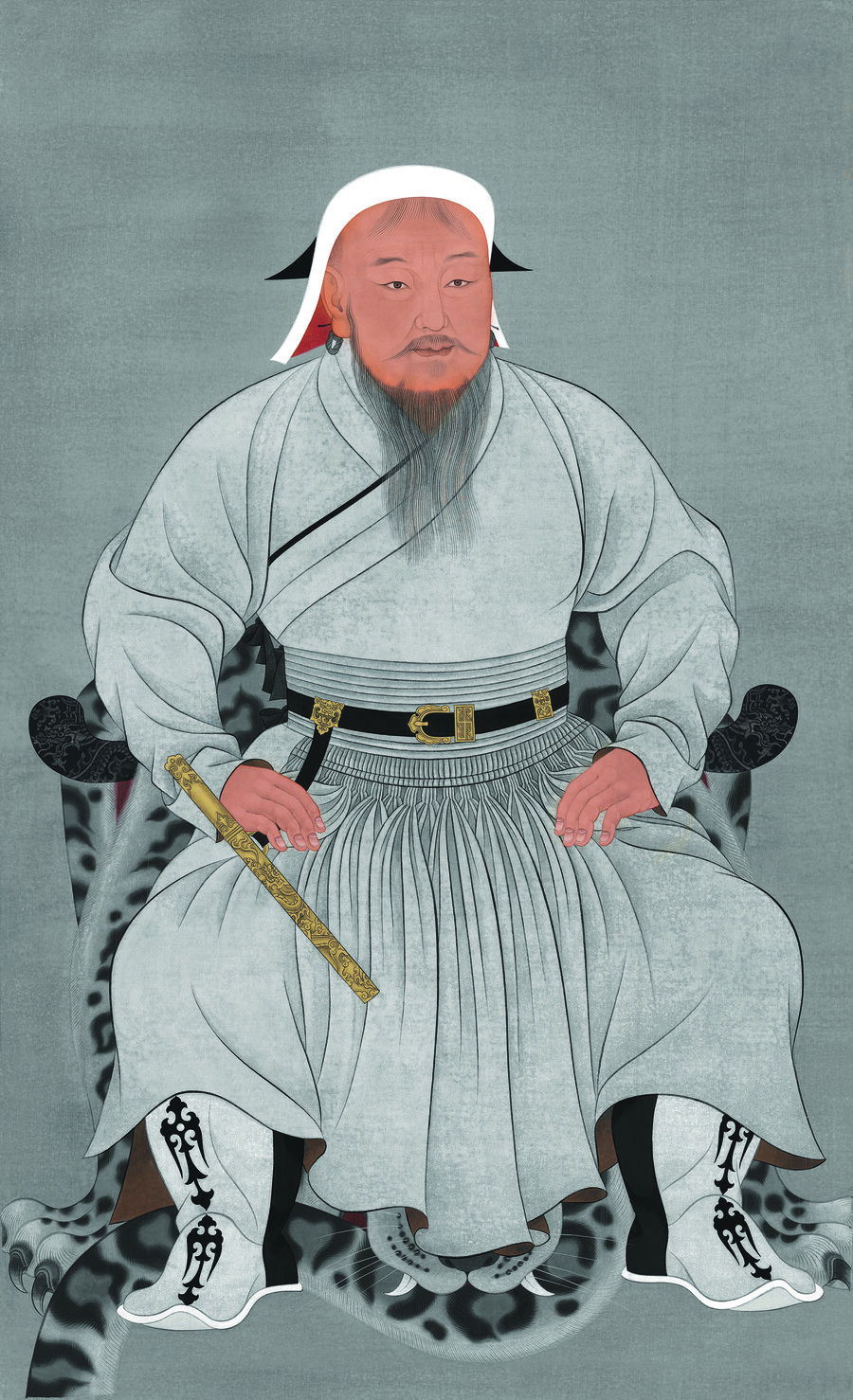
Genghis Khan is known as a great warrior. Not surprising then that the Royal Armouries, with their focus on military history, should want to host an exhibition about the legendary leader.
Genghis Khan: How the Mongols changed the world is a travelling exhibition produced by Nomad Exhibitions in association with Nantes History Museum and the Chinggis Khan National Museum. The fact that it is a travelling exhibition seems befitting for an evaluation of the world’s most significant nomadic civilisation.
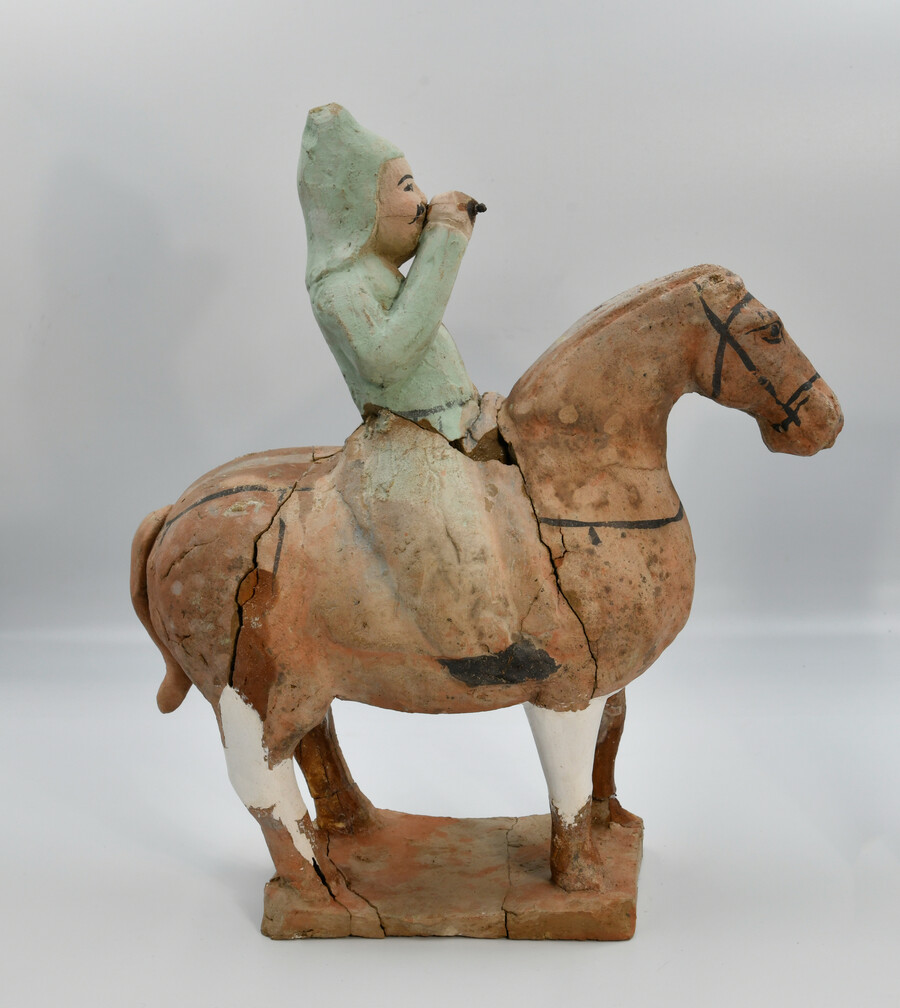
The exhibition entrance features a video of mongols on horseback, camel and on foot. Today, there is a tendency to perceive travelling communities of all types as peripheral. This is a reminder of the contribution the Mongol Empire made to world trade, geography and science, alongside their development of warfare. Their strength lay in their ability to travel; to ferry goods and spread ideas.
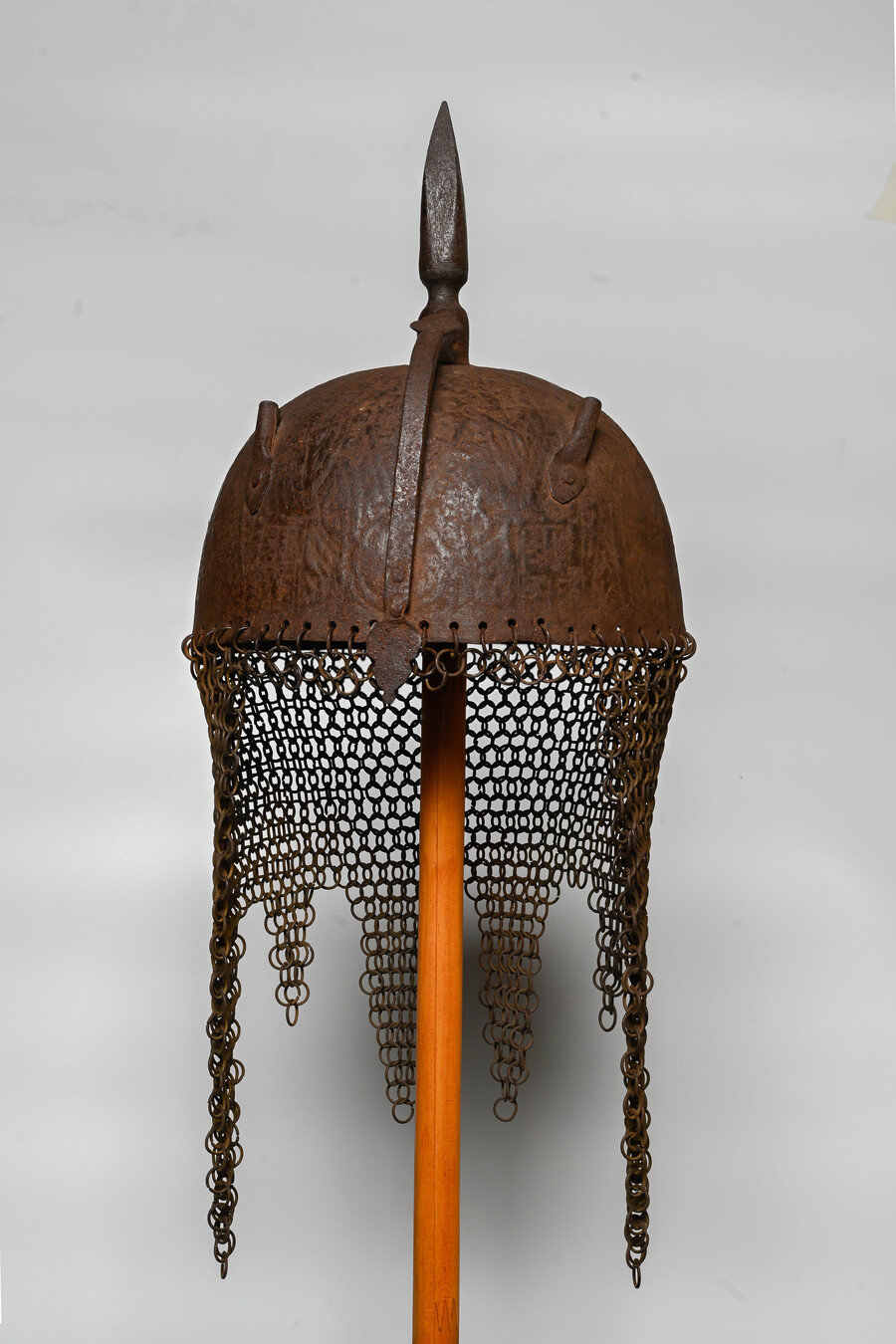
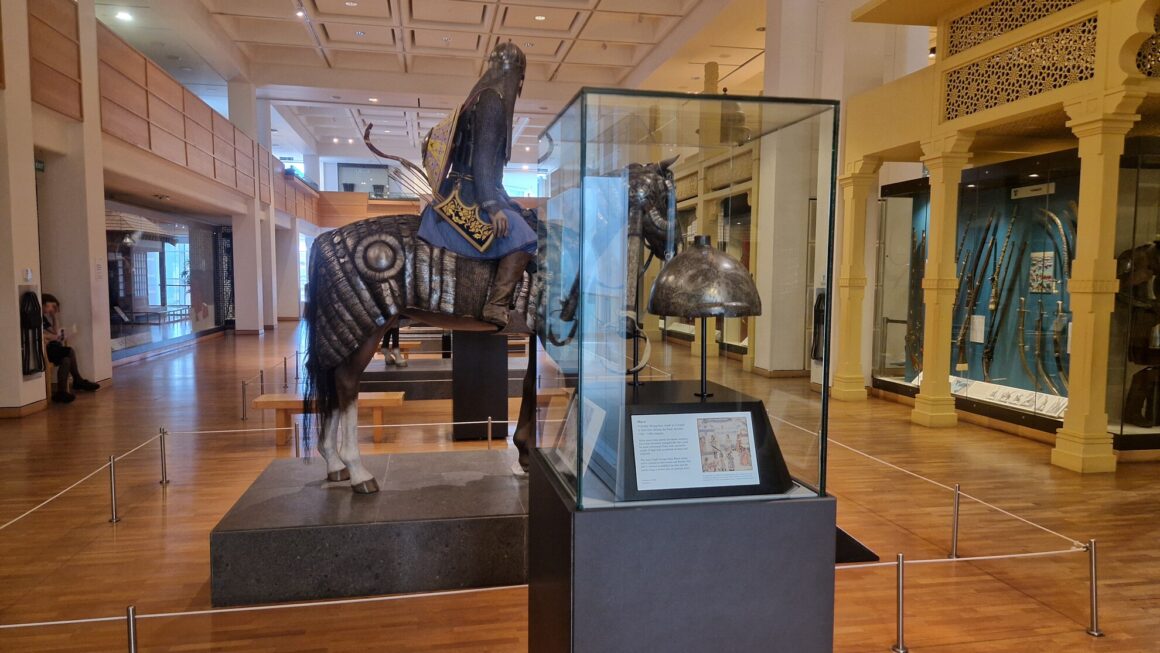
One of the exhibition’s curators, Marie Favereau, talked to me about how in the field of Mongol artefacts there ‘is something new every year,’ through archaeology and through discoveries within established collections. Some of the 200 plus artefacts were still in the ground a few years ago. In Leeds, a Mongol mace has been transferred from the Tower of London so it can be displayed alongside a matching Mongol helmet. Both have recently been identified as Mongol and can be seen at the entrance to the Asian and African Gallery. A replica mace can be handled at the exhibition entrance.
Among visitors to the launch event were siblings Katie and Harrison, contestants from Race Across the World. If you were impressed by the vast Mongolian landscapes on the programme, you will enjoy the introductory video which surrounds you with mountains, steppe, and snow. Yet a look at the interactive map will show you that today’s Mongolia occupies a fraction of the historic empire.
There is armour in this exhibition as military campaigns were essential to the establishment of empire and safe passage on the Silk Road trade route. The importance of animals to Mongol society is clear from artefacts and the planning of military campaigns. There is an elaborate replica saddle for visitors to straddle. I liked the detail that military campaigns were avoided in the spring and summer, so that mares could give birth and nurture their young. During the school holidays the Royal Armouries will be presenting twice a day free Mongolian-style horse archery shows in the Tilt Yard.
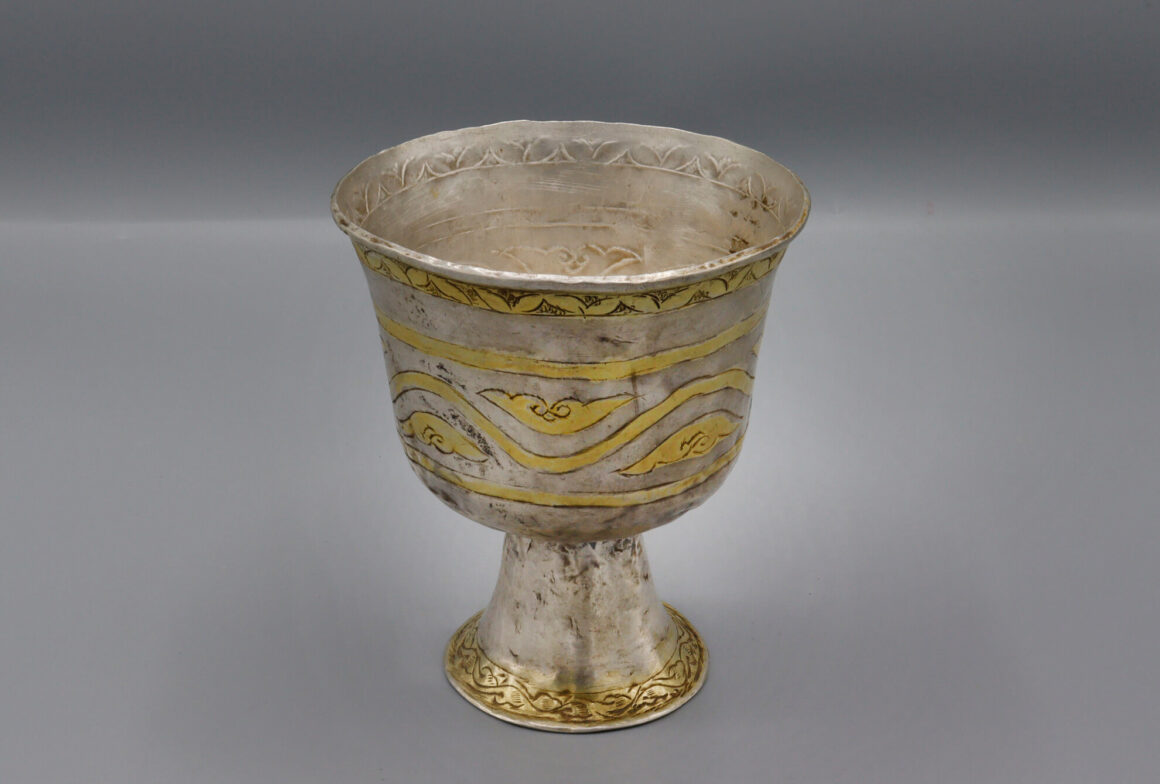
The exhibition goes on to give a glimpse into a complete society, not just a warrior class. Safe travel on the Silk Road, provided through the empire, enabled the exchange of goods, ideas and knowledge. Artefacts related to trade include blue and white pottery, which significantly affected ceramic design in China and Turkey, and an early example of paper currency. Scientific discoveries, particularly in the field of astronomy, are highlighted. The Mongol Empire was able to bring together scholars from the Islamic world and China to share knowledge and develop new concepts. I have found a presentation on how the Mongols influenced the development of cartography fascinating.
The military campaigns were without doubt violent and brutal but once established the empire seems to have been less male dominated and dogmatic than might be assumed. Although there are clear signs of spirituality and religious ceremony linked to the Mongol Empire the exhibition shows how it was flexible enough to welcome followers of all the world’s major religions. The empire continued after the death of Genghis Khan through his bloodline, with power having already been distributed to his wife and daughters not just his sons. There are also some fascinating stories related to other women. Favereau is keen for these ‘forgotten histories’ to be shared.
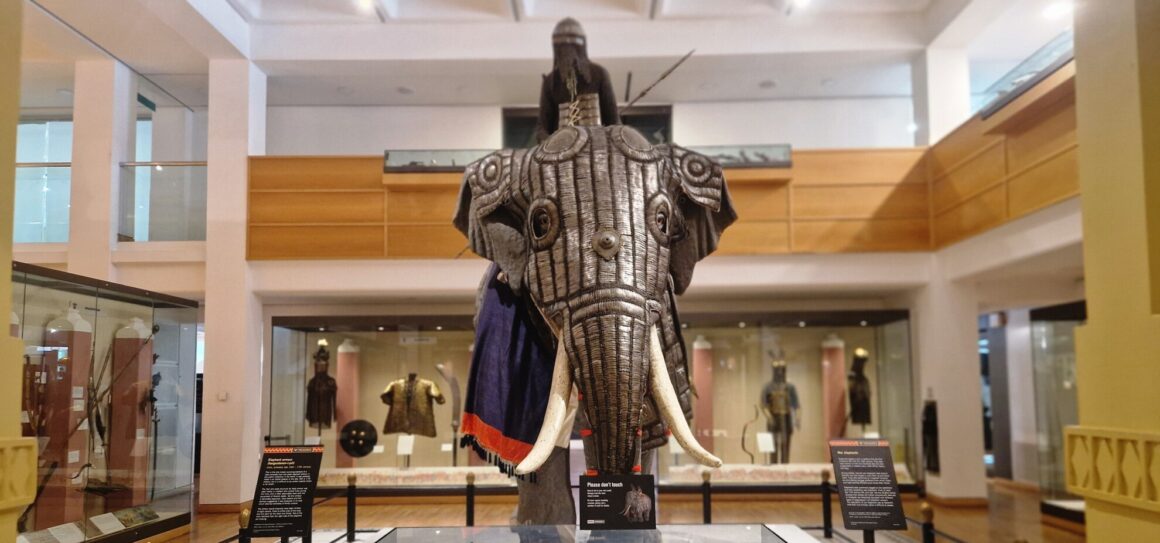
I talked to Matthew Wood about the relevance of the exhibition to the wider Royal Armouries collection. He explained that for him, the importance of the Mongol Empire was in the ‘legacy they provided’ for future warfare. The Asian and African Gallery is full of examples of combat techniques and weapons that are part of that legacy. The museum has created a Family Trail that takes you through some of these exhibits, including the Chinese bow, Timurid shield and the magnificent, armoured Mughal elephant. Although Genghis Khan did not recognise the value of war elephants, releasing those he found at Samarkand to die, his grandson Kublai Khan used elephants on the battlefield and ceremonially. The Royal Armouries has regular gallery talks and combat demonstrations. No doubt many of these will carry a Mongolian flavour this summer.
There is free admission to the exhibition for children under 16,
Adult admission is £9, or £7 concessions.
Admission to the Asian and African Gallery, and all the other Royal Armouries galleries, is free.
The exhibition runs until 1st November 2026. Tickets are available here.