Based on the novel by Khaled Hosseini and adapted for the stage by Ursula Rani Sarma, directed by Roxana Silbert, A Thousand Splendid Suns tells the tale of the lives of two women in Kabul from the 1970s to 2001.
The challenges in their lives change over time, but in the face of constant threat, the two women overcome their differences and are drawn together in solidarity.
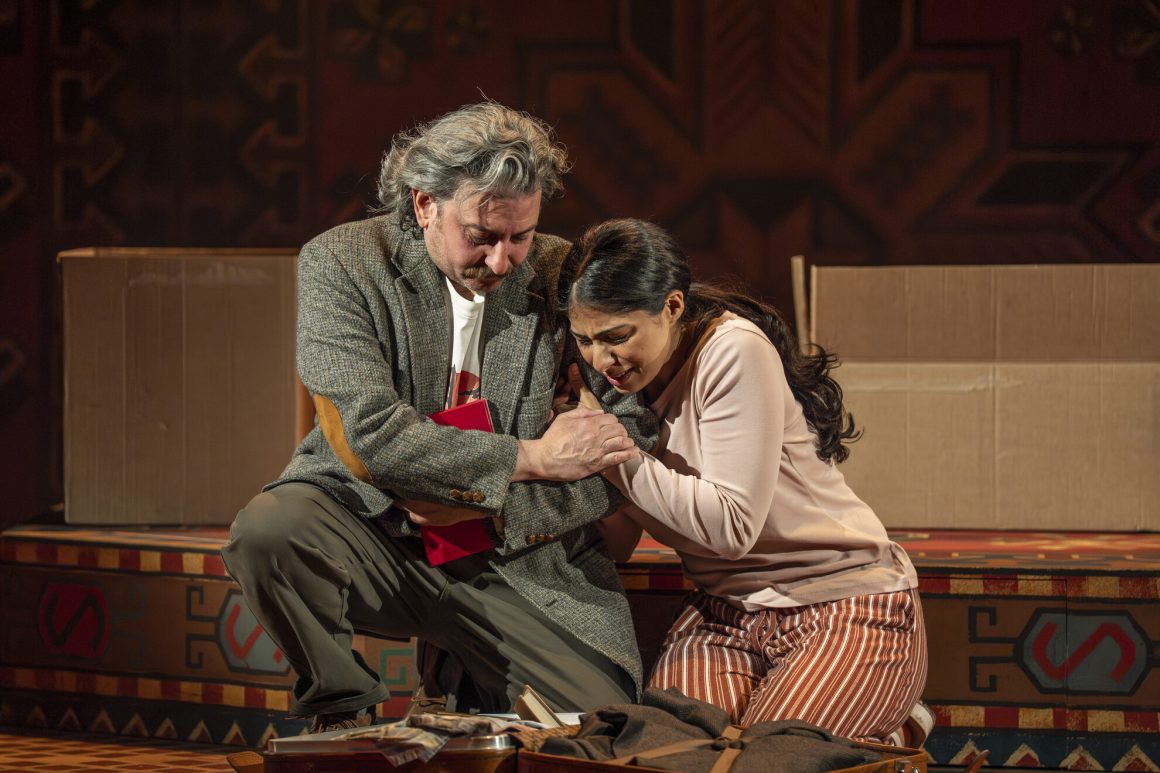
The set design by Simon Kenny revolves around a series of hexagonal platforms covered in richly patterned carpet. Carpets, traditionally woven by women, are prized possessions in Afghanistan. The patterned textiles invoke a rich cultural heritage without ever showing Kabul. The platforms give a sense of separate rooms, courtyards or even the street outside, whilst the extension of the pattern reaches up the wall ending in a jagged line representing the mountains beyond the City.
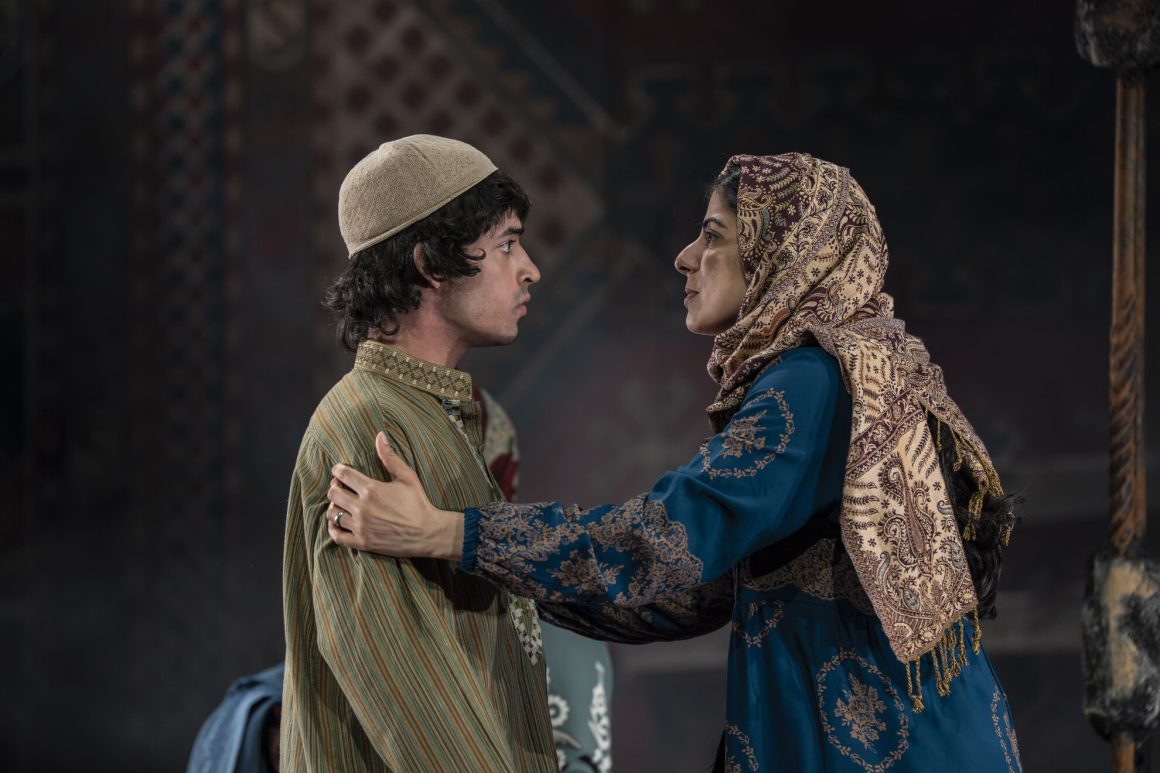
The play begins with Kerena Jagpal, as fifteen-year-old Laila, and her parents packing to flee across the mountains to Pakistan. Her father (David Ahmad) evokes a disappearing Kabul of art, intellect and female contribution as he tries to select which poetry books to pack with Laila. A man who appreciates his daughter’s mind and sees no reason to hasten her marriage. Laila life changes dramatically when the house is shelled and her parents killed.
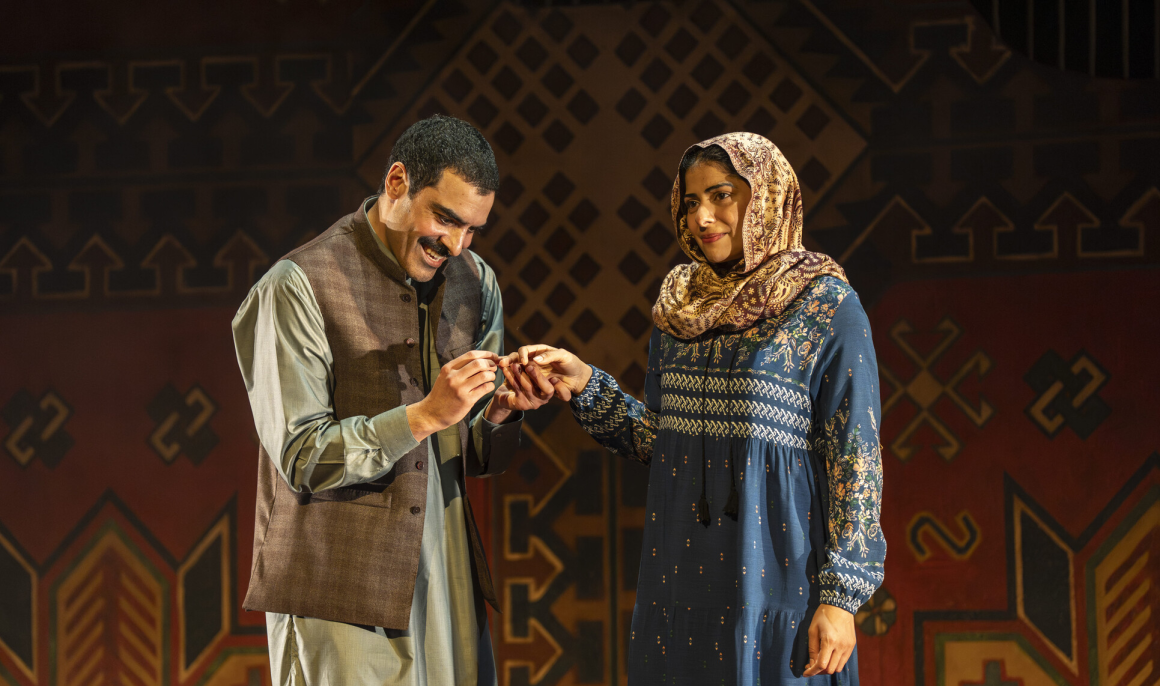
Rescued from the rubble by Rasheed (Jonas Khan). she accepts an offer of marriage and becomes his second wife. Initially this leads to conflict with Mariam (Rina Fatania), Rasheed’s first wife who he married after his original wife and child died in childbirth. A serious of miscarriages have left their relationship bitter and fraught.
The central narrative of the story is the bonding of the two women as their family situation becomes increasingly hazardous. The action reveals their individual histories and the trauma they both face. Gradually, they become united in their determination to protect children and form a united front against their husband. Both actresses put in excellent performances – Fatania makes Mariam’s hard edges gradually soften as she becomes committed to her found family. Jagpal is completely convincing in the way she changes from energetic teenager to responsible mother, seeming to age on stage.
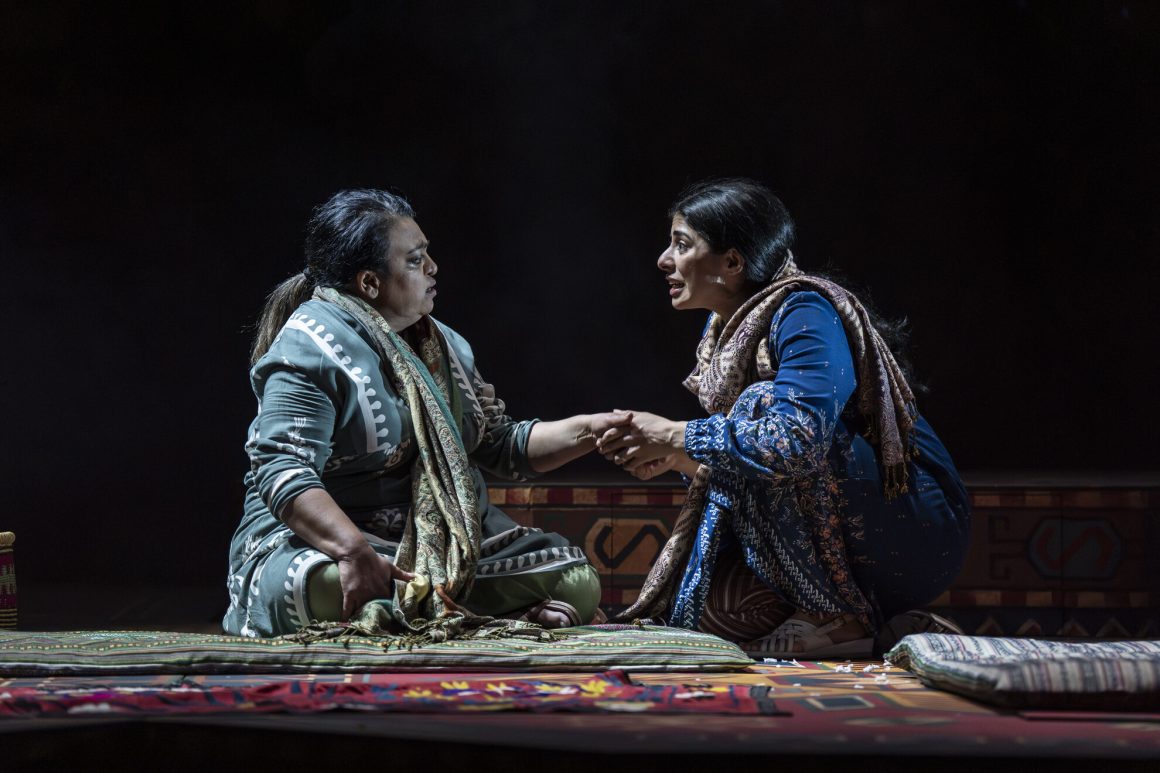
Despite a background of war, domestic abuse and oppression there is warmth and humour in this production. This springs from characterisation and occasionally the sheer absurdity of their situation. The details of the Taliban’s new regulations are read by Aziza, women must stay at home, but no one can play cards or keep parakeets. What have parakeets done to offend the Taliban wonders Mariam.
There are moments when we feel we are part of everyday family life. When we see the children tease each other, when Aziza acts out scenes from Titanic, the hottest merchandise at the Black Market. When Mariam and Laila wish for a brighter future for Aziza. Our empathy for the characters grows and makes the brutality even more forceful.
The soundscape for the piece is provided by Elaha Soroor, a singer, songwriter and composer form Afghanistan. She draws upon Afghanistan’s folk traditions to develop a rich enveloping sound that anchors the story in the local culture and supports the storyline. I am not sure how easy it would have been to translate the lyrics into English, but I found myself wondering what was being said, especially when translated by the traditionally dressed BSL interpreter at the side of the stage.
The production has been produced by Birmingham rep, Nottingham Playhouse and Leeds Playhouse. The Leeds run follows on from Birmingham and Nottingham and the nine-member cast are clearly committed to the production and comfortable in each other’s presence; a great example of collaborative working between theatres in an age when production costs are becoming increasingly difficult for individual theatres to manage.
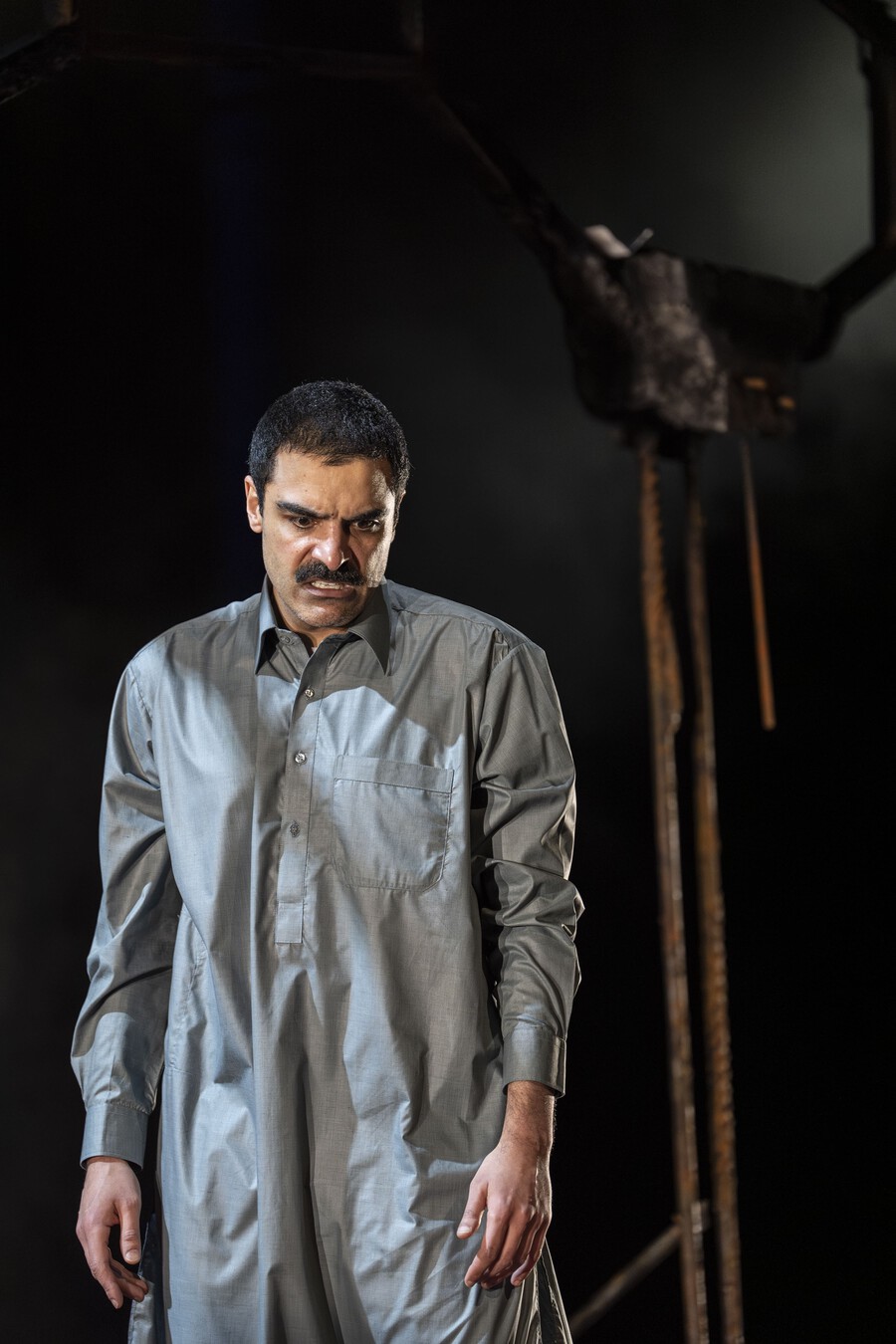
This is a story of brutality, at a societal and domestic level, but it is also a story of hope and life. The story finishes in 2001 but many of the challenges faced by the women of Afghanistan in this story persist today. Add to this the threat to children in other parts of the world and the way that the concept of sisterhood is being undermined by the alienation of trans women, and this is a play for today.
At the end of the performance, we were reminded of the work of Leeds Playhouse as a Theatre of Sanctuary and encouraged to donate to enable the theatre’s charitable work supporting and exploring creativity with refugees.
The production runs in the Quarry Theatre until 14th June.
Leeds Playhouse, Birmingham Rep and Nottingham Playhouse present
A Thousand Splendid Suns
Quarry Theatre, Leeds Playhouse
28 May-14 June
Press Night: Thu 29 May, 7.30pm
14+
2hrs 30mins
Box office 0113 213 7700
Book online at leedsplayhouse.org.uk
Access Performances
British Sign Language (BSL) interpreted: Thu 29 May, 7.30pm; Sat 7 Jun, 2pm
Audio described: Fri 13 Jun, 7.30pm; Sat 14 Jun, 2pm
Captioned: Wed 11 Jun, 7.30pm; Thu 12 Jun, 1.30pm
Access productions at Leeds Playhouse are sponsored by Principal and Access Partner Irwin Mitchell.
Photography by Ellie Kurttz.