The National Theatre’s production of Dear England, written by James Graham and directed by Rupert Goold, brings football to the stage with surprising tenderness, humour and humanity, reminding us that the beautiful game isn’t just about goals, but is also about growth, teamwork and pride.
At its core, Dear England follows Gareth Southgate’s real-life mission to redefine what it means to play for England, both on and off the pitch.
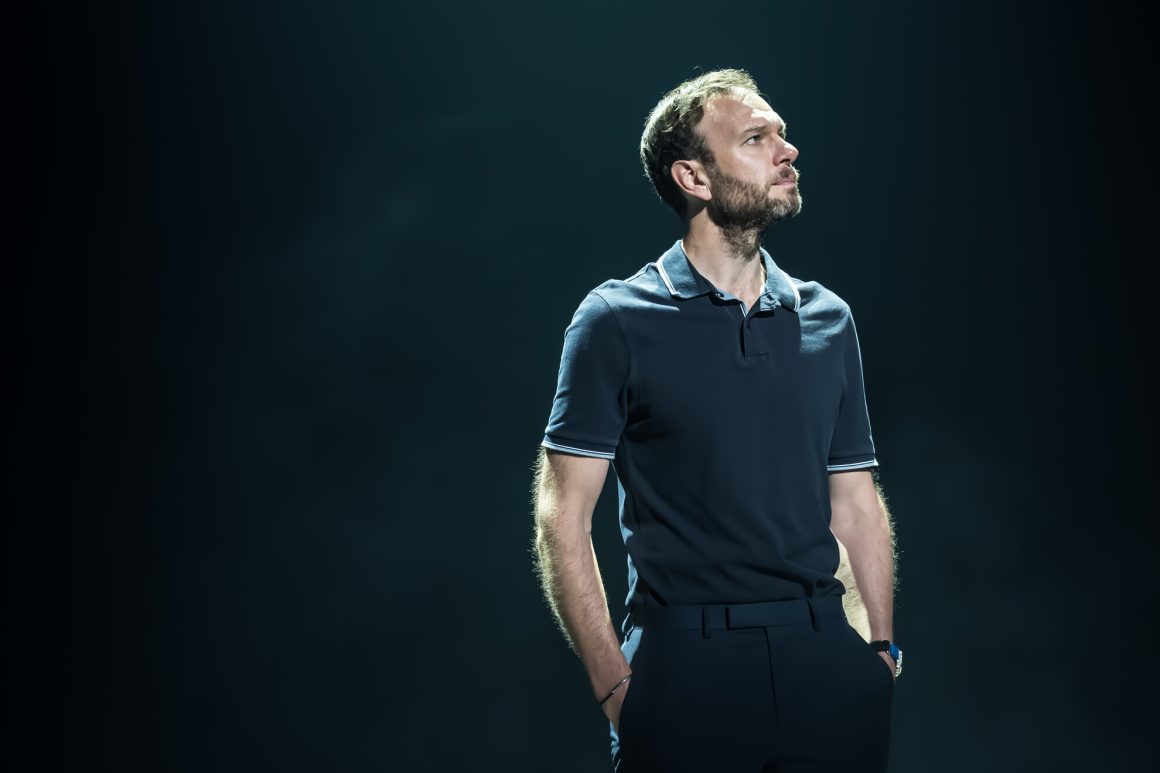
James Graham’s play begins in the aftermath of England’s failures in previous tournaments, with Southgate stepping into the daunting role of national manager after years of disappointment and public scrutiny. What unfolds is not simply a story about football matches and tactics, but a portrait of transformation: of a team, a mindset, and even a nation’s relationship with its sport. Southgate’s leadership ushers in a new era built on emotional intelligence and vulnerability, as he introduces psychologist Pippa Grange (played by Eastender’s Ronnie actress Samantha Womack) to help the players confront their fears, anxieties, and the crippling pressure of representing their country.

The players, initially sceptical and defensive, gradually begin to open up, learning to connect as people rather than just athletes. Through this shift, Graham explores themes of masculinity, identity and national expectation, showing how the team’s evolving mental strength leads to genuine growth both on and off the field.

Even for those who don’t follow football religiously, the story resonates as a powerful study of courage, teamwork and the human cost of carrying a nation’s hopes. It’s a play about people, not just players, a reminder that behind every penalty, there’s a person learning how to face failure and start again, just as Gareth Southgate himself had to do after the infamous penalty shoot-out in 1996.

Although the production can be described as a verbatim-inspired political drama, it is enriched with a strong sense of physical and ensemble theatre, creating energy and cohesion throughout. The extensive use of multimedia elements gives the piece a distinctly modern and dynamic edge, making it both contemporary and visually striking. Balancing sharp comedy with moments of genuine emotional power, Dear England captures audiences through its constant shifts in tone and inventive staging. This blend of styles and contrasts keeps the performance engaging almost consistently, showcasing a production that is as creative and clever as it is moving and memorable.

The performances throughout are a joy to watch. Impersonations of iconic managers are spot-on and often hilarious, with Tereasa May a particular highlight. Gary Lineker’s portrayal was absolutely pitch-perfect, and the mannerisms of both players and coaches were captured with uncanny accuracy. David Sturzaker’s Gareth Southgate anchors the show with warmth and grace, portraying him as the true gentleman of the game, a leader who cares deeply about the minds and wellbeing of his team.

This is a brilliant ensemble performance, with all cast members shining through at different moments. The young men who portrayed the players faithfully captured the individual personalities of each England star, showing us their insecurities whilst also making us laugh out loud at their witty locker-room banter. I was particularly bowled over by the performances of Ian Kirkby and Courtney George, who skilfully multi-roled their way through an extremely wide variety of celebrity impersonations to the utter delight of the audience.

Es Devlin’s minimalist set of nine movable lockers that transform into changing rooms, tunnels and press spaces is a masterclass in simplicity and imagination. Combined with Jon Clark’s lighting and Ash J Woodward’s video design, the production feels dynamic, almost cinematic. Transitions between scenes are slick and choreographed with precision, making the physical movement of the ensemble one of the show’s hidden highlights. Football warmups and exercises are used to move time and location, adding visual variety and showing the growing sense of bond between players and manager.

The second half dips slightly in pace, echoing the repetitive cycles of real tournaments, but the emotional and dramatic payoff remains strong. There was as much tension in the theatre as there ever was on the pitch during those fateful penalty shootouts, blocked again with beautiful creativity and simplicity, with multi- media being skilfully utilised again. By the final whistle, the show leaves you reflecting not only on the evolution of English football in recent years but also on the importance of empathy, resilience and collective belief.

You don’t need to know your Trippier from your Rashford to appreciate Dear England. I’m not a die-hard football fan myself (although I have watched every England cup match), yet I found it uplifting, funny and surprisingly moving, while my football-mad sister relished every reference and recalled fondly each real-life moment. She also helpfully whispered a couple of names of managers into my ear that I didn’t recognise. This is a production that most definitely transcends sport. It’s about leadership, national identity and the courage to change. It’s a clever, heartfelt celebration of the game and the man who helped remind us all what English football is really about.
Dear England is at Leeds Grand Theatre until 8 November.
Photography by Marc Brenner.