A powerful piece of social theatre: When bureaucracy strips away humanity, one man refuses to disappear.
I, Daniel Blake is a gritty, quietly devastating piece of theatre that shines an unflinching light on the failures of our social system.
Rooted in stark realism, it gives voice to those too often unheard, capturing, with painful clarity, the struggle of ordinary people trying to be seen, believed and treated with dignity.
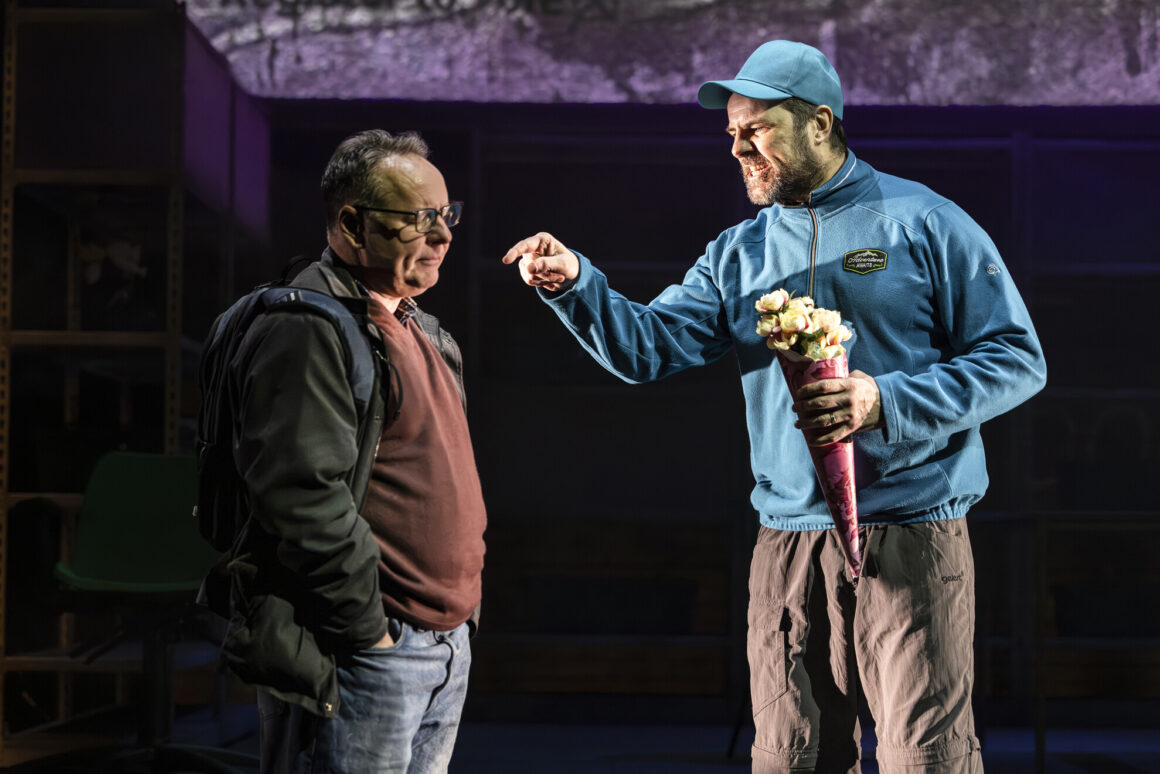
The story follows Daniel Blake, a 59-year-old carpenter in Newcastle, recovering from a heart attack yet declared “fit for work” by a system that seems designed not to listen.
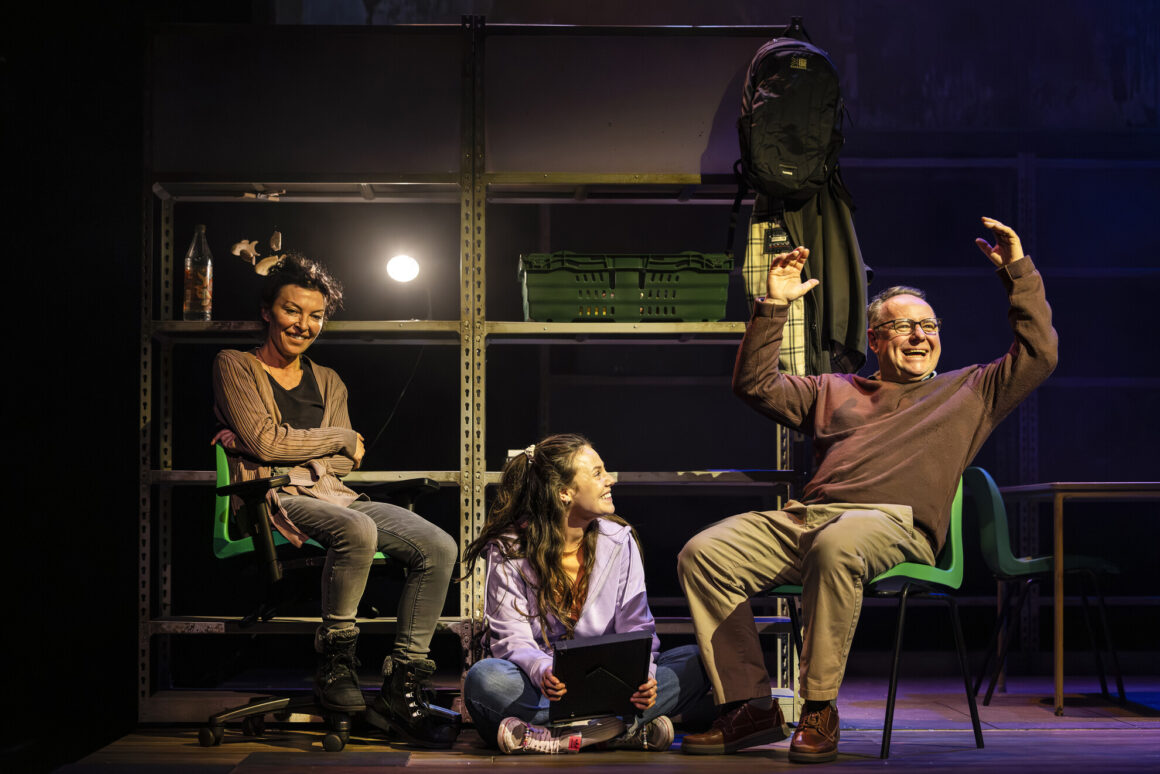
What unfolds is not just a narrative, but also an unravelling…of dignity, patience and hope. Alongside him is Katie, a young mother displaced and desperate, and together they form a friendship that feels both fragile and fiercely necessary. Their bond, cross-generational, unassuming, and deeply human, is the quiet heartbeat of the piece.

David Nellist brings Daniel to life with warmth and an easy, cheeky charm that never feels performed, only lived. Opposite him, Jessica Johnson gives a portrayal of Katie that is raw, emotional and quietly devastating. Their connection unfolds naturally, and that’s rare to see on stage; nothing is overstated, yet everything lands. Even the smallest moments, shared glances, gentle humour, acts of care, carry weight.
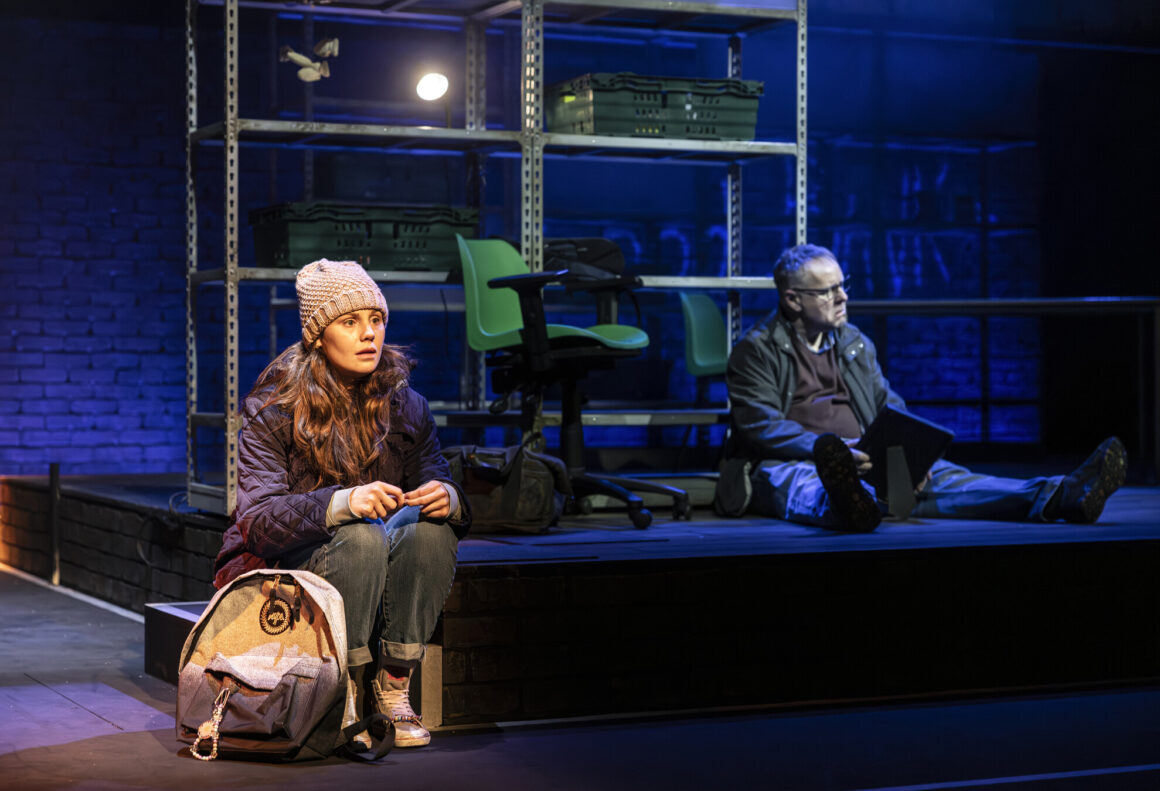
The ensemble cast is equally compelling, particularly in their depiction of the system itself: detached, procedural, and chillingly indifferent. The choice to have an adult actor, Jodie Wild, play the child Daisy is a practical one, though it does soften the immediate emotional pull. Yet her performance, especially in a tender doorstep scene in the second act, is handled with such innocence that it is overwhelmingly moving, offering a glimpse of the quiet casualties of a system that fails its most vulnerable.
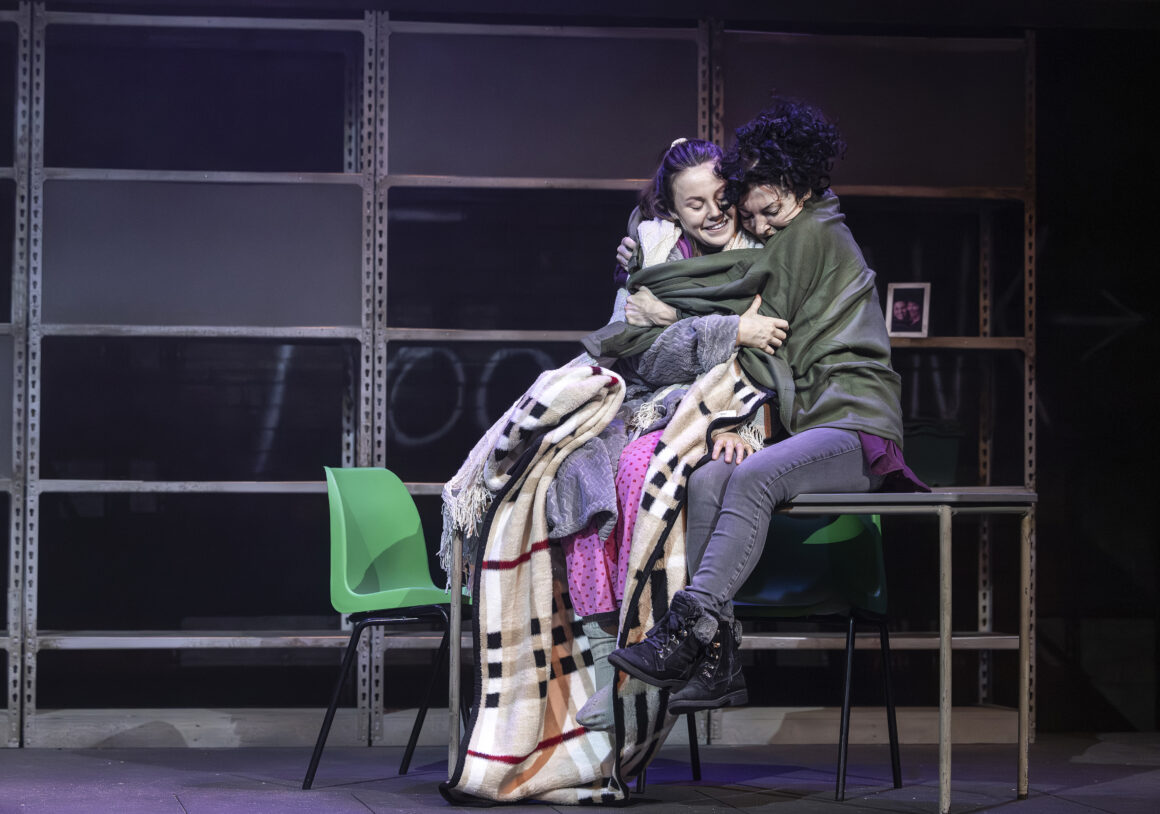
The production, originally created by Northern Stage and directed by Mark Calvert, is stripped back but striking. A minimal set of metal storage racks shifts fluidly between spaces, keeping the action grounded and immediate. Above it, projected billboards display both location markers and verbatim political speeches, paired ironically with the glossy optimism of job centre advertisements. The contrast is as sharp as it is unsettling: an ignorant, naive public narrative of support, set against the private reality of struggle.
There is humour here, too: dry, Northern and instinctive. It surfaces in the gaps between hardship, a reminder of that very human impulse to laugh, even when things feel unbearable. And it’s this balance, between warmth and devastation, that makes the piece so affecting.
This is not theatre designed to dazzle. It doesn’t offer escapism or easy resolution. Instead, it asks you to sit with discomfort, to witness, and to feel. It is draining, at times overwhelmingly so, but also deeply cathartic, the kind of experience that lingers long after the curtain falls.
www.leedsplayhouse.org.uk
Main image: Micky Cochrane, Jodie Wild, David Nellist, Jessica Johnson, Janine Leigh, Kema Sikazwe.