This year, Light Night, one of the earliest light festivals in the country, celebrated twenty years of bringing light-based art and culture to the City.
Light Night has grown in depth, variety and popularity over the years, with fifty art works this year on display across the City. The two-night festival now brings over 200,000 people into the City Centre. Magical worlds in Portals, the 32-meter-long Bird Passing By, beautiful needlework in Stitching Light: just some of the illuminations that impressed. Some were enormous, like the projections that covered the Queens Hotel, City Hall and the Laidlaw Library. Others were tiny, like the beautiful butterflies found In a City of Flowers at the University of Leeds.
Sandwiched between Diwali and Bonfire Night, this year’s festivities seemed particularly well timed. Light Night brings brightness, joy and celebration to what can be a dreary time of year. Once the annual firework display was the biggest draw in Leeds, but Light Night brings far greater numbers to an event that does not frighten animals and is more environmentally friendly. Previously held on Thursday and Friday, it was brought forward one day to avoid a clash with a Leeds United match. This may prove to be a masterstroke. Holding the event mid-week, on a Wednesday and Thursday, boosted retail and hospitality without clashing with the weekend night-time economy. To me, it seemed much more family-friendly this year.
The spread of installations would have been too much for one person to digest in one outing. I opted for two trips, and even then, did not cover all the sites.
The first evening began at a launch event organised by Markel Insurance. Whilst the biggest funders are Arts Council and Leeds City Council, Light Night is also supported by a range of businesses from across the City. The sponsorship list includes over 40 organisations and individual members of the public also donate. Support comes in the form of finance and volunteers. As I headed out to watch this year’s projection at the Queen’s Hotel, several Markel staff were setting out to take up their posts directing the public.
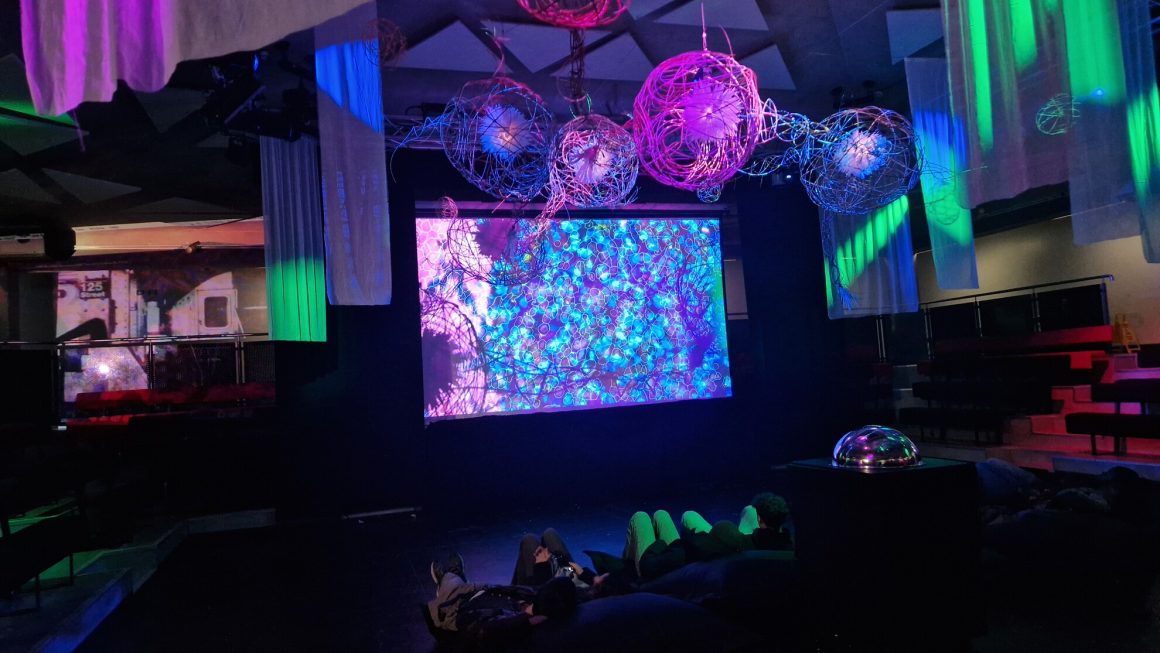
At the launch event, I had the opportunity to talk to James Hill, who along with Kate Vigurs, had been instrumental in establishing Light Night when he worked for Leeds Council. He talked to me about how in 2005 people were of the opinion that Britain was too cold to host light events. Ironic, given that some of the most popular light events are now in Northern cities such as Leeds, Durham and Newcastle. They took inspiration from events held in Continental Europe but made the concept their own.
This year, there was a range of European artists bringing their work to Leeds: Luminariste from France, Dirk Rauscher from Germany and Gabriella Kiryluk from Poland to name a few. There was a mixture of outdoor and indoor events. The weather was balmy for late October but if it had been cold there were plenty of opportunities to warm up.
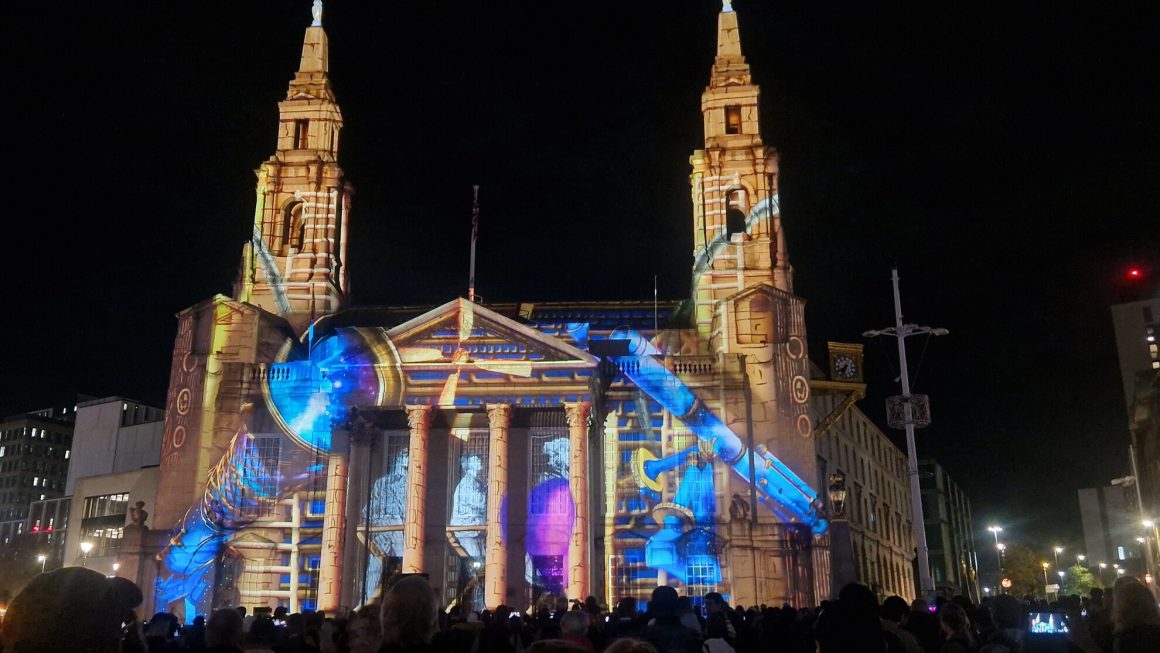
Libraries across the City opened to the public. Storytelling took place next to the University’s Brotherton Library’s amazing chandelier, in the dimly lit Leeds Library the stories of WW2 fire watchers were told and a projection in Leeds Central Library focussed upon gardening literature. Outside, the City’s continued collaboration with the British Library saw Ocubo from Portugal bring to life historical science fiction imagery, think HG Wells and Jules Verne, to present Portals: The Machine of the Worlds.
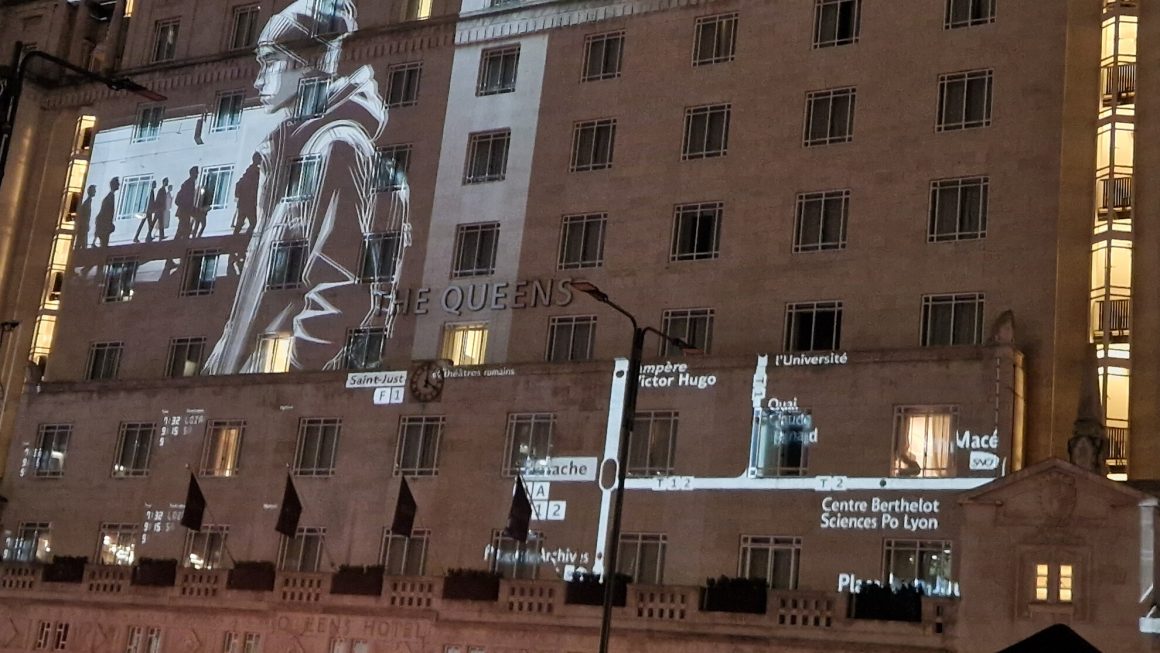
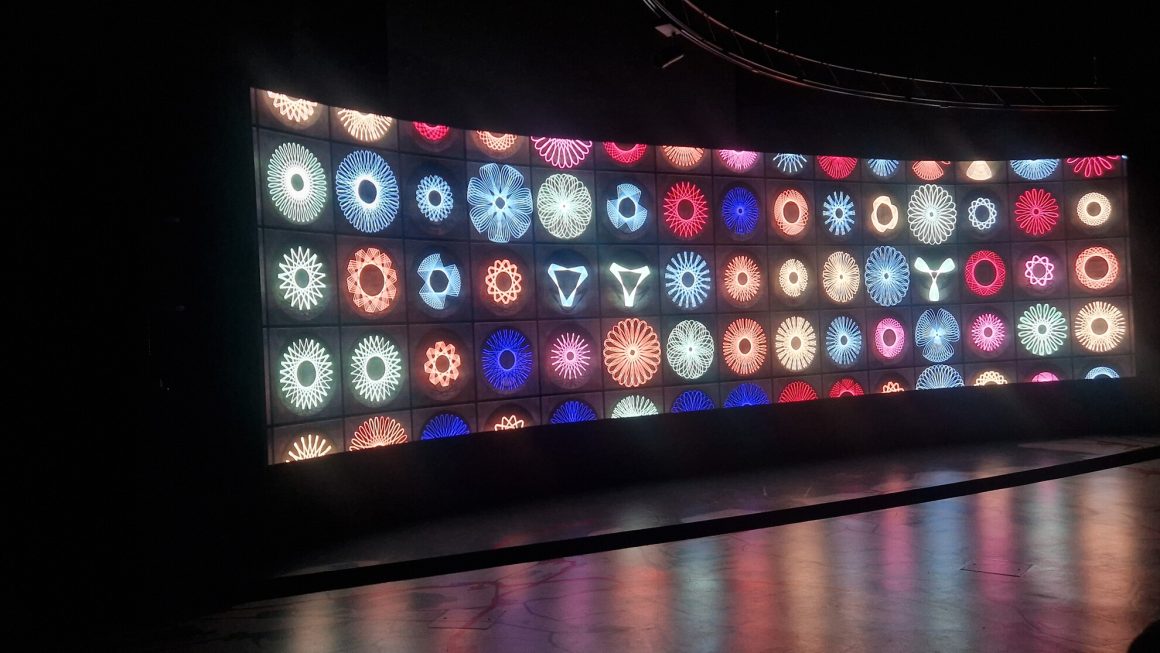
Anniversaries inspired art: 200 years of the railways and 60 years of Spirograph. Dirk Rauscher adapted his graphic novel to bring a host of railway-themed images to the facade of The Queens Hotel in One Second Lovestory. Leeds engineer Denys Fisher was commemorated in Spirograph Reimagined; where lines, colour and sound drew us into an immersive celebration in Leeds City Museum.
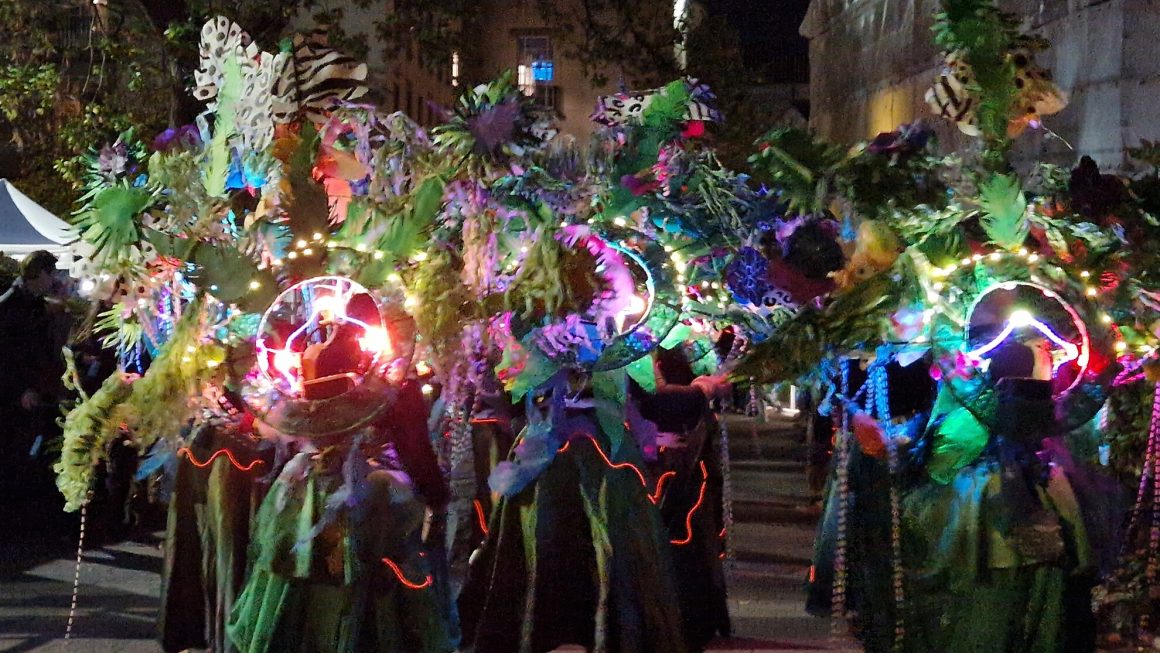
On evening two, I focussed on the university area. Whilst many parts of the City had been pedestrianised by closing roads, the university campus offered an ideal space for wandering and discovering lights. The area had a festive feel enhanced by salsa and reggae music. It was lovely to see families enjoying a space usually reserved for those over 18. Diwali inspired Feather Light, which saw lanterns and fluttering patterned discs which artist Govi Asano had prepared with the help of over 150 people. Carnival was invoked by Banyan with illuminated carnival costumes. While the combination of art and science you would expect in a university was embodied in Illuminated Minds.
Wandering around, it was great to see people enjoying culture but also enjoying the City, venturing into places they had never visited before. Light Night was a treat for the eyes and ears and an opportunity to explore Leeds.