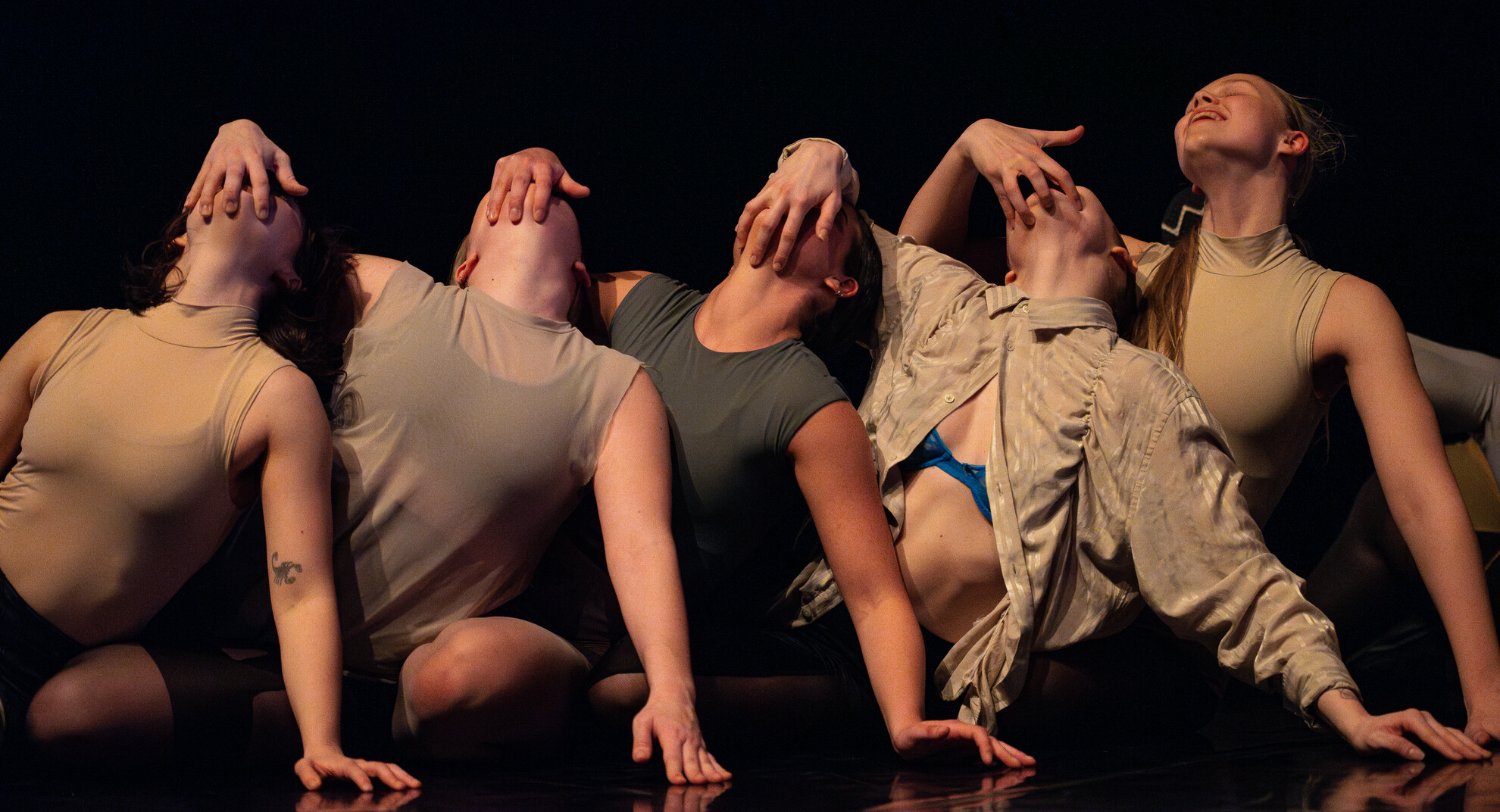
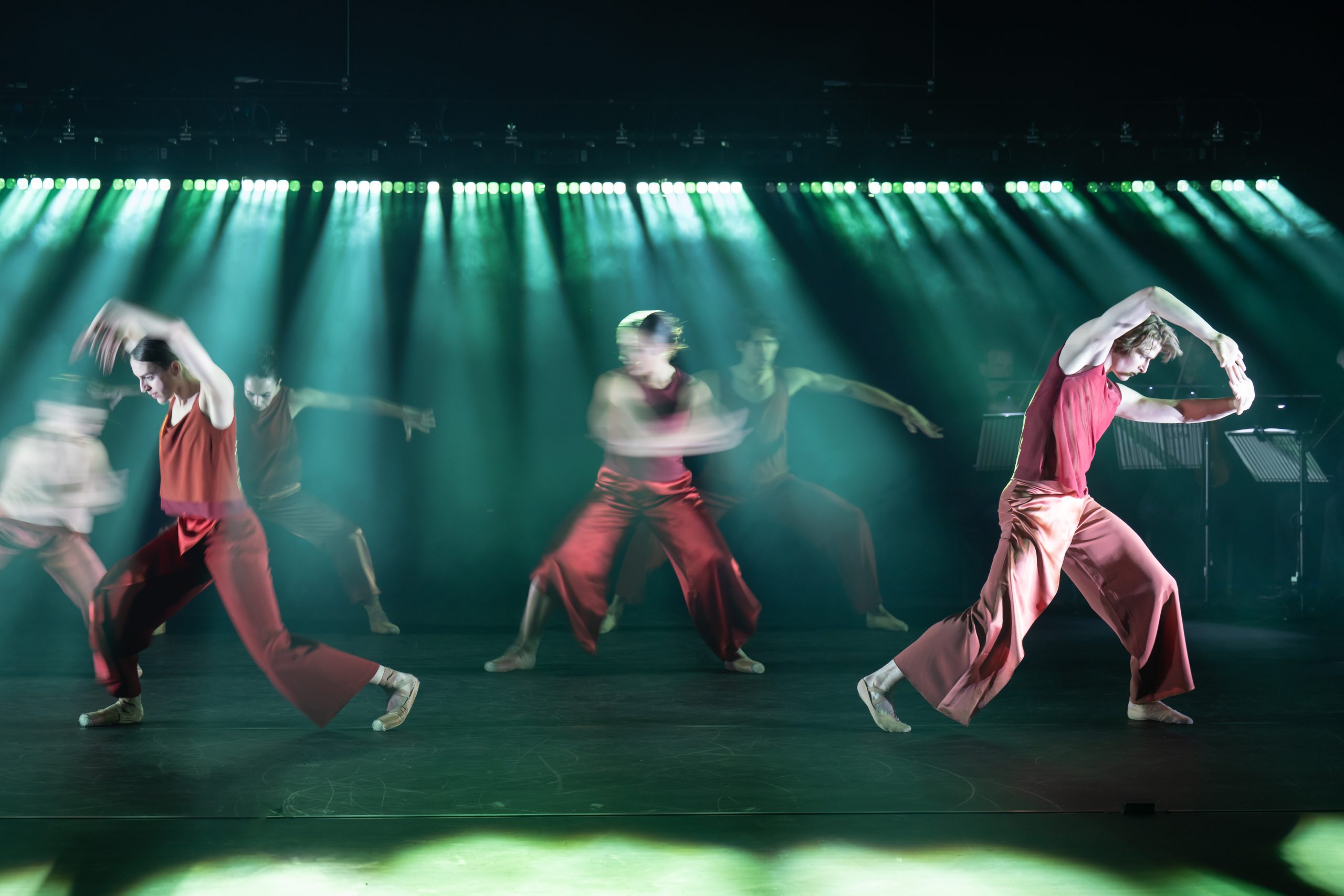
Anna Holmes’ SUNNY SIDE, created in collaboration with Andy’s Man Club, is a production that lingers.
Premiering at Leeds Playhouse, Northern Rascals’ blend of contemporary movement and poetic text tackles youth, masculinity and mental health with ambition, delivering moments of genuine brilliance alongside some frustrating inconsistencies.

The trio of dancers – Soul Roberts, Ed Mitchell, Sophie Thomas – are mesmerising to watch, committing fully to their roles, while the narration (delivered by Lamin Touray, Jonny Aubrey Bentley, and Brendan Barclay) provides a haunting counterpart to their physical storytelling.
The production’s greatest strength lies in its ability to viscerally convey the weight of its protagonist’s experience. Soul Roberts delivers a revelatory performance as K, a young man trapped between the numbing repetition of menial work and the quiet turmoil of a fractured home.

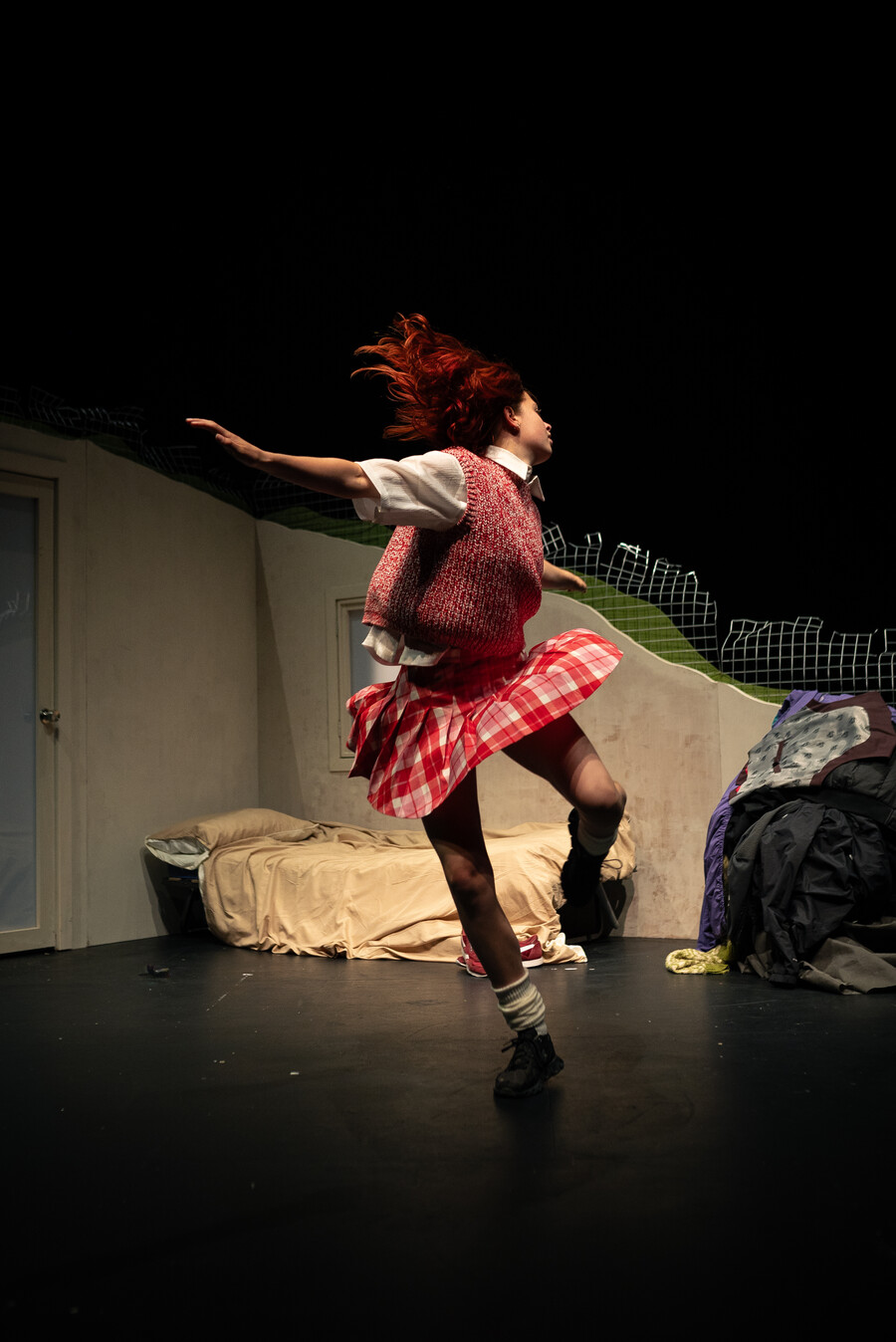
The opening sequences are masterfully executed, establishing K’s psychological imprisonment through relentless cyclicality – the same iPhone alarm, the same hollow gestures, the same stifling routines. Roberts’ physicality is extraordinarily precise, his body twisting into a vessel of silent despair. The iPhone projection that engulfs the back wall of Caitlin Mawhinney’s brilliantly decrepit bedroom set is a particularly effective touch, visually trapping K in the glow of sleepless nights and endless scrolling – a smart, contemporary metaphor for modern isolation.
The production reaches its emotional zenith when Sophie Thomas’ B character enters the narrative. This scene is nothing short of breathtaking. After enduring K’s grey, repetitive existence, the moment B knocks on his window feels like watching colour flood into a monochrome world. The lighting’s shift to a warm pink glow (courtesy of Barnaby Booth) is transformative, and Roberts’ physical language changes palpably – where his movements were once constrained by routine, they now pulse with tentative possibility. Thomas and Roberts craft something magical here: a wordless dance of connection that captures the awkwardness, hope, and vulnerability of human intimacy with remarkable authenticity. Details are perfectly judged – K’s swap from a grey T-shirt to red, the black cloth draped over the door to mute his parents’ arguments, the fumbling tidying of his usually neglected space. These choices don’t just serve the story; they reveal character with rare subtlety.

Yet for all its brilliance, this pivotal scene also underscores the production’s subsequent weaknesses. When Thomas reappears as A – a figure from K’s social circle – the transition is bafflingly underdeveloped. Lacking clear textual or visual distinction, the shift from B to A feels like a directorial oversight rather than an intentional blurring of identities. The confusion peaks during a going-out scene where A cuddles with Danny (K’s closest friend), creating unintended narrative whiplash. Is this the same character who shared such tender movements with K? The ambiguity is distracting, undercutting the emotional precision of earlier scenes.
Danny’s role, however, remains one of the most compelling elements. Holmes renders their friendship with arresting sonic and physical ingenuity. In their first meaningful interaction, Danny’s dialogue is deliberately muffled beneath K’s internal monologue – a shrewd metaphor for how depression can distort connection.
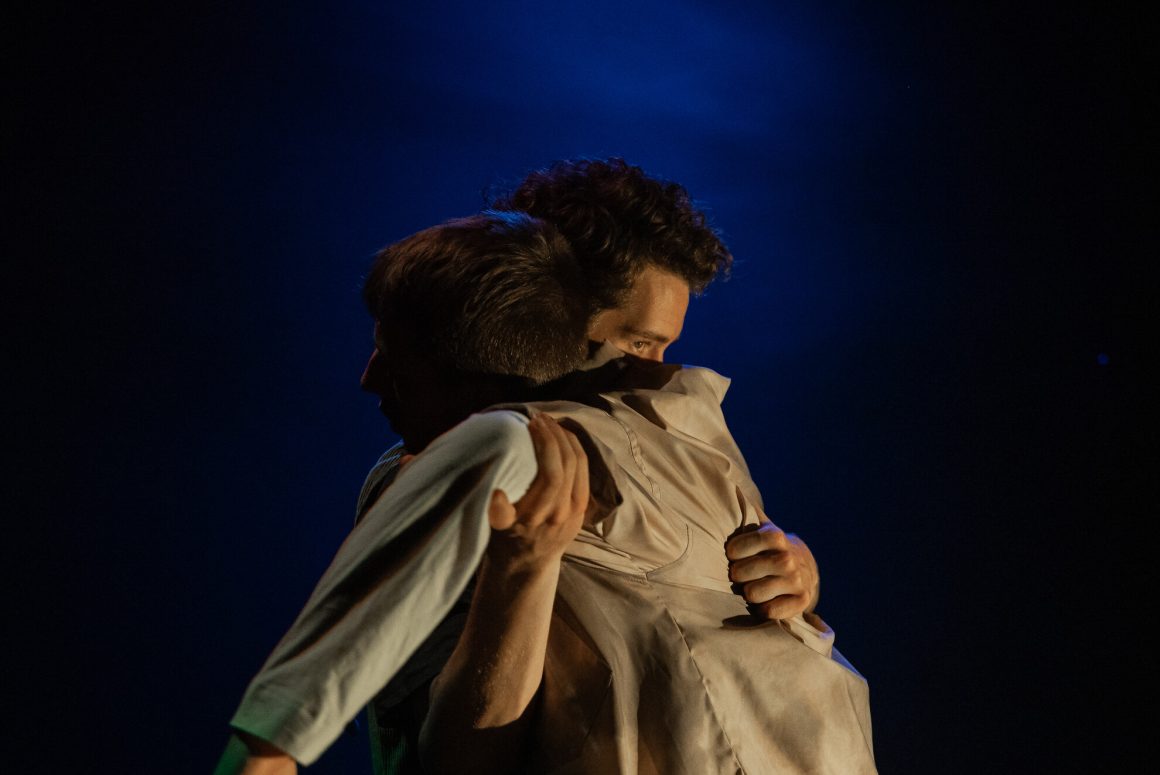
Their final duet is the production’s other standout moment: wordless, raw and exquisitely choreographed. The push-pull of their bodies, with one stumbling and the other catching, becomes a visceral metaphor for the exhausting reciprocity of friendship. When they finally collapse into a tight embrace, the relief is palpable. Which makes the abrupt ending all the more frustrating. The decision to empty the stage after such a charged climax feels like a missed opportunity. Rather than sitting with the emotional resonance, the production hurries to its conclusion with a musical swell that dissipates tension rather than fully resolving it.
Thematically, SUNNY SIDE walks a delicate line. While its exploration of male vulnerability is timely and often powerful, it occasionally risks presenting male camaraderie as a panacea. The narrative’s focus on Danny’s role, coupled with the underdevelopment of B/A’s female characters, subtly reinforces the very ‘boys fix boys’ dynamic it might have interrogated. This isn’t a fatal flaw – the work remains too emotionally intelligent for reductiveness – but it does leave certain complexities unexplored. Similarly, the muted exploration of gentrification and the decay of opportunities for rural youth feels like a missed chance to deepen the social commentary.
Holmes’ direction shines most brightly through physical storytelling, where recurring movement motifs create a visceral language of struggle and connection. While SUNNY SIDE isn’t without flaws, I can look past these imperfections because they ultimately serve its central truth: mental health struggles resist tidy resolutions. What elevates the work beyond its shortcomings is its timeliness and the extraordinary commitment of its performers.
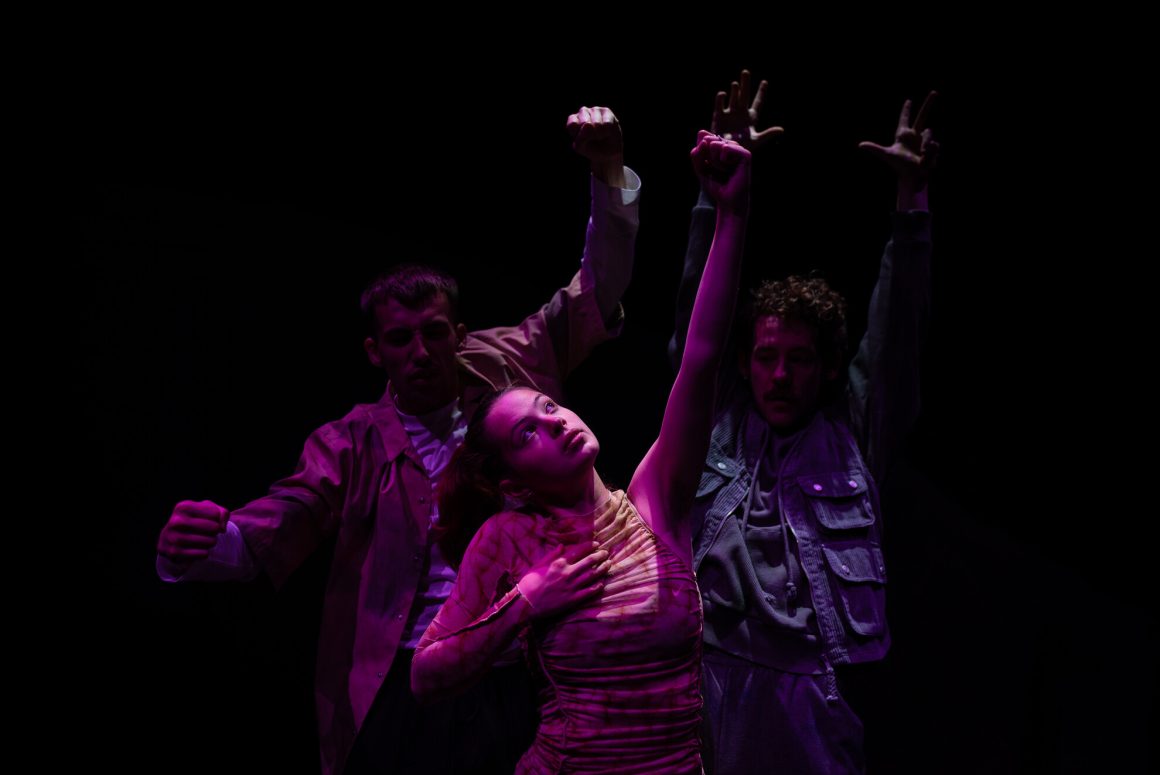
Roberts, Mitchell and Thomas form a remarkable trio, bringing both technical precision and emotional authenticity to their roles. Their performances transform what could be abstract movement into urgent, human storytelling.
In an era when male mental health remains both stigmatised and misunderstood, SUNNY SIDE makes its most vital contribution simply by starting the conversation. The standing ovation it deserves belongs equally to its creators and to the important dialogue they’ve begun.
Photography by Elly Welford.