Sick is an exhibition born of reflection, imagination and collaboration. In Sick, Sarah Roberts has drawn upon personal experience, archives from across Leeds and worked with a range of professionals to lead us into the world of a young carer.
In her launch speech, Sarah described it, ‘As a note from my present self to my past self.’
Sick: A Note from 40 Sandilands Road and Other Stories, to give the exhibition its full title, recreates aspects of her childhood home in a Welsh coastal town. During her youth, she cared periodically for her father, who died when she was 14, and lived with a sister whose challenges with diabetes involved frequent hospital admissions. At the time, she was unaware of the uniqueness of her experience, of how the boundaries of hospital and home had become blurred when caring for someone with a chronic illness.
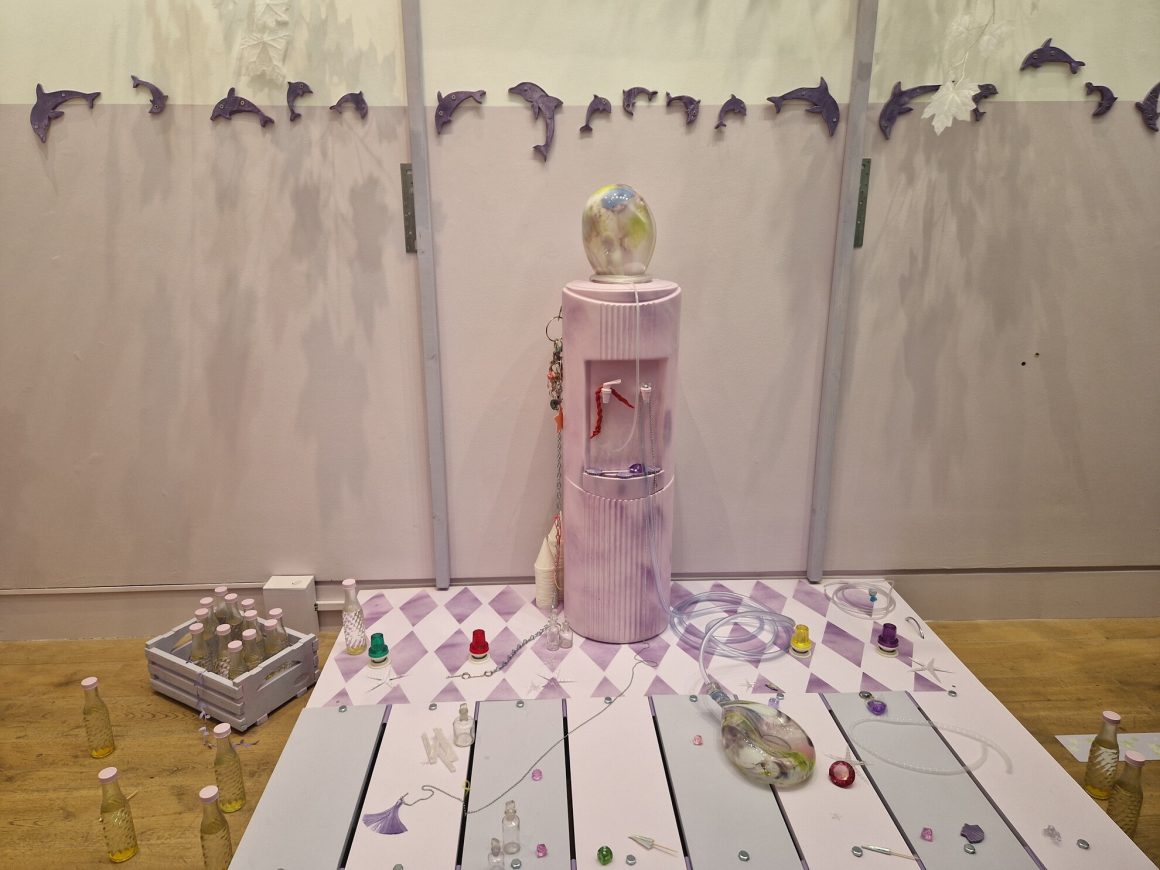
Roberts takes us on a journey: travelling from the public water cooler in the hospital, through a room set up as a home care unit, past a hoard space full of unused household items, and finally reaching the escape of her teenage bedroom.
Roberts is not looking for pity; she had friends and music for company, the tension of being ‘sick-adjacent’ being broken by trips to the beach and raves. The pastel purple teenage bedroom is a haven where a radio plays music or the soothing cry of coastal gulls can be heard.
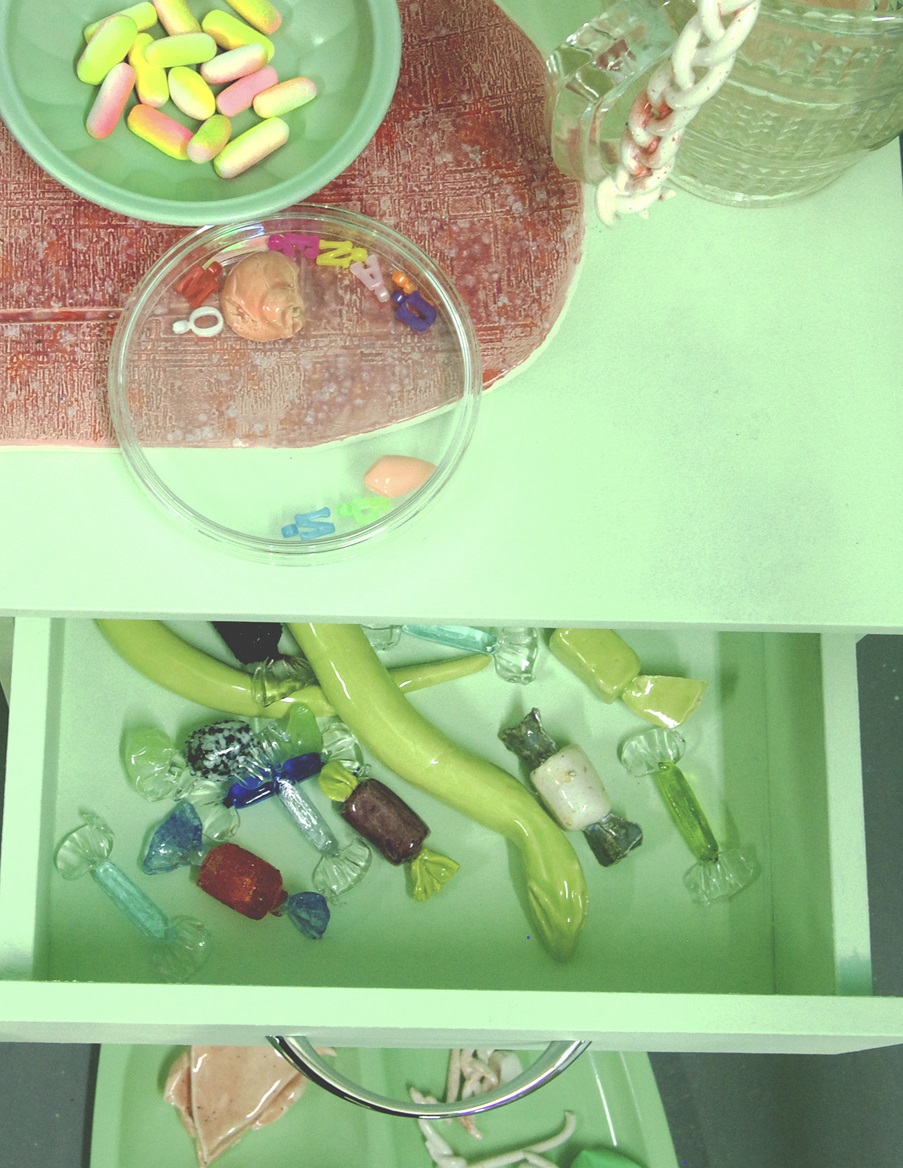
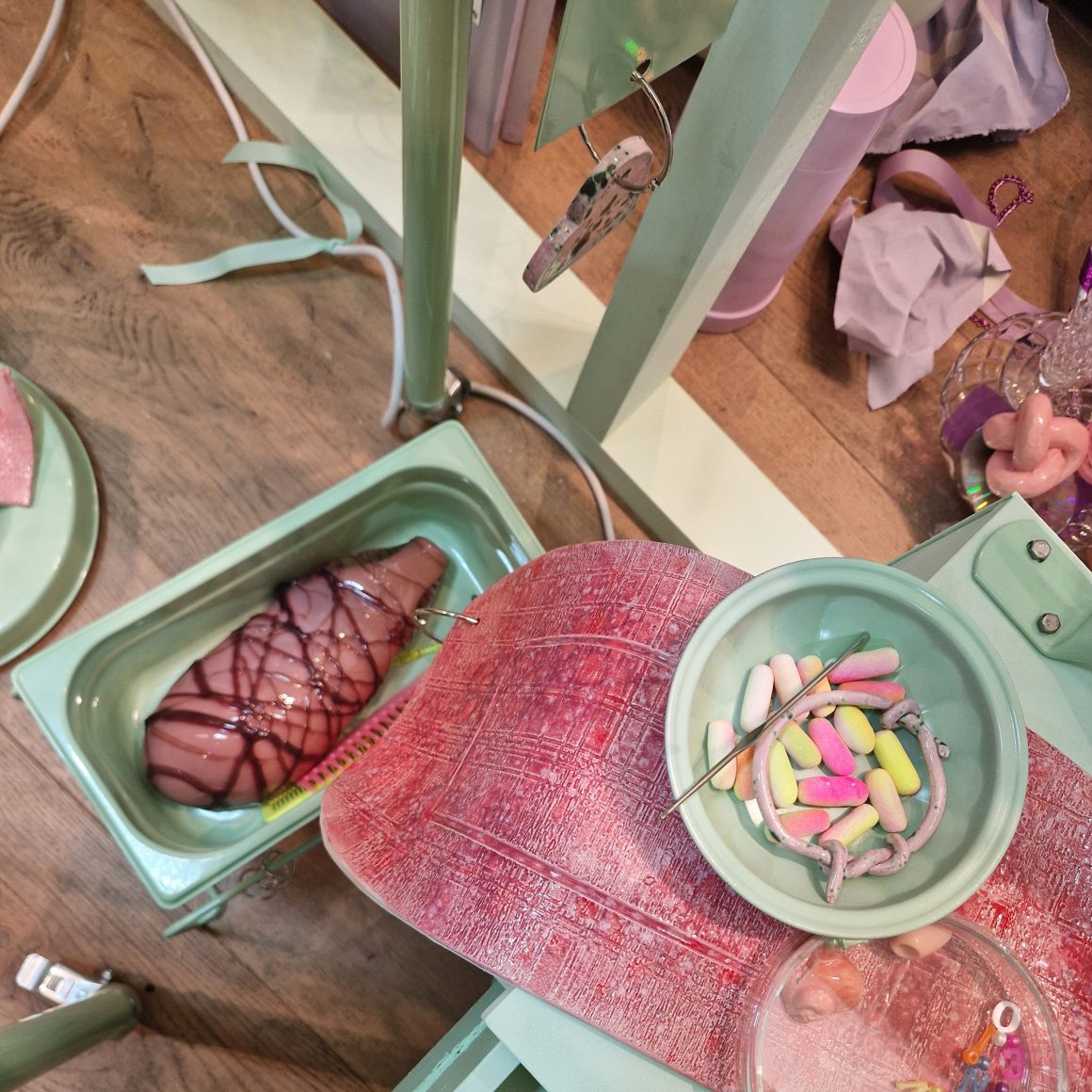
Colour is important here; the vivid green of the sick room, filled with oversized bed and sink unit, is a recommendation from a care manual from the Thackray Medical Museum. A colour that should be calming appears hyperreal, jarring with the neon pinks of personal items, brightly coloured pills, curtains decorated with pink pneumonia bacteria motifs and dusky pink glass internal organs.
When introducing the exhibition, curator Laura Claveria spoke of her desire for artists at the university to make full use of libraries, archives and museums. Roberts was given the luxury of a six-month residency to prepare the exhibition, although given the final complexity, I’m surprised this was long enough. Her enthusiasm for the project seems to have spread to others, with unexpected parts of the university and other institutions being drawn into the process. Many of the items she discovered during her research are displayed in a complimentary exhibition Sick Too in the Treasures of the Brotherton Library.
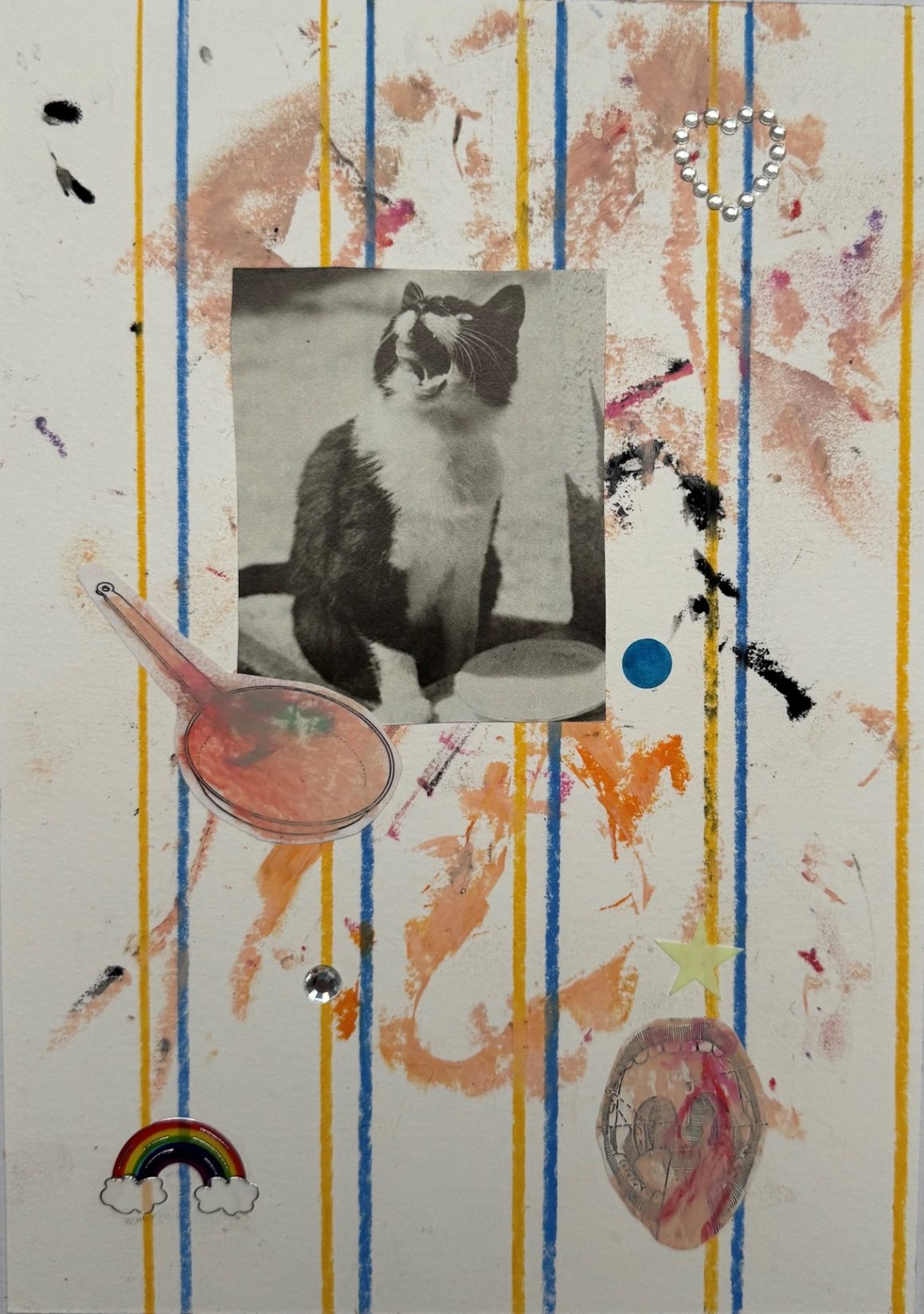
Sick Too contains books and artefacts utilised during the research process which clearly have had an impact on the exhibition. Some could be considered artworks, such as a beautiful volume of anatomical drawings, or Gyorgy Gordon’s Alone III, the rather sad but hopeful painting of a child sitting by themselves. Others have informed her work in terms of the history and attitudes towards caring. Books on cooking for invalids sit alongside feeding cups and care manuals. Before becoming an artist, Roberts studied Sociology at Leeds University, which perhaps informs the strong socials themes in her work.
Roberts talked to me of the wonder of amassing items, each of them individually insignificant; that ‘suddenly become meaningful and amazing together.’ It would take you months to catalogue every item in these montages. Many are found objects, whilst others have been carefully crafted. The items made by Roberts include ceramics, collages and hand-blown glass. Together, they constantly blur the lines between medicine and domesticity, the mundane and art.
The water cooler montage is an example of how the installation is a product of research, artistic endeavour and collaboration. Medicine and the coast have a long history. In the archives, Roberts found an 1843 chemical analysis of Scarborough Spa water, the elixir that was to give birth to the British seaside resort. Scientists in the School of Chemistry used the recipe to reproduce the original spa water. Roberts then decanted the water into the soda stream bottles of her youth and a decorative water cooler that she had personally blown.
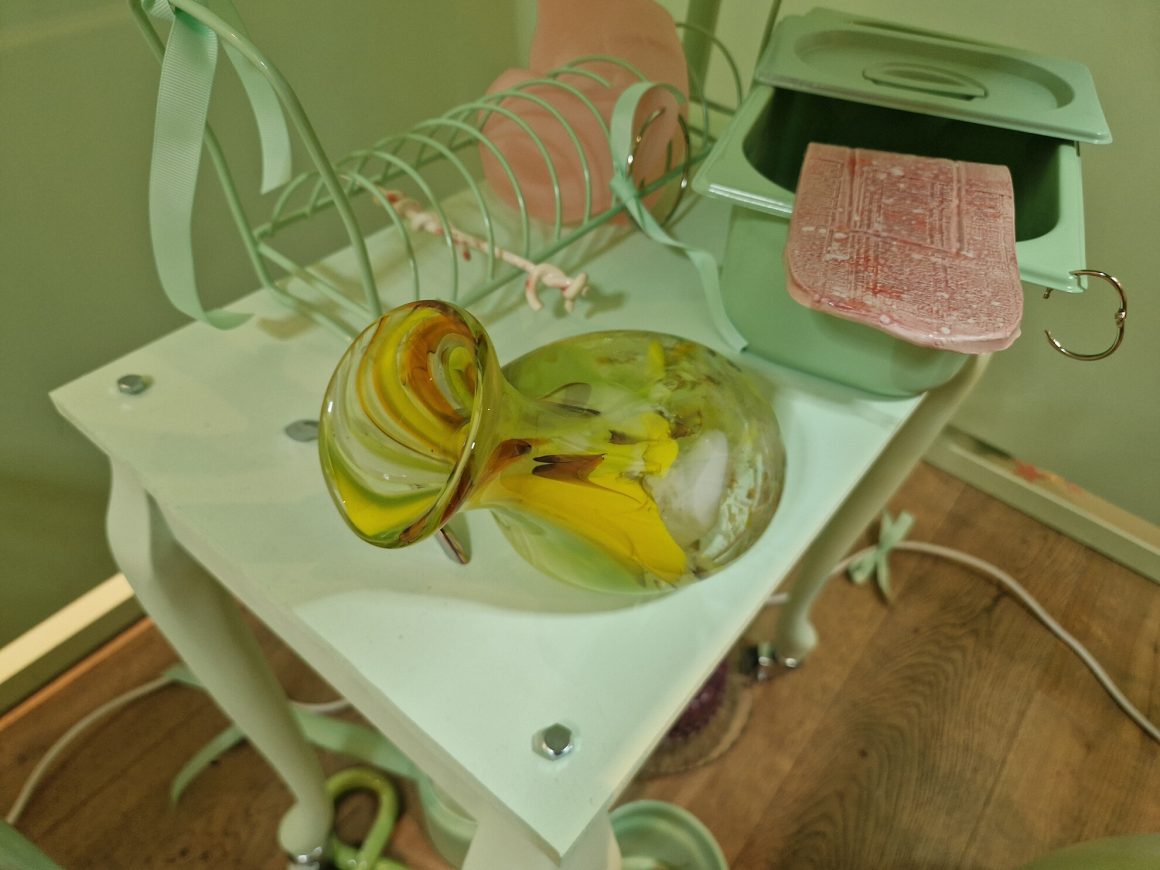
Before this project Roberts had never worked in glass, setting out to learn new skills to bring her ideas to life. A collaboration with Ingrid Pears MBE saw Roberts taught and guided through the glass blowing process. One of the most striking artefacts in the exhibition is a Murano-style glass urinal created by Roberts. Her ability in ceramics may be more established but is no less striking. Bright green Asclepios snakes slither through the exhibition and a frieze of ceramic dolphins rings the room.
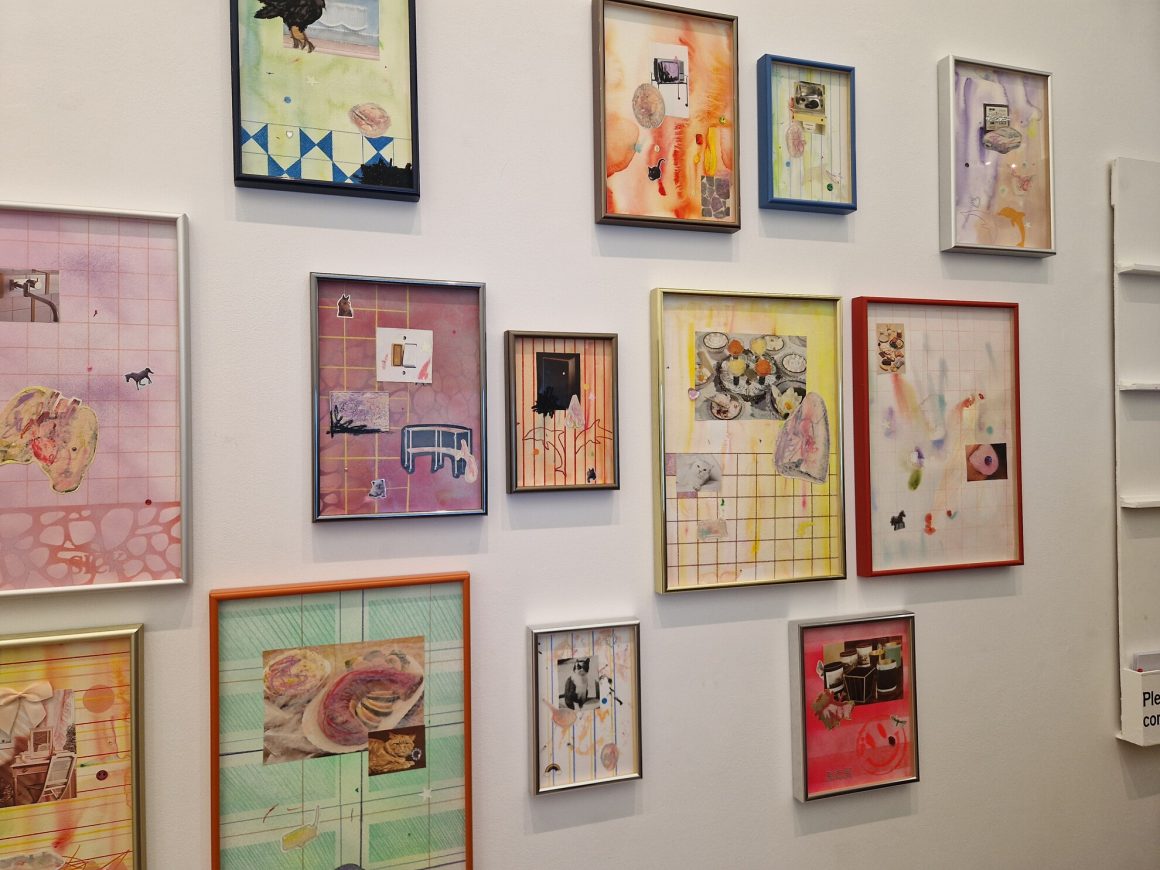
The collages are displayed just like pictures might be on the walls or stairs of a terraced house. Again, individually they lack impact, but huddled together I found them quite overwhelming. Kittens sit alongside internal organs; smears of colour give a dirty feeling when placed alongside shiny stainless-steel utensils. The detritus of life is here but nowhere in the exhibition is the blood and vomit that is somehow hinted at.
Having been present during my own brother’s chronic teenage illness, I engaged with this on an emotional level. Yet, despite unsettling elements, this is a hopeful exhibition with moments that made me smile. Claveria in a video outlining the development of the exhibition describes it as ‘joyous, hopeful and cathartic’. Roberts’ enthusiasm for art and knowledge shines through and has been complemented by collaborations across both university galleries and with the wider Leeds academic community.
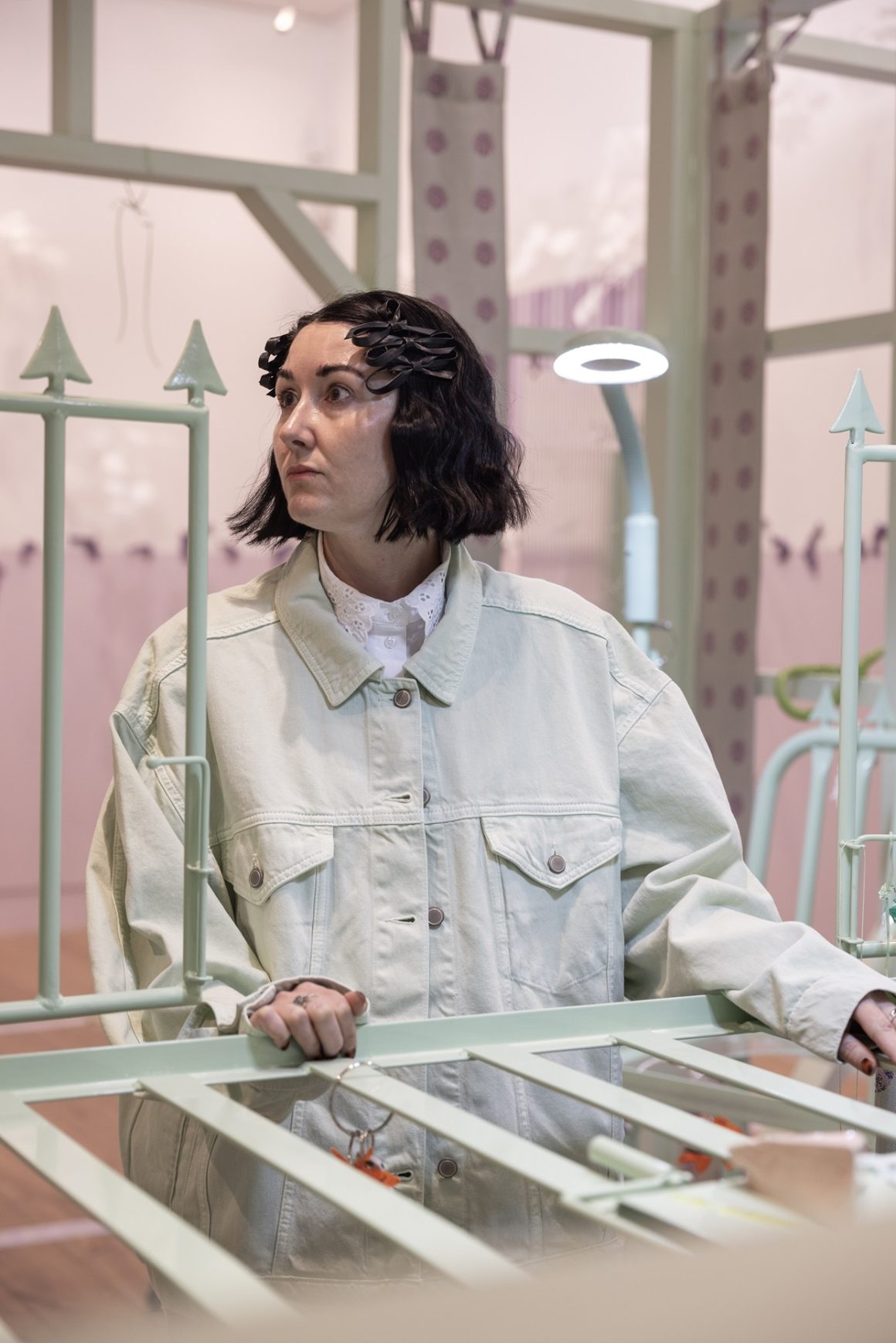
Sick / Sick Too: at The Stanley & Audrey Burton Gallery / Treasures of the Brotherton until 19th July.
Main image: Sarah Roberts in her Leeds studio. Unless otherwise attributed, photographs are by the University of Leeds.