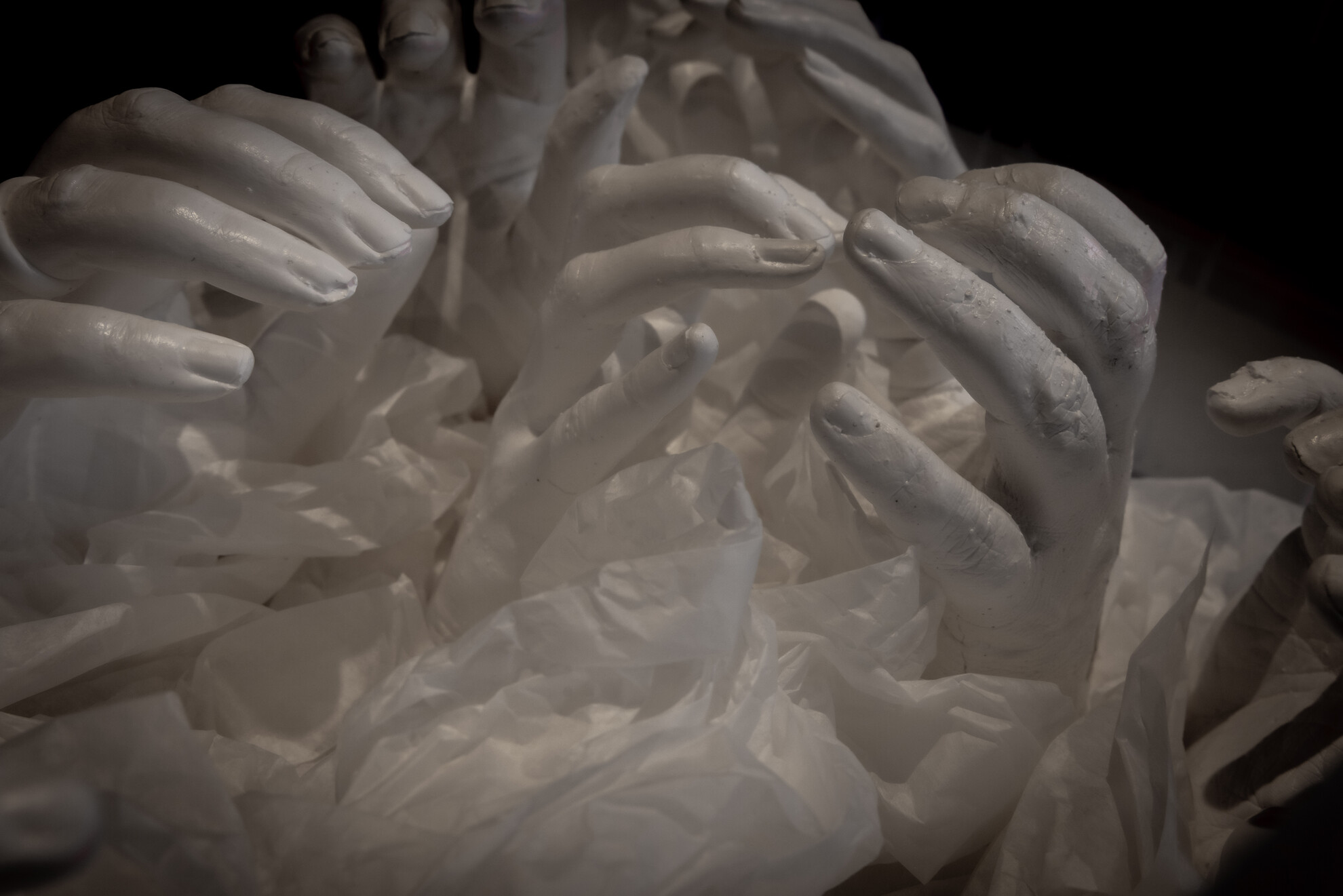
What the Hand Remembers is a group exhibition bringing together four artists whose practices focus on making as a way of holding knowledge.
It was also for me a celebration of young women in art. The four artists, and curator Shazia Bibi, have clearly undertaken a positive collaborative process to bring together four styles of art-making in a way that draws upon their differences and shared interests. The work moves from one artist to another; no one is separated in the one large gallery space. Instead, they echo and form a whole.
The pole of attraction for the exhibition is Farwa Rizvi. She works at the University of Leeds with fellow artist Laura Joan Smith. She came across the work of Alice Boot and Saba Saddiqui when they exhibited some of their work at the University’s Stanley and Audrey Burton Gallery and knew that she wanted to work with them.
On the opening night, Monday 26th January, we heard from all four artists. Shazia Bibi, as curator, gave a brief introduction but left it up to the artists to talk about their own practice, interjecting occasionally with questions to encourage them to expand on their ideas or clarify their practice.
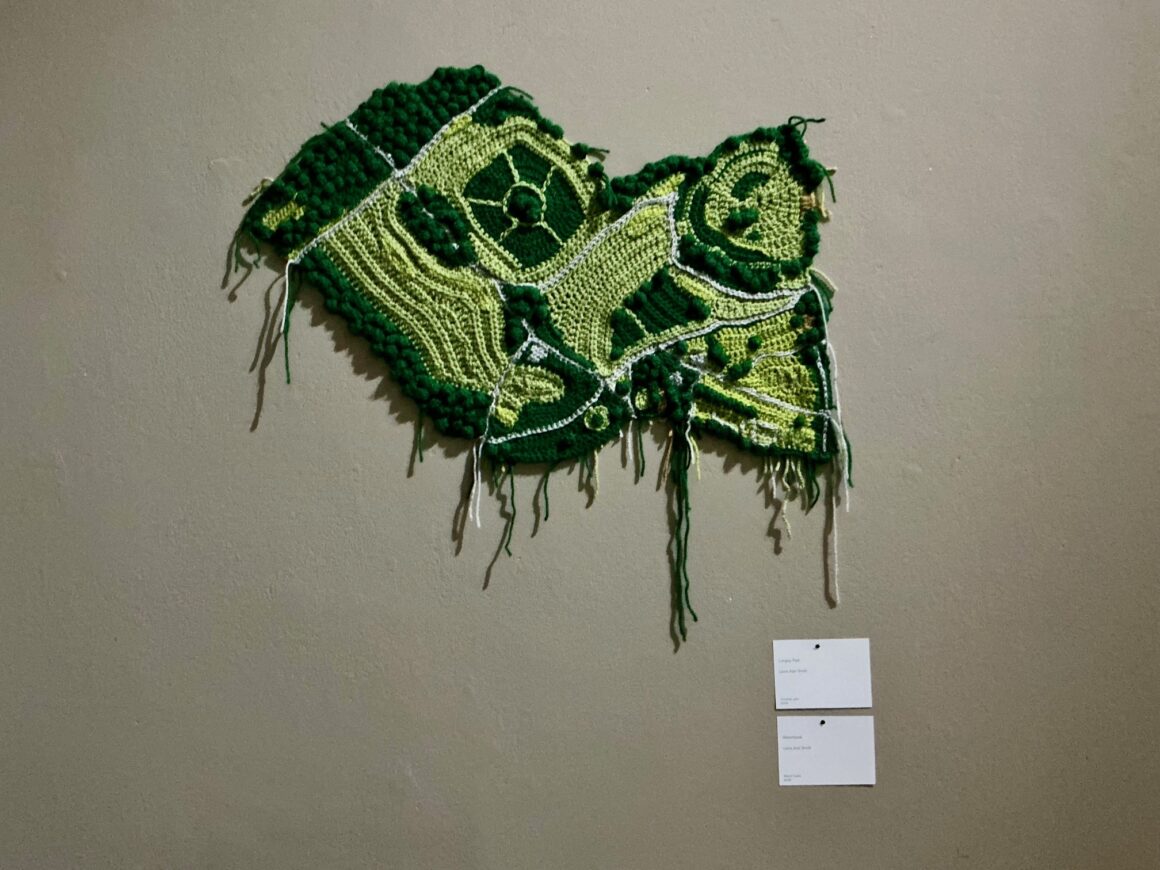
All four artists use textiles in their art, but the use takes many forms. Laura Joan Smith has used yarn to connect her to landscape and memory. Using maps and satellite photos, she has created an image of the park she visited as a child. Using stitches, she remakes experience and memory.
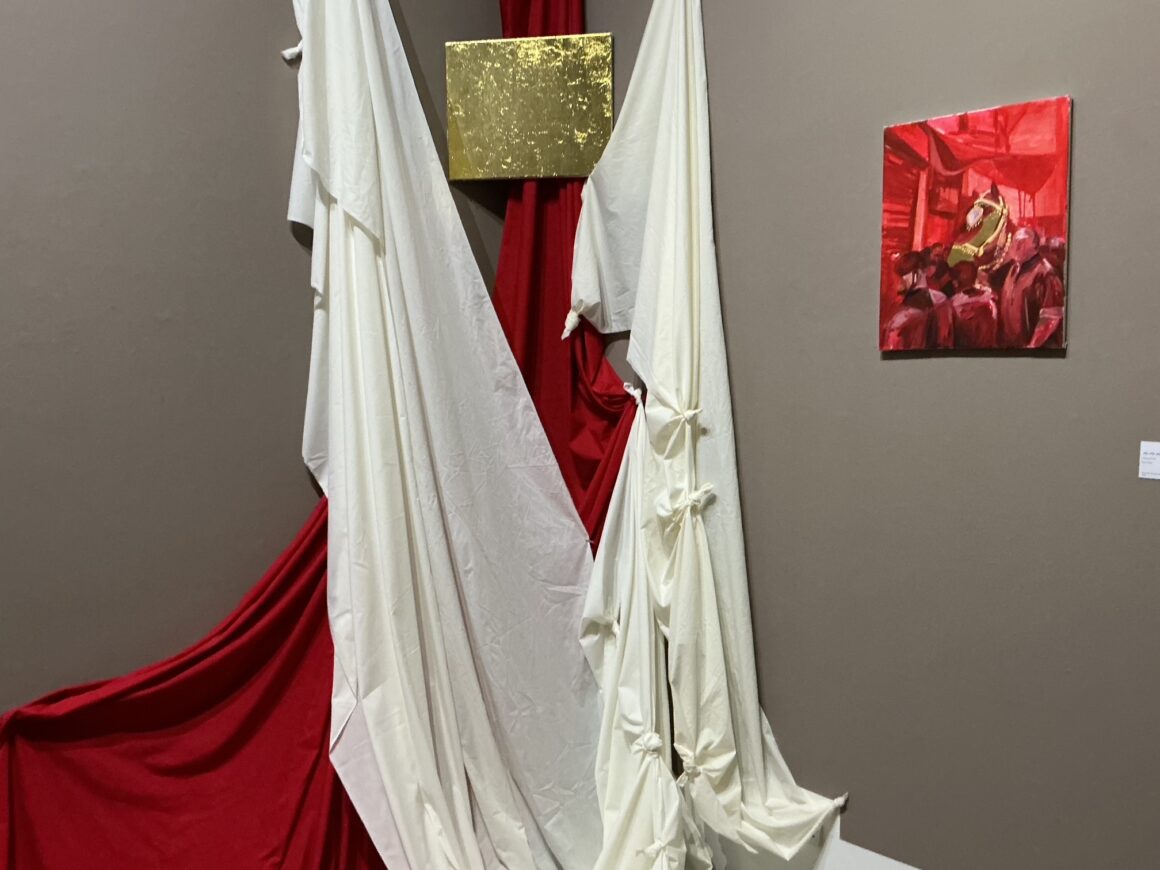
Farwa Rizvi has combined textiles with her vibrant paintings. The textiles sometimes flow out from the canvas. At others, they have their own direction of travel. The pure white and bold reds are related to religious ritual and shared cultural memory. Rizvi is interested in transformation, tracking the ways faith and rituals change over time and place. In this exhibition, visitors are invited to add their own small transformation: tying a knot in red and white sheets to represent memories and hopes. Rizvi explores faith as a conduit for hope, rather than through religious structure.
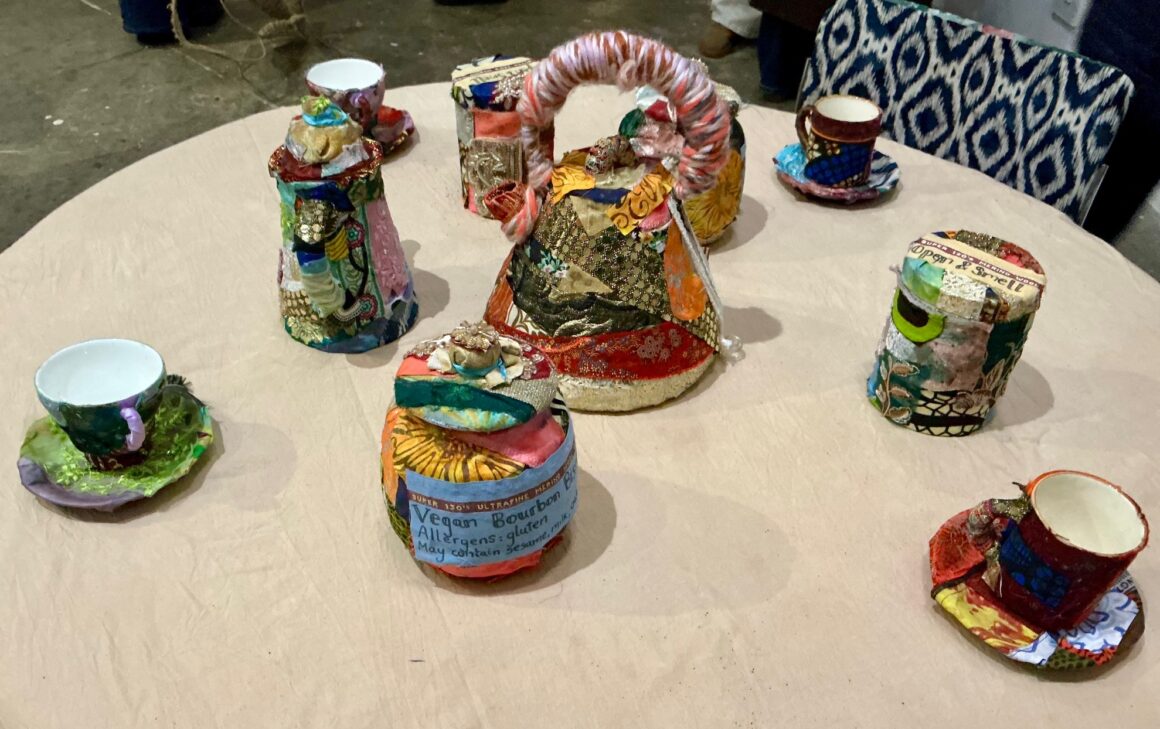
Saba Siddiqui presents work from a number of different projects, all united by relevance to lived experience and memory. The memories relate to her own experience but also to communal memory. One of my favourite pieces is A Well-Deserved Cuppa, a textile encased tea service. In developing this piece, Siddiqui has drawn upon her experience of working with the elderly and has produced a sensory experience, reflecting upon how sensory experiences relate to memory. Visitors are welcome to feel the textured vessels, eat a biscuit and smell coffee and tea. Other textiles are found and created.
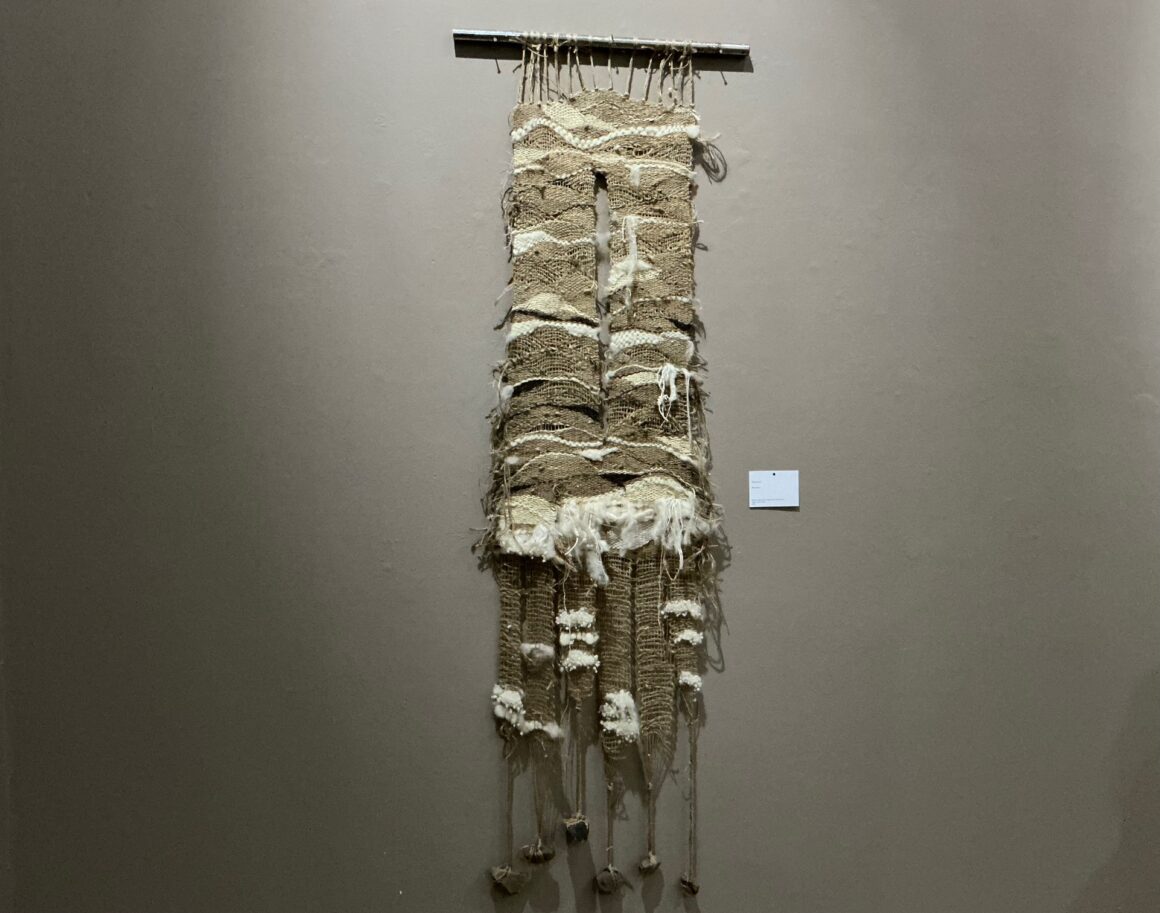
Alice Boot works with a much narrower range of textiles, concentrating upon burlap. She discovered the material through coffee bags, but her art is about deconstruction and reconstruction, with the final works showing no resemblance to their beginnings. Burlap may be a constant, but apart from a unifying colour palette, the works show a lot of variation. Boot talked about being led by materials. Memory here is part of physical manipulation. Some pieces become transparent hanging, while others become three-dimensional shapes or tightly woven hangings.
This exhibition treats textile and fibre-based materials not as decorative or symbolic objects, but as working surfaces shaped by use. Across the works, materials are stretched, handled, repaired, marked and worn. What the Hand Remembers positions material work as a way of thinking through questions of belief, displacement, care and belonging. Memory is approached as something active and ongoing, shaped by bodies and environments rather than fixed in the past.
What the Hand Remembers is a collaboration between East Street Arts with Shazia Bibi and Farwa Rizvi, Alice Boot, Laura Joan Smith, Saba Siddiqui.
Patrick Studios, East Street Arts, LS9 7EH.
The exhibition runs until 13 February:
Open from 10 am until 4 pm Tuesday to Thursday and from12 pm until 5 pm Saturday and Sunday